
What Is GTM (Go-to-Market)?
Go-to-market (GTM) is the strategy and process a company uses to bring a product to market, reach target customers, and achieve competitive advantage. A GTM strategy defines who you're selling to (ICP), how you'll reach them (channels), what you'll say (positioning), and how you'll convert interest into revenue (sales motion).
GTM is not the same as marketing. Marketing is one channel within a GTM strategy — alongside sales, partnerships, product-led growth, and customer expansion. GTM is the coordinating layer that aligns all of them toward the same revenue goal.
GTM Strategy Components
- Market definition: TAM, SAM, SOM — who can you sell to, and who should you sell to first?
- Positioning & messaging: Why you vs. the alternative (including "do nothing")
- Channel strategy: Inbound, outbound, PLG, partnerships — and the sequencing between them
- Sales motion: Self-serve, sales-assisted, enterprise — matched to deal size and buyer complexity
- Metrics & feedback loops: Pipeline velocity, CAC payback, win rate by segment
GTM vs Marketing: What's the Difference?
Marketing generates awareness and demand. GTM coordinates the entire path from awareness to revenue — including sales execution, pricing, partnerships, and customer expansion. A company can have great marketing and a broken GTM if sales, product, and CS aren't aligned.
GTM for SaaS
SaaS GTM has unique dynamics: freemium funnels, usage-based pricing, expansion revenue, and the critical importance of time-to-value. The best SaaS GTM strategies match the sales motion to the price point — self-serve for <K ACV, sales-assisted for K–50K, enterprise for K+.
Key Roles in a GTM Team
Below, we break down the specialized roles that make a GTM strategy work — from demand generation to revenue operations.
Go-to-market roles are the specialized positions across marketing, sales, customer success, and revenue operations that are collectively responsible for bringing a product to market and generating revenue.
Each role owns a specific piece of the customer journey, from generating the first awareness to closing the deal to ensuring the customer renews year after year.
This guide covers every major GTM role in 2026, what each one does in practice on a weekly basis, what breaks in its absence, when companies typically make each hire, and how every role connects to the others in a functioning revenue system.
It also covers the data quality foundation that every GTM role depends on to execute effectively.
The Core Go-to-Market Roles
The seven roles below are the ones that practitioner communities, real GTM team structures, and Google search data consistently identify as the foundation of any functioning go-to-market organization.
They apply to B2B SaaS companies, B2B service firms, and any business with a defined sales motion. Each role is explained below with its real responsibilities, what signals its absence, and what it is measured on.
1. Product Marketing Manager
The Product Marketing Manager sits at the intersection of product, marketing, and sales. It is the only role in the entire GTM system simultaneously accountable to all three functions. PMMs translate what the product does into language that makes the right buyers want it.
PMMs own three things: positioning, messaging, and competitive intelligence.
Positioning is the strategic decision about how the product is framed in the market. Who it is for, what problem it solves, and why it is the right choice for that specific buyer over available alternatives.
Messaging is the specific language used to communicate that positioning across every customer-facing surface including the website, the sales deck, the outbound sequence, and the objection-handling guide.
Competitive intelligence is the ongoing work of understanding what alternatives buyers are evaluating and precisely why they choose or reject each one.
Most B2B companies hire their first dedicated PMM around 50 to 100 employees, or when win rates become inconsistent across reps and there is no canonical positioning document any rep can point to.
Measured on: Win rate against specific competitors, sales team adoption of messaging assets, pipeline influenced by PMM-created content, and quality of product launch execution.
2. Demand Generation Manager
The Demand Generation Manager (DGM) fills the top of the pipeline with qualified opportunities. They run programs such as paid media, email campaigns, webinars, events, and partner co-marketing that generate awareness among the right audience and convert that awareness into leads the sales team can work.
The role is partly creative and partly analytical. Demand gen managers build campaigns, but they spend equal time measuring which campaigns generate pipeline that actually converts downstream, not just which campaigns produce the most form fills.
Measured on: Marketing-qualified leads generated, pipeline sourced from marketing campaigns, cost per qualified lead, and the rate at which marketing-sourced leads convert into sales opportunities.
3. Sales Development Representative (SDA) and Business Development Representative (BDR)
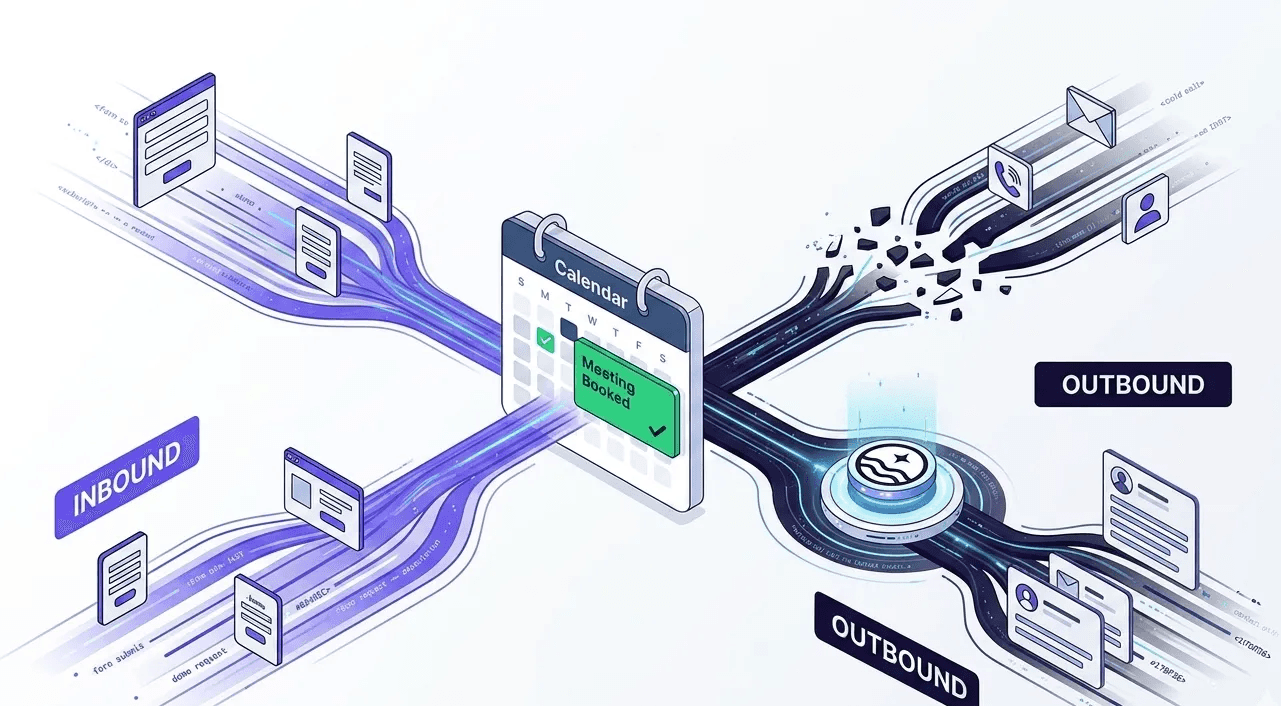
The SDR and BDR titles are often used interchangeably. When organizations distinguish between them, SDRs typically handle inbound leads such as following up on form submissions, demo requests, and event registrations that marketing generated.
BDRs typically handle outbound prospecting, building target account lists and reaching out cold to decision-makers who have shown no prior interest. Many companies assign one title to cover both motions.
Regardless of title, the core job is generating qualified meetings for Account Executives. SDRs and BDRs do not close deals. They open conversations, determine whether a prospect matches the ideal customer profile, and book a discovery call. Their success is measured by the number of qualified meetings they generate each month, not by revenue.
Measured on: Meetings booked per month, meeting-to-opportunity conversion rate, and pipeline contribution from SDR-generated opportunities.
4. Account Executive
The Account Executive closes deals. They receive qualified meetings from the SDR or from marketing programs, run structured discovery calls to understand the prospect's specific situation and pain points, demonstrate how the product addresses those pain points, handle objections, negotiate commercial terms, and bring deals to signature.
AEs also manage the internal deal process. They coordinate with technical specialists for product evaluations and work with legal on contract terms. They also involve customer success early for complex accounts where onboarding complexity is a buying concern.
Measured on: Closed revenue against quota, win rate, average deal size, sales cycle length, and pipeline coverage ratio. A minimum of four times quota in active pipeline is the standard healthy benchmark for an AE to consistently hit their number.
5. Customer Success Manager
The Customer Success Manager is responsible for everything that happens after a deal closes. Their primary function is ensuring customers get enough value from the product to renew their subscription and expand their usage over time.
CSMs handle onboarding, which is the process of taking a new customer from signed contract to actively using the product in a way that delivers the outcome they were sold.
They run regular check-ins to understand whether the customer is achieving that outcome. And they identify expansion opportunities when usage data signals the customer is ready for additional seats, new use cases, or a higher-tier plan.
Measured on: Net Revenue Retention, customer retention rate, expansion revenue generated, time-to-value for new customers (how quickly a new customer achieves the specific outcome they were sold), and Net Promoter Score, which measures how likely existing customers are to recommend the product to others.
6. Revenue Operations (RevOps)
RevOps builds and maintains the operating system the rest of the GTM team runs on. RevOps owns the CRM as the single source of truth for all customer data. They design the lead routing logic that ensures every inbound lead reaches the right rep at the right time. They build the forecasting models that tell leadership how much revenue the current pipeline will produce.
They define lifecycle stage definitions specifically, what exactly constitutes a Marketing Qualified Lead, a Sales Qualified Lead, and an Opportunity. They do this so every function measures the same things in the same way rather than arguing about definitions in every cross-functional meeting.
When RevOps is absent, CRM data becomes unreliable. Marketing and sales report different pipeline numbers because they are measuring different things with no agreed definitions. Inbound leads fall through the cracks because routing is manual or broken. Forecasting becomes guesswork. Leadership makes hiring and spending decisions based on data that does not reflect reality.
Measured on: CRM data accuracy, lead response time, forecast accuracy versus actuals, pipeline velocity trends, and how consistently deals move through defined lifecycle stages without getting stuck or skipped.
7. GTM Engineer
The GTM Engineer is the newest role on this list and the one generating the most debate in sales and operations communities. It emerged around 2022 and 2023 as a small number of operators began building automated systems that could do what teams of SDRs previously did manually, and do it faster, more consistently, and at far greater scale.
The GTM Engineer combines revenue operations knowledge, sales process understanding, and technical capability to build the automated workflows that connect the entire GTM stack.
LinkedIn listed over 3,000 open GTM Engineer roles in the start of 2026, representing approximately 205 percent year-over-year growth in postings. The rise of the role reflects a concrete reality: the average B2B company now uses approximately 17 tools in its revenue stack, up from 9 in 2021.
Is GTM Engineer Different From RevOps?
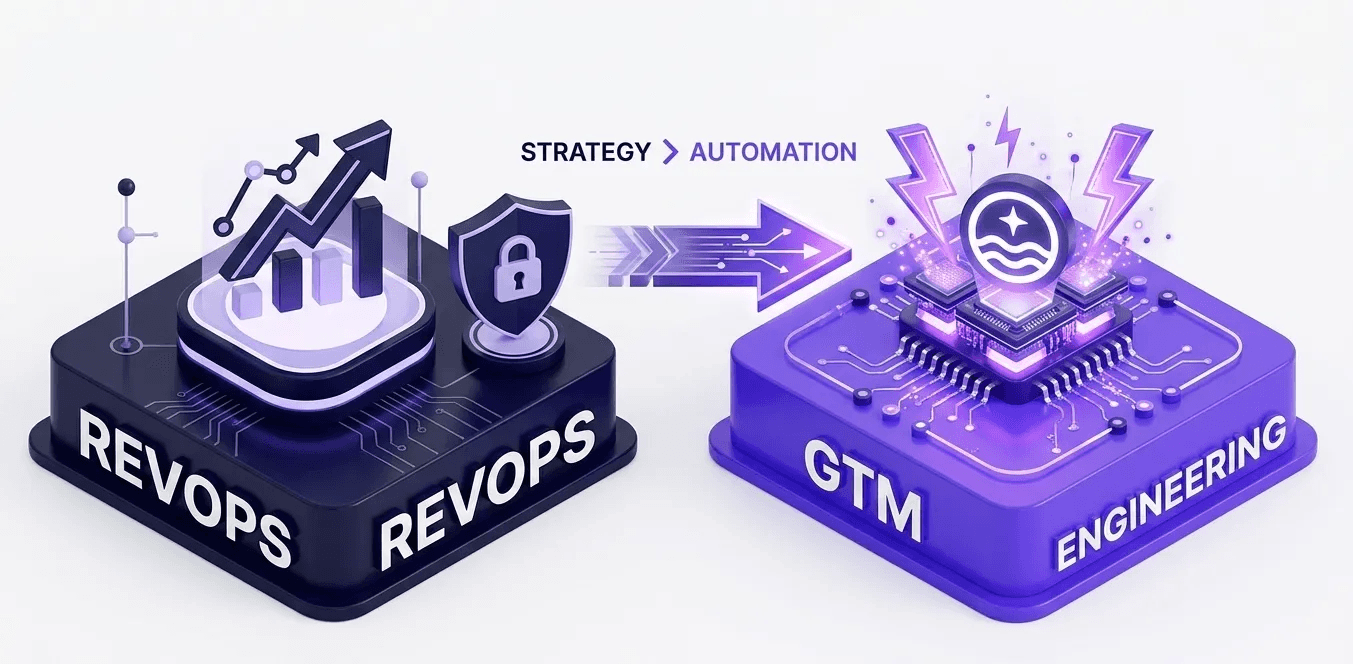
The GTM Engineer differs from RevOps in emphasis rather than in opposition. RevOps defines process strategy, governance, and reporting. GTM Engineering builds the technical systems that execute those processes.
A VP of RevOps decides that all high-scoring inbound leads should reach the enterprise team within five minutes of submission. The GTM Engineer builds the scoring model, configures the routing logic, sets up the alert, and connects it to the CRM assignment rules.
When GTM engineering capacity is absent, automation gaps that could generate pipeline go untapped. Manual processes that hours of workflow building could eliminate continuing consuming rep time. Enrichment runs on a slow manual cycle instead of triggering in real time.
Measured on: Automation coverage across the GTM stack, lead routing speed and accuracy, pipeline generated by automated workflows, and measurable reduction in manual task time across the revenue team.
How GTM Roles Connect: The System in Practice
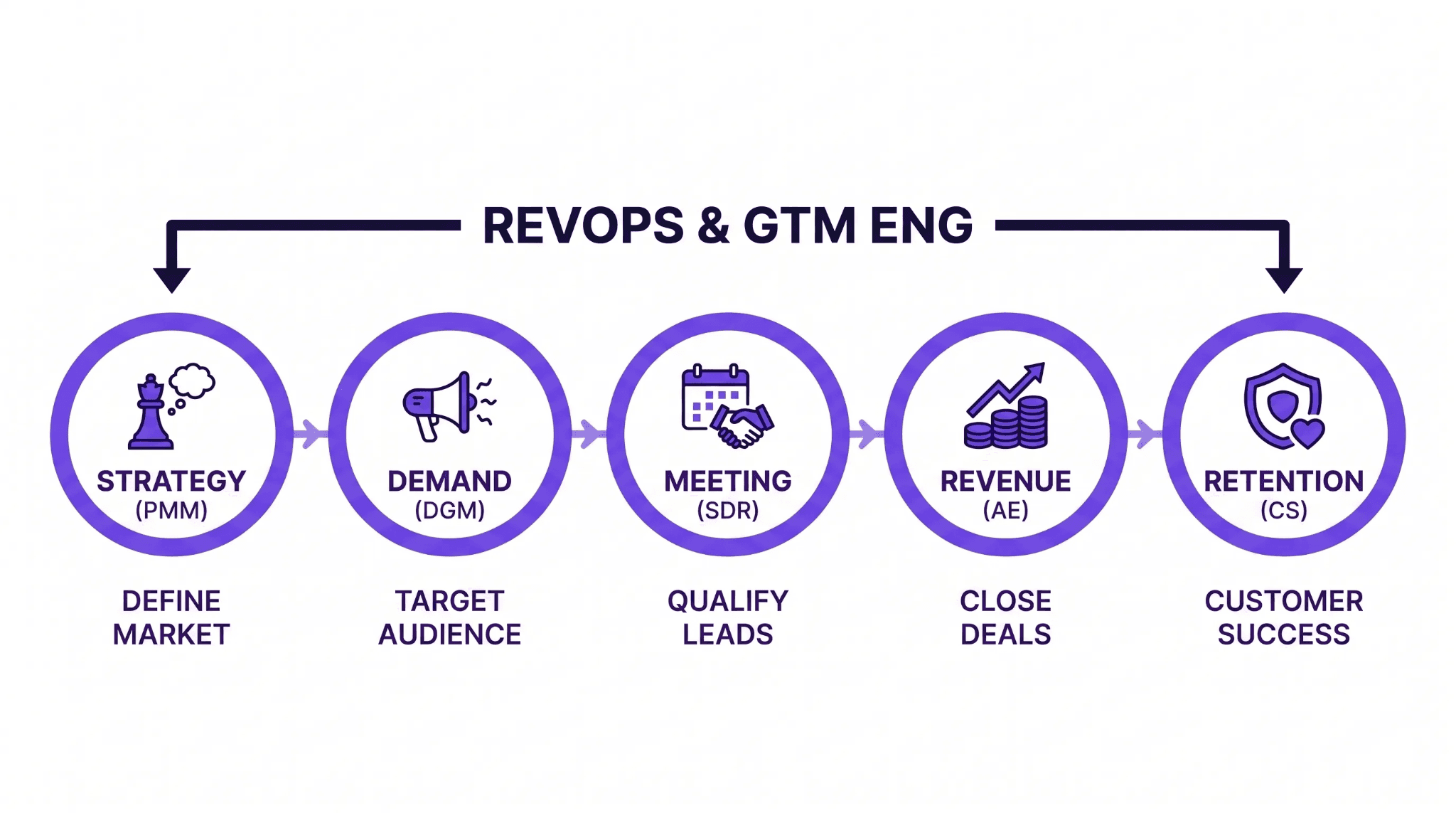
Understanding each role individually is not the same as understanding how the system operates. The most common GTM failures happen at the handoffs between roles, not within any single function. Here is what a healthy GTM system looks like working end to end.
(A) The Product Marketing Manager produces the positioning document that defines the ideal customer, the problem they have, and why this product solves it better than alternatives. Every other function builds on this document.
(B) The DGM uses that positioning to build campaigns. Content marketing creates SEO-driven material around the problems ideal customers search for. Paid media promotes that content and drives direct traffic. Webinars and events generate registered contacts who have self-selected as relevant to the offering.
(C) The SDR or BDR works the leads that marketing generates alongside their own outbound target list. They use the PMM-created messaging as the basis of their outreach. They enrich contact lists with verified emails and phone numbers. They qualify prospects against defined criteria and book meetings for Account Executives.
(D) The Account Executive runs discovery using questions shaped by the PMM's positioning, tailors their demonstration to the pain points the SDR documented, and handles objections using the battlecards the PMM built. They close the deal and hand the new customer to Customer Success.
(E) The Customer Success Manager onboards the customer with a process designed to deliver the specific value the AE sold. They track usage data to identify customers not yet realizing that value and intervene before the renewal conversation becomes a churn conversation.
(F) Revenue Operations ensures every handoff is tracked, every stage definition is agreed upon, every piece of data flows correctly between tools, and every leader has an accurate view of pipeline health and forecast.
(G) The GTM Engineer builds the automation that makes all of these handoffs faster and more reliable. Signal-based lead routing, automated enrichment triggers, CRM workflow automation, and real-time alerts to reps when high-intent signals fire – these are the systems that reduce the delay between a buyer showing intent and a rep acting on it from hours to minutes.
How Data Quality Underpins Every GTM Role?
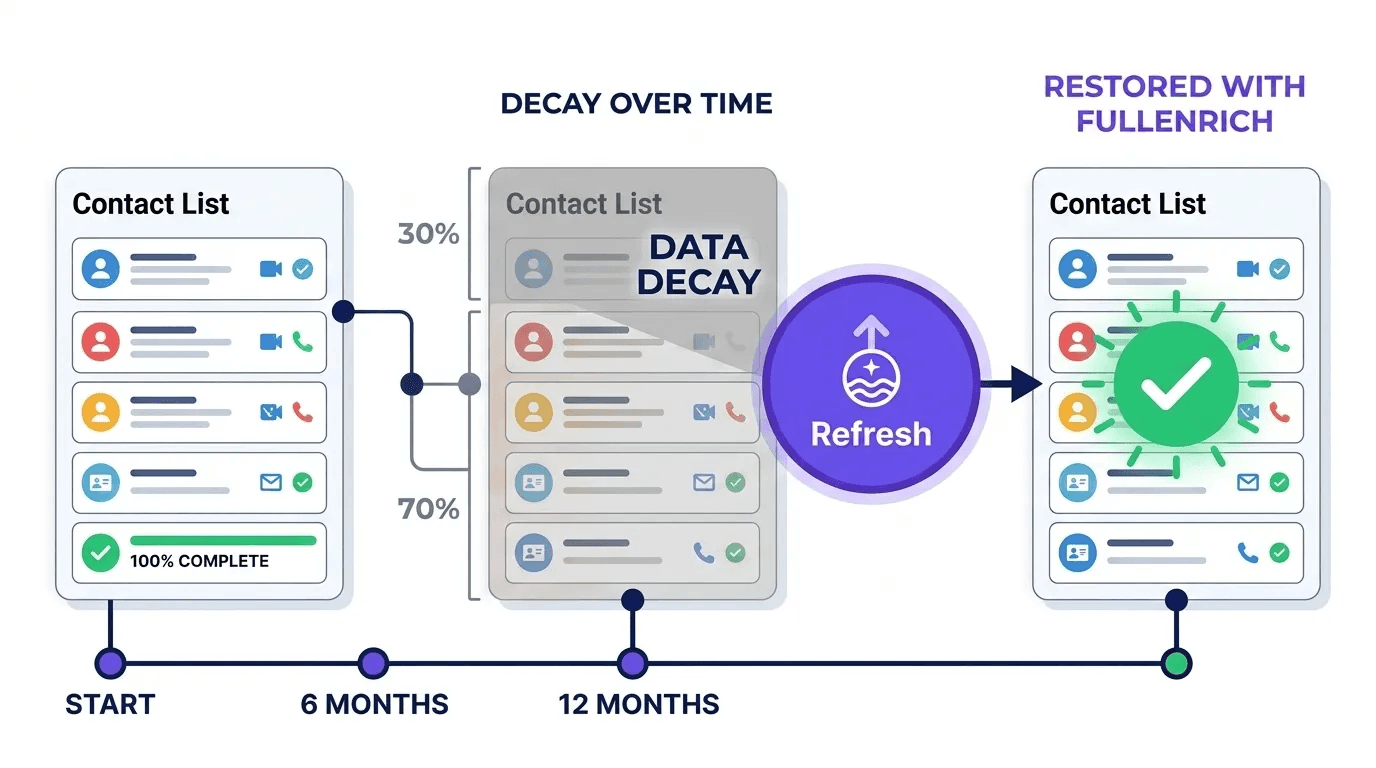
Every role in this system depends on accurate data to function. This is the layer most GTM guides skip entirely, and it is the layer where most GTM systems actually break in practice.
An SDR's outreach sequence can only reach people whose contact details are verified and current. In general observation, it is seen that a list built in January and not refreshed will have one in four contacts degraded by December. The reason is B2B professional contact data decays at 25 to 30 percent per year as people change jobs, companies get acquired, and email addresses change.
It becomes necessary for DGMs, RevOps, and GTM Engineers to have verified data on the table. The GTM Engineer building a routing workflow on contacts without verified emails creates automation that fires but produces no outcomes because the underlying records are broken.
Here arises a question: How to get verified and updated data of a prospect. The answer is simple. Waterfall enrichment platforms like FullEnrich query 20+ premium data providers in sequence until a triple-verified email or phone number is found.
The result is an 80 percent or above match rate on B2B contact lists, compared to the 40 to 60 percent ceiling of single-source tools. Every email is verified to produce a bounce rate under one percent. Credits are charged only on successful enrichment. Landlines are identified and returned free, with unlimited seats on every plan.
For SDRs, higher coverage means more conversations from the same list without additional headcount. For GTM Engineers, it means enrichment automation that produces complete records rather than partial data that breaks downstream workflows. For RevOps, it means CRM records that reflect reality rather than gaps that distort forecasting.
Start enriching your GTM team's contact lists with 50 free credits
When to Hire Each GTM Role?
One of the most common mistakes in building a GTM team is hiring the wrong roles at the wrong stage. An enterprise org chart applied to a 15-person startup wastes resources and creates overhead that slows the company down. Scaling without the right roles creates execution chaos that stalls revenue growth at precisely the moment it should be accelerating.
Early Stage: Pre-Revenue to $1 Million ARR
At this stage, the founding team does most of the GTM work. The first dedicated GTM hire should be a generalist seller; someone who can prospect, run discovery, close deals, and document what works. This person should be comfortable running the full sales cycle and should leave behind a repeatable playbook that a future hire can build on.
A part-time RevOps resource matters earlier than most founders expect. Setting up the CRM correctly, defining the first lifecycle stages, and building the initial routing logic is far easier before multiple reps have each invented their own system. Cleaning up a broken CRM at $5 million ARR costs weeks of work that a few hours of proper initial setup would have prevented.
Growth Stage: $1 Million to $10 Million ARR
This is where GTM begins to specialize. The AE running the full sales cycle gets dedicated SDR support so they can focus on closing. A marketing hire takes over demand generation, freeing the founders from running campaigns. A Customer Success hire takes post-sale responsibility off the AEs who were managing it informally alongside their closing work.
A dedicated RevOps person typically joins around 25 to 50 employees, when the complexity of routing, forecasting, and data management outgrows what can be managed as a side responsibility. The PMM hire tends to follow when win rates are inconsistent between reps, a clear signal that positioning lives only in the founder's head and has never been transferred to the team in a usable, systematic form.
Scaling Stage: $10 Million ARR and Above
At this stage, GTM roles specialize further. SDRs split between inbound qualification and outbound prospecting. Marketing develops separate demand generation, content, and product marketing functions reporting to their own leaders. Customer success segments by account size and expansion potential.
The GTM Engineer becomes a serious consideration when the tech stack has grown complex enough that manual processes between tools are visibly limiting throughput. When an AE spends 20 minutes logging a call that should take 30 seconds with the right automation, or when inbound leads sit for hours before a rep sees them because routing requires a human to move them, the GTM Engineer hire pays for itself quickly.
The DRI Principle: How Ownership Prevents GTM Breakdown
One of the most practical frameworks in modern GTM management is the Directly Responsible Individual (DRI) concept. For every critical GTM output, one person is accountable. Not a team..
Without this clarity, work falls between functions. Who owns which page? Who owns sales onboarding content? Who owns the definition of a Sales Qualified Lead? In organizations without clear answers, these questions are relitigated in every meeting, consuming hours that should be spent on execution.
Research by Ritz Marketing Solutions (University of Connecticut) suggests organizations, without clear ownership definitions, lose up to 30 percent of working time to these clarification loops. A simple DRI mapping written down and shared across the team removes this cost entirely.
A practical DRI mapping for a growth-stage GTM team looks like this:
GTM Output | Directly Responsible Individual |
|---|---|
ICP definition and targeting criteria | PMM with input from Sales and RevOps |
Positioning and messaging | PMM |
Inbound lead routing rules | RevOps |
SDR qualification criteria | SDR Manager aligned with AE leadership |
Competitive battlecards | PMM |
Sales stage definitions | RevOps |
Onboarding process design | Customer Success |
Forecast accuracy | RevOps |
Tech stack and workflow automation | GTM Engineer governed by RevOps |
Expansion opportunity identification | Customer Success |
Writing these down is not bureaucracy. It is the practical difference between a GTM team that executes cleanly and one that relitigates ownership in every cross-functional thread.
Frequently Asked Questions
What is a go-to-market role?
A go-to-market role is any position whose primary function is connecting a product or service with buyers and driving revenue. GTM roles span marketing, sales, customer success, and revenue operations. Together they form a system responsible for finding, converting, and retaining customers throughout the full customer lifecycle.
What is the difference between an SDR and a BDR?
The terms are used interchangeably in most organizations. When companies make a distinction, SDRs handle inbound lead qualification, following up on marketing-generated leads, while BDRs handle outbound prospecting into accounts that have shown no prior interest. Both roles are measured on qualified meetings booked for Account Executives rather than on closed revenue.
What is RevOps and why does it matter?
Revenue Operations manages the systems, data, and processes the entire GTM team runs on. RevOps owns the CRM, lead routing logic, lifecycle stage definitions, and forecasting models. When RevOps is absent, CRM data becomes unreliable, leads fall through the cracks, and forecasting becomes guesswork. Most B2B companies need a dedicated RevOps hire by the time they have five or more revenue-generating people and a tech stack of more than three or four tools.
What is a GTM Engineer and how is it different from RevOps?
A GTM Engineer builds and maintains the automated systems that make the GTM team operate faster and more efficiently. RevOps defines the strategy, processes, and governance. GTM Engineering builds the technical systems that execute those processes.
When should a company hire a Product Marketing Manager?
Hire a PMM when win rates vary significantly between reps, typically a sign that positioning exists only in the founder's head and has never been systematically transferred. This usually happens around 50 to 100 employees, or when the company scales past three or four salespeople running deals simultaneously. If reps tell different stories about the product and there is no canonical positioning document any of them can point to, the PMM hire is already overdue.
How does contact data quality affect GTM roles?
Every GTM role depends on accurate contact and company data. SDRs cannot reach contacts whose emails are wrong or missing. GTM Engineers build automated workflows on top of enrichment data – bad inputs produce bad outputs at scale. RevOps forecasting models built on incomplete CRM records produce inaccurate pipeline visibility. Waterfall enrichment across 20 or more providers, as FullEnrich provides, delivers the 80 percent or above contact coverage that makes every GTM role more effective. Start with 50 free credits atfullenrich.com.
Related Resources
- Ideal Customer Profile (ICP) — define who your GTM targets
- GTM Engineer — the technical role automating go-to-market
- TAM Mapping — size the market your GTM addresses
- Email Enrichment — the data layer powering outbound GTM
Frequently Asked Questions
What does GTM stand for?
GTM stands for Go-to-Market — the strategy and process a company uses to bring a product to market, reach target customers, and generate revenue.
What is a GTM strategy?
A GTM strategy is the coordinated plan that aligns marketing, sales, product, and partnerships to acquire and retain customers. It defines who you sell to (ICP), how you reach them (channels), and how you convert interest into revenue (sales motion).
What is the difference between GTM and marketing?
Marketing is one channel within a GTM strategy. GTM coordinates the entire revenue path — including sales execution, pricing, partnerships, and customer expansion. Great marketing with misaligned sales is a broken GTM.
What is a GTM position?
A GTM position is any role focused on bringing a product to market and generating revenue — including demand gen, SDRs, AEs, product marketing, RevOps, partnerships, and the emerging GTM engineer role.