

B2B lead generation is the exact process of identifying, attracting, and capturing the contact information of other businesses that are a perfect fit for your product or service.
You can no longer blast out thousands of generic emails and expect your sales pipeline to stay full. Buyers ignore mass outreach, and spam filters block lazy cold emails. If your strategy relies entirely on volume instead of precision, you are actively wasting money and burning out your sales team.
To win consistently, you need a targeted approach. A strong lead generation system requires a mix of inbound marketing to attract interested buyers and highly specific outbound sales to reach the right decision-makers. In this guide, we will break down the exact process, nine specific strategies that work right now, and the top seven software tools you need to automate your lead generation process.
B2B vs B2C Lead Generation
B2B lead generation targets groups of professionals seeking a clear financial return, whereas B2C lead generation targets individual consumers driven by personal emotions or immediate convenience.
Because you are selling to a business, the process requires a great deal of patience. A B2B deal often costs tens of thousands of dollars and requires approval from an entire buying committee. This means your lead generation efforts must focus on building long-term trust through educational content, deep-dive case studies, and direct consultative outreach.
In contrast, B2C lead generation moves much faster. A consumer buying a pair of shoes online does not need approval from a legal team or a procurement department. B2C marketing relies heavily on highly visual advertisements, influencer partnerships, and limited-time discount codes to trigger a quick, one-click purchase.
What is B2B lead generation?
B2B lead generation is the process of identifying, attracting, and capturing the contact information of other businesses that are an ideal fit for your product or service, giving your sales team a clear target to reach out to.
It acts as the critical bridge between your marketing efforts and your active sales pipeline. Instead of waiting for companies to magically stumble upon your website, lead generation means you are actively hunting for decision-makers who have a specific operational problem you can solve.
The end goal is not just to collect a massive list of random email addresses. A true B2B lead generation engine is designed to find highly qualified prospects who actually have the budget and authority to buy.
Why is B2B Lead Generation Important?
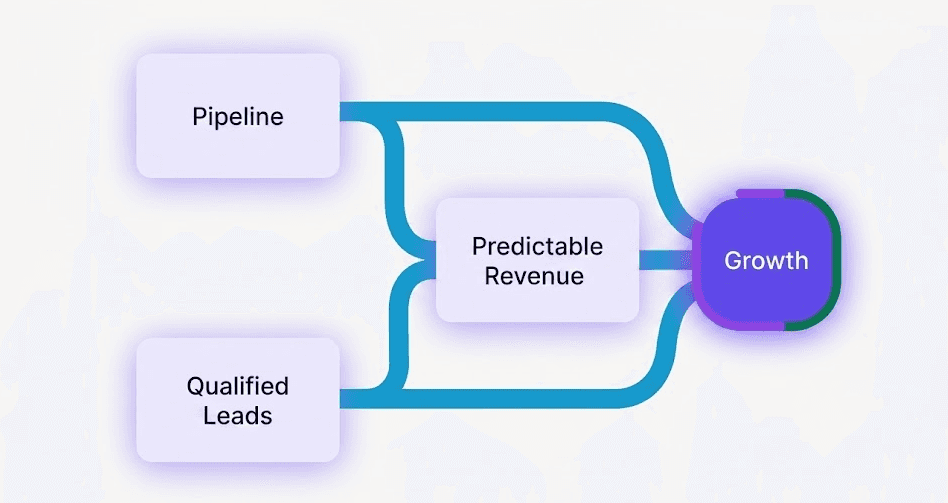
B2B lead generation is important because it builds a predictable and reliable revenue pipeline for your company. If you do not have a specific system to actively find and engage new buyers, your sales team is left guessing, and your business will eventually run out of people to sell to.
Hoping that buyers will simply come across your website is not a valid strategy. Modern B2B buyers do a massive amount of private research before they ever agree to speak with a vendor. A strong lead generation process puts your brand in front of them early, while they are still trying to understand their operational problems.
Most importantly, a proper system protects your sales team's time. It filters out the bad fits before a meeting ever happens. By consistently generating and qualifying the right leads, your reps spend their days actually closing high-value contracts instead of wasting hours talking to companies that lack the budget to buy.
Types of B2B Leads
The main types of B2B leads are Information Qualified Leads (IQLs), Marketing Qualified Leads (MQLs), Sales Accepted Leads (SALs), Sales Qualified Leads (SQLs), Product Qualified Leads (PQLs), cold leads, and warm leads. Grouping your leads by their exact stage in the buying journey tells your team exactly how to approach them.
Here is the exact breakdown of each type:
Information Qualified Leads (IQLs): These are early-stage prospects just starting their research. They usually trade their contact information for basic educational content, like a free industry report, but they are not ready to buy a solution yet.
Marketing Qualified Leads (MQLs): These prospects engage directly with your targeted marketing campaigns. They might download a specific case study or attend a product webinar, showing clear interest but still needing nurturing before a direct sales pitch.
Sales Accepted Leads (SALs): These are the MQLs that your sales team has officially reviewed and accepted. The reps confirm the prospect fits your ideal customer profile and take ownership of the next steps.
Sales Qualified Leads (SQLs): These are the highly vetted prospects who are completely ready for actual execution. They have the budget, the authority, and an immediate need, meaning the sales team can move straight into pitching and closing the deal.
Product Qualified Leads (PQLs): These buyers have already experienced your product's value through a free trial or freemium account. Because they actively use the software to solve a problem, they are prime targets for a paid upgrade.
Cold leads: A cold lead perfectly matches your target profile but has zero prior contact with your company. Reaching out to them requires a highly personalized introduction to grab their attention from scratch.
Warm leads: A warm lead already knows your brand, follows your content, or has interacted with your company in the past. Because the familiarity is already there, the initial sales conversation is much easier and faster.
B2B Lead Generation Process
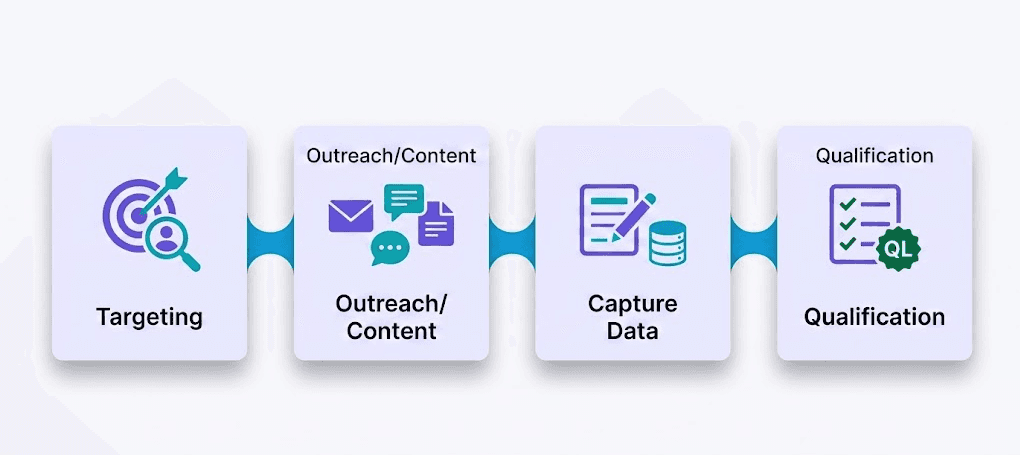
The B2B lead generation process is the exact framework a business uses to turn an anonymous market into a pipeline of qualified sales opportunities. It is not about casting a wide net and hoping someone bites. It is a highly calculated, four-step cycle. If you execute these steps correctly, you build a predictable revenue engine. If you skip one, your pipeline falls apart.
Finding the target audience
You cannot generate leads until you know exactly who you want to talk to. This step goes far beyond basic industry categories. You have to build a highly specific Ideal Customer Profile (ICP) and map out your B2B buyer personas.
To do this right, you need to research three specific areas:
Firmographics: The hard facts about the target company. What is their annual revenue? How many employees do they have? Are they a startup or an established enterprise?
Technographics: The software and tools they currently use. If you sell a specific CRM integration, you need to know if they actually use that CRM before you ever spend money trying to reach them.
Buyer personas: The actual humans making the decision. You have to identify the exact job titles of the people who experience the daily problem (the end-users) and the people who actually sign the checks (the executive buyers). Once you map out this buying committee, you know exactly who to target and what specific pain points to bring up.
Reaching out or attracting them with content
Once your target list is built, you have to get on their radar. You can do this actively through outbound outreach or passively through inbound marketing.
Outbound means taking the data you just researched and using it to send highly personalized cold emails, make direct phone calls, or send messages on LinkedIn. Because you are interrupting their day, your message must focus entirely on fixing a specific operational issue they face.
Inbound means publishing authoritative content like original industry research, SEO-focused guides, or video breakdowns that pull buyers directly to your website. You attract them by proving you are an expert at solving the exact problems they are searching for on Google.
Capturing their data (usually an email or phone number)
Earning attention is useless if you cannot follow up. To turn an anonymous website visitor into an actionable lead, you need a secure way to capture their contact details. Your sales team needs a verified corporate email address and a direct phone number, not a personal Gmail account.
The most effective way to get this information is through a clear value exchange. A buyer will not hand over their phone number just to join a generic mailing list. You have to offer a high-value asset, such as a custom pricing calculator, an exclusive benchmark report, or a ready-to-use spreadsheet template. The buyer gets a free resource that solves an immediate problem, and you get the verified data you need to start a sales conversation.
Qualifying them to make sure they have the budget and need
Not everyone who downloads a free template is ready to sign a massive annual contract. Before your sales reps spend hours researching an account and building a custom pitch deck, you have to rigorously qualify the lead.
This step involves asking direct discovery questions to confirm a few critical details. Do they have a budget actually allocated for a solution? Does the person you are talking to have the authority to make a final purchasing decision? Is their current problem severe enough to fix this quarter, or are they just casually browsing? If they lack the money or the urgency, you must disqualify them instantly. This protects your team's time and ensures they only focus on buyers who can actually close a deal.
11 B2B Lead Generation Strategies
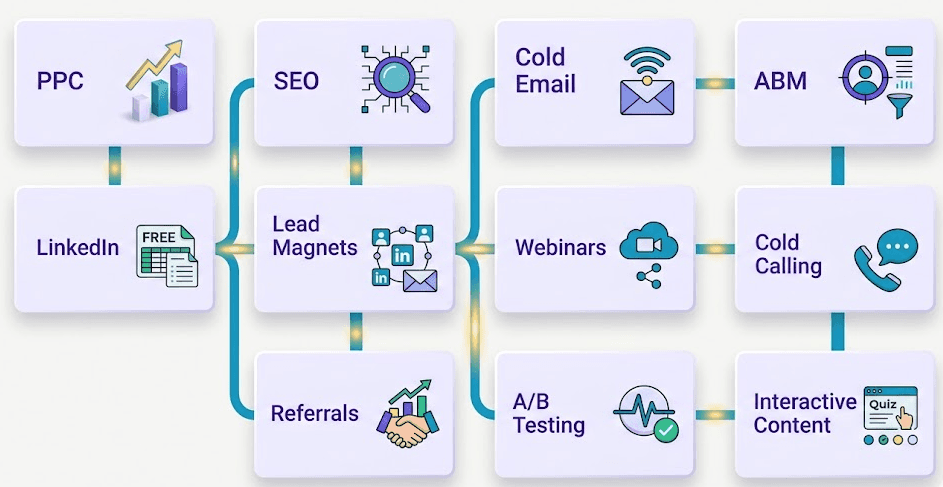
The most effective B2B lead generation strategies rely on a calculated mix of inbound marketing to attract buyers and precise outbound sales to engage them directly. Relying on a single channel leaves your revenue completely vulnerable to market shifts or algorithm updates. To build a consistent and predictable pipeline, you must surround your ideal buyer across multiple touchpoints and test what actually works.
Here is an in-depth breakdown of the first three foundational tactics to capture high-value prospects.
1. Pay-per-click (PPC) advertising
PPC advertising puts your company at the exact top of search engine results, the second a buyer looks for a solution. Unlike social media ads that interrupt a scrolling user, search ads capture high-intent traffic. When a director of operations types "automated inventory routing software" into Google, this means they have a budget and an immediate problem to solve.
To execute PPC effectively in the B2B space, you must stop bidding on broad, generic industry terms. Because B2B keywords are expensive, broad terms will quickly drain your budget on unqualified clicks. You need to bid aggressively on long-tail, highly specific pain-point keywords. Most importantly, never send a paid click to your general homepage.
You must direct that traffic to a dedicated, conversion-optimized landing page that matches their exact search query and offers a single, clear next step, such as booking a live demonstration.
2. B2B SEO and content marketing
Search engine optimization (SEO) and content marketing work together to pull qualified buyers to your website organically. Instead of continuously paying to rent attention through ads, you build a permanent asset that drives traffic by answering the specific questions your target audience asks every day.
A successful B2B content strategy completely ignores high-volume vanity metrics and focuses entirely on bottom-of-the-funnel intent. You achieve this by publishing in-depth case studies, original industry benchmark data, and highly technical guides that solve actual operational problems.
When you consistently rank for these niche, highly specific queries, you build massive brand authority. The prospect learns from your content and begins to trust your expertise long before they ever agree to a formal sales call, which drastically shortens your eventual sales cycle length.
3. Hyper-personalized cold email outreach
Cold email involves sending highly targeted, plain-text messages directly to a decision-maker's inbox to initiate a business conversation. Mass-blasting a generic, automated template to a purchased list of 10,000 contacts is not a strategy; it is spam, and it will permanently destroy your company's email domain reputation.
Modern, high-converting cold email requires intense upfront research. Before you send a single message, your sales reps must investigate the prospect's current company news, identify a specific structural problem their department likely faces, and craft a short message focused entirely on diagnosing that pain point.
You should never pitch your product's technical features in the first email. Your only objective is to secure a brief, low-friction introductory call by proving to the buyer that you understand the exact operational struggles they deal with every week.
4. Account-based marketing (ABM)
Account-based marketing flips the traditional lead generation model upside down. Instead of casting a wide net to capture as many random leads as possible, ABM requires you to identify your absolute highest-value target accounts first and treat each one as its own individual market. Marketing and sales teams must work in total alignment to surround the entire buying committee simultaneously.
This means running highly specific ad campaigns, sending custom direct mail, and initiating personalized outreach directly to the CEO, CFO, and end-users of that single company. Because you focus entirely on securing a massive enterprise deal, your messaging speaks directly to that specific company's internal goals and recent corporate developments, making it incredibly effective for high-ticket sales.
5. High-value lead magnets
A B2B buyer will not trade their verified corporate email address for a generic newsletter subscription. To capture high-quality data, you must offer a high-value lead magnet. This is a premium, highly actionable resource that solves an immediate, painful problem for the prospect. Instead of writing basic ebooks, smart B2B companies create plug-and-play spreadsheet templates, interactive ROI calculators, proprietary industry benchmark reports, or step-by-step audit checklists.
The key is utility. When the buyer uses your free resource to eliminate a small problem in their daily workflow, they instantly associate your brand with competence and value. This builds immediate trust, making your sales team's follow-up call feel like a natural next step rather than a cold interruption.
6. LinkedIn prospecting
LinkedIn is the most accurate B2B database in the world, making it a critical channel for finding and engaging decision-makers. A strong LinkedIn strategy mixes organic social selling with highly targeted paid efforts. Organically, your sales reps should build personal authority by sharing original insights, commenting on industry trends, and naturally participating in discussions where your buyers spend their time.
On the paid side, tools like LinkedIn Sales Navigator are absolute necessities. Sales Navigator allows you to filter the entire platform by strict firmographic data like company headcount, recent funding, or specific job title changes, so you can find the exact prospects you need. You can then use InMail to send direct, personalized messages or run targeted LinkedIn ads to put your content straight into the feeds of the exact buying committee you want to reach.
7. Hosting live educational webinars
Hosting a live webinar allows you to showcase your exact product expertise while actively building a list of high-intent leads. When a professional registers for a 45-minute live session about a highly specific industry problem, they are telling you they currently experience that exact pain point.
A successful B2B webinar does not feel like a long, disguised sales pitch. Instead, it operates as a valuable educational session where you break down complex strategies, share screen recordings, and answer direct questions in real-time. Everyone who signs up provides their contact details, giving your sales team a warm, engaged list of attendees to follow up with. You can also record the session and use it as a permanent lead magnet on your website to continuously generate leads long after the live event ends.
8. Targeted cold calling
Picking up the phone remains one of the fastest ways to cut through the digital noise and secure a meeting. However, blind cold calling, dialing hundreds of random numbers, and reading a generic script is completely dead. Targeted cold calling requires extreme precision. Before the rep dials the number, they must know exactly who the prospect is, what their company does, and what specific operational problem they are likely facing.
The phone call serves as a direct, real-time diagnostic conversation. Instead of pushing product features, the rep asks high-level questions to confirm a pain point. Because you bypass the crowded email inbox entirely, a well-executed cold call can generate a highly qualified lead in five minutes.
9. Customer referral programs
Your absolute best source of new business is the group of people who already pay you. A structured customer referral program actively incentivizes your current, happy clients to introduce your brand to their professional network. You might offer them a discount on their next renewal, a cash bonus, or a free service upgrade in exchange for a warm introduction.
Because these leads come directly from a trusted peer, the initial barrier of skepticism is already gone. Referral leads typically have a much shorter sales cycle, a higher win rate, and a significantly lower acquisition cost than any lead generated through cold outreach.
10. A/B testing and campaign optimization
You should never rely on gut feelings to decide what marketing message works best. A/B testing turns lead generation into a strict science. It involves running two slightly different versions of a campaign simultaneously to see which one performs better.
You might test two different email subject lines, two variations of a landing page headline, or two different call-to-action buttons. By letting the actual conversion data dictate your strategy, you eliminate guesswork. Continuous testing allows you to incrementally improve your conversion rates over time, which directly lowers your cost per lead and maximizes your overall marketing budget.
11. Interactive content formats
Static PDFs and standard blog posts are slowly losing their appeal as buyers demand more engaging experiences. Interactive content forces the prospect to actively participate to get value. You can build maturity assessments, custom pricing calculators, or diagnostic quizzes that require the user to input their specific business metrics.
To see their final, personalized results, they must enter their work email address. This strategy not only generates a high-intent lead, but the exact answers the prospect provides during the quiz give your sales team a goldmine of qualification data to use on the first discovery call.
What are B2B Lead Generation Tools and why use them?
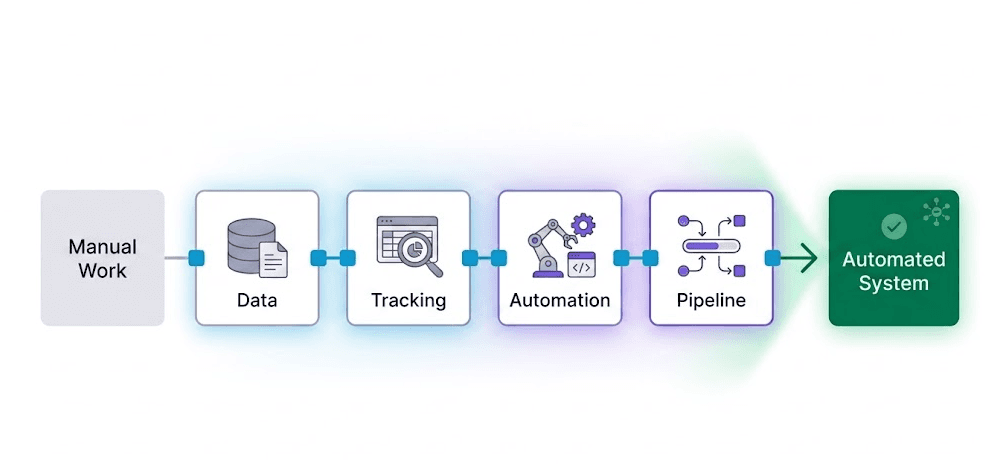
B2B lead generation tools are specialized software applications designed to automate the process of finding, organizing, and reaching out to potential corporate buyers. They handle the complex task of gathering contact data, qualifying prospects, and tracking interactions so your sales team can focus entirely on having real, human conversations.
Trying to run multiple different lead generation strategies manually using basic spreadsheets will quickly break your internal systems. As your prospect list grows, tracking who opened an email, who needs a follow-up call, and who requested a demo becomes impossible. You use lead generation software to build a scalable, predictable pipeline that prevents high-value buyers from slipping through the cracks.
Here is exactly why top-performing sales teams rely on these tools:
Eliminating manual data entry: Sales reps often spend hours hunting for email addresses and copying data into a CRM. Lead generation tools automate this entire process, allowing your team to spend their time actually selling rather than doing administrative paperwork.
High data accuracy: Sending messages to outdated or fake email addresses will cause your emails to bounce, which destroys your domain reputation. The right tools constantly verify contact information to ensure your outreach actually lands in a primary inbox.
Tracking buyer intent: Smart software tracks how prospects interact with your brand. If a lead opens your email three times and clicks a link to your pricing page, the tool instantly alerts your sales rep to call them while their interest is at its peak.
Automating the follow-up: Prospects rarely reply to the first email. It usually takes five or more touchpoints to get a response. Lead engagement tools allow you to build an automated sequence that sends perfectly timed follow-ups without requiring your reps to hit the send button manually.
7 Best B2B Lead Generation Tools
A small consulting agency needs completely different features than a massive enterprise software company. The tools you choose will act as the engine for your entire revenue operation, so you have to pick the platforms that actually fit your daily workflow.
We have gathered seven of the most reliable platforms available. This list covers everything you need to build a complete pipeline, from finding verified email addresses to designing high-converting landing pages and managing your final sales contracts.
Quick comparison of the top lead generation software
If you are short on time, use this quick breakdown to compare the top options side-by-side. It highlights their absolute best use case, a standout core feature, baseline pricing, and their current user ratings.
Tool | Best For | Key Feature | Starting Price (billed annually) | G2 Rating |
FullEnrich | Finding verified B2B contact data | Multi-vendor waterfall enrichment | $26/month | 4.8/5 |
HubSpot | All-in-one inbound marketing | Automated lead capture workflows | Free Tier | 4.4/5 |
Salesforce | Large enterprise sales teams | Advanced CRM data customization | Free Tier | 4.4/5 |
LeadFeeder | Tracking anonymous website visitors | Identifies companies browsing your site | €99 /month | 4.3/5 |
Pipedrive | Visual pipeline management | Activity-based sales tracking | $14/month | 4.3/ 5 |
Kit | Email marketing automation | Visual email sequencing | $33/month | 4.4/5 |
Apollo.io | Sales intelligence and outreach | Massive B2B contact database | $49/user/month | 4.7/5 |
1. FullEnrich
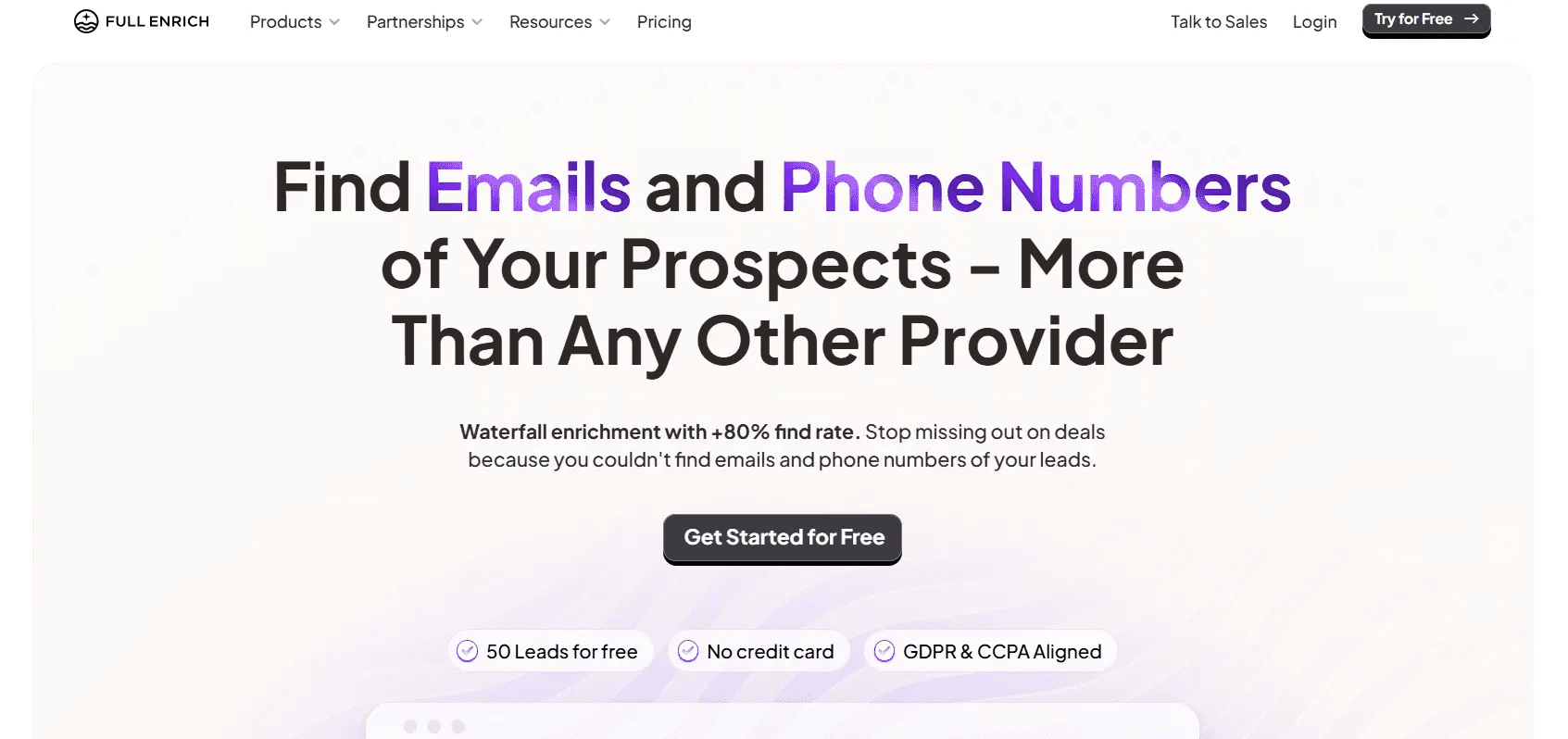
FullEnrich is built specifically to solve the data accuracy problem in B2B lead generation. Relying on a single data provider often leaves you with missing phone numbers or outdated emails. FullEnrich uses a unique waterfall enrichment approach, querying over 20 premium data vendors simultaneously to achieve an 85%+ match rate. It acts as an aggregator, pulling the best available contact details so your sales team can execute highly targeted prospecting without manually hunting for information across the internet.
Beyond finding data, the platform ensures that the contact information is actually usable. It runs a triple validation process to verify every single email address, bringing bounce rates down to under 1%. This protects your domain reputation and keeps your cold outreach landing in primary inboxes rather than spam folders. The software also connects directly into your existing workflow, syncing data easily into CRMs and automation platforms like HubSpot and Zapier to keep your pipeline organized.
Pricing plans:
Starter: $26/month (billed annually). Provides 6,000 credits per year and includes features like reverse email lookup, live company and person enrichment, Personal Email Enrichment for recruiters, etc.
Pro: $49/month (billed annually). Provides 12,000 credits per year and includes all the features of the Starter plan.
Scale: Custom pricing starting at $500/month. Designed for enterprise needs with custom monthly credit allocations and SSO capabilities.
2. HubSpot
HubSpot operates as a complete all-in-one engine for your marketing and sales teams. Instead of forcing you to stitch together five different platforms, it provides a centralized CRM, an entire marketing database, and advanced lead scouting features in one place. The platform heavily focuses on inbound marketing, giving you the tools to attract buyers through content, capture their information on custom landing pages, and track their behavior before passing them to the sales team.
To speed up the daily workflow, HubSpot includes built-in AI capabilities that assist with content creation, writing sales templates, and summarizing long email threads. With advanced automated nurturing sequences, the system ensures that every marketing-qualified lead receives the right follow-up message at the exact right time.
Pricing plans:
Free: $0/month. Offers basic CRM functionality and limited contact management.
Starter: $9/month per seat (billed annually). Includes 500 HubSpot credits, 1,000 marketing contacts, CRM segmentation, ad management, and ad retargeting.
Professional: $800/month (billed annually). Includes three core seats, 3,000 HubSpot credits, 2,000 marketing contacts, omnichannel marketing automation, and custom reporting.
Enterprise: $3,600/month (billed annually). Includes five core seats, 5,000 HubSpot credits, 10,000 marketing contacts, multi-touch revenue attribution, lookalike lists, and advanced journey automation.
3. Salesforce
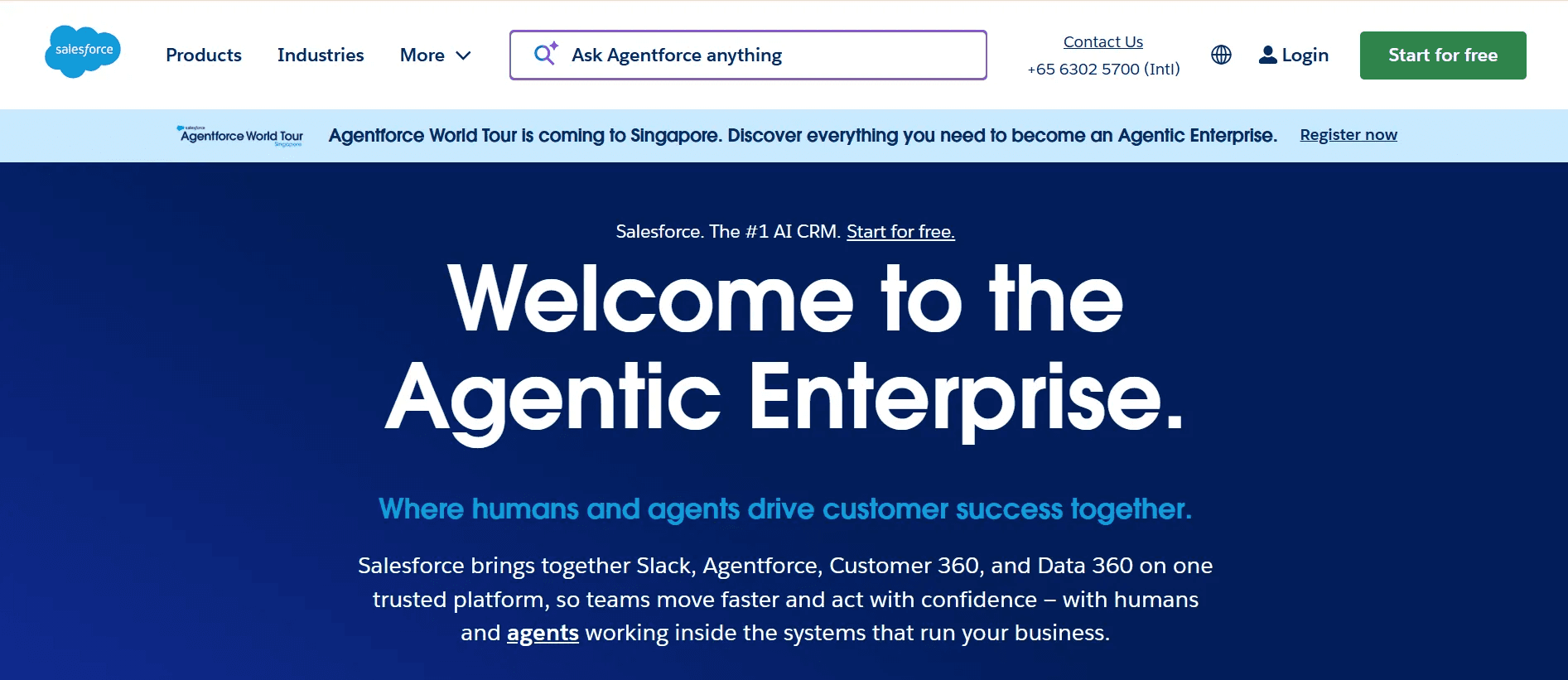
Salesforce is the industry standard for managing complex B2B sales pipelines. It acts as a unified data platform, breaking down the silos between your marketing and sales departments to ensure both teams work from the same information. With comprehensive analytics and automated lead routing, managers can track the real-time health of every deal and accurately forecast quarterly revenue. It aligns the entire organization around a single source of truth.
The platform also introduces Agentforce, an AI-powered personalization agent designed to build and execute multi-step campaigns. This AI evaluates incoming leads, assigns them a predictive score, and helps reps create highly customized outreach material based on the buyer's history. By automating the nurturing and scoring process, Salesforce ensures high-value accounts get immediate attention while keeping early-stage leads engaged until they are ready to buy.
Pricing plans:
Free Suite: $0/month (maximum of 2 users). Includes connected Slack conversations and simple email marketing.
Starter Suite: $25/month per user. Includes built-in sales flows, lead routing, dynamic email marketing, and analytics.
Pro Suite: $100/month per user. Adds sales quoting & forecasting, and access to the AppExchange.
Enterprise: $175/month per user (billed annually). Includes conversation intelligence and access to Agentforce.
Unlimited: $350/month per user (billed annually). Includes sales engagement, a premier success plan, and a full sandbox.
Agentforce 1 Sales: $550/month per user. Includes unmetered Agentforce usage for employees, 1 million Flex credits, and 2.5 million data cloud credits per organization per year.
4. Leadfeeder
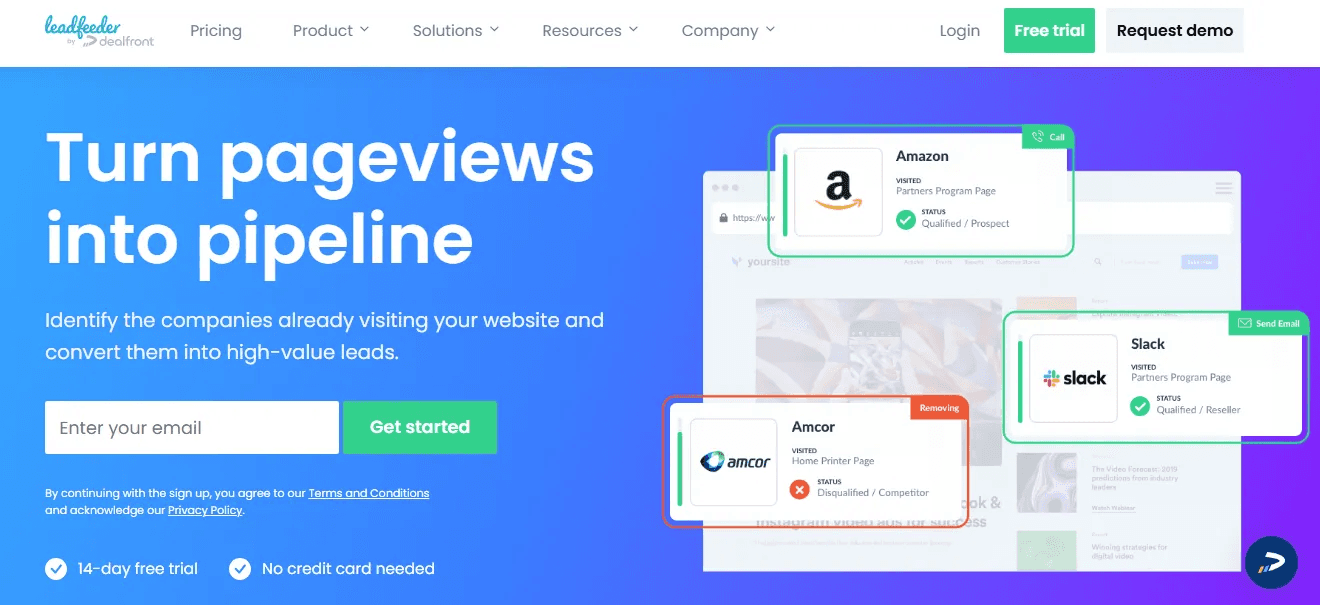
Most people who visit your website leave without ever filling out a contact form or booking a call. Leadfeeder fixes this massive blind spot. It tracks the IP addresses of your visitors and matches them against a huge database of over 60 million companies and 400 million+ contacts. If you run a SaaS company or marketing agency, this means you can see exactly which target accounts are reading your pricing page right now.
Instead of guessing who to cold call, your sales team gets a list of high-intent leads. The platform automatically scores and prioritizes these visitors based on how they act on your site. It also connects directly to your CRM.
Pricing plans:
Lite: $0/month. Reveals up to 100 companies per month and gives you a 7-day history of company visits.
Website Visitor Identification: Starts at €99/month (billed annually). Identifies unlimited companies and provides full company details along with unlimited visitor history.
Platform: Starts at €399/month (billed annually). Includes over 100+ advanced filters, AI enrichment, and the ability to score and prioritize leads from both your website and their global database.
5. Pipedrive
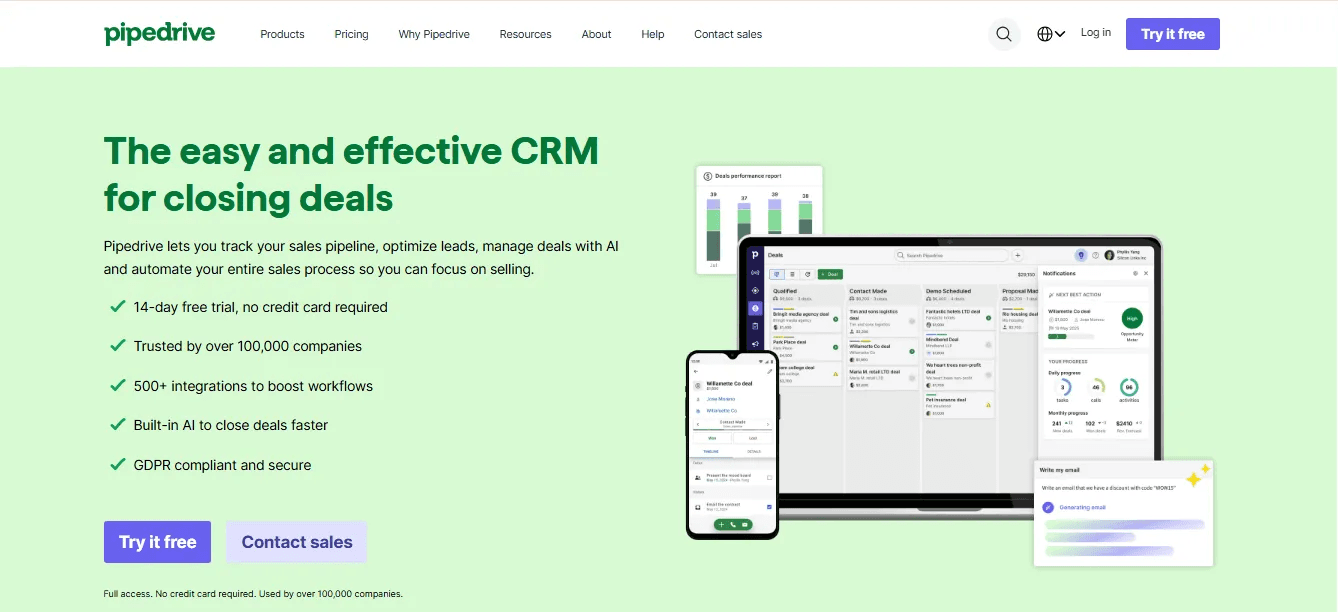
Pipedrive is a CRM designed to keep your sales pipeline incredibly visual. Instead of clicking through confusing spreadsheets, you get a clean drag-and-drop board that shows exactly where every deal stands. It includes an AI sales assistant that reviews your open deals and tells your reps which prospects are most likely to close, keeping everyone focused on the best opportunities.
To bring in new prospects, you can use their LeadBooster add-on, which gives you a custom chatbot and live chat tools to qualify people while they browse your site. Pipedrive also makes it easy to build automated workflows and connects easily with your other marketing tools.
Pricing plans:
Lite: $14/user/month (billed annually). Includes AI-powered report creation and a real-time sales feed.
Growth: $24/user/month (billed annually). Adds automation, nurturing sequences, a meeting scheduler, and a contacts timeline.
Premium: $49/user/month (billed annually). Includes AI-powered multi-email tools, contracts, e-signatures, and company data enrichment.
Ultimate: $69/user/month (billed annually). Offers extended phone support, a sandbox testing account, and fortified account security with rules and alerts.
6. Kit
Kit is a top choice if you rely on email marketing to generate and nurture leads. It uses advanced tag-based segmentation rather than rigid lists. When someone clicks a specific link or fills out a form, the system automatically tags them. This lets you send highly relevant emails that match their exact interests, which drastically improves how many people actually read your messages.
The platform also gives you a visual, flowchart-like interface for building automations. Plus, it includes an easy builder for landing pages and forms to help you capture new subscribers directly from your website.
Pricing plans:
Newsletter: $0/month. Supports up to 10,000 subscribers. Includes the ability to sell digital products and subscriptions, audience tagging, and basic segmentation.
Creator: Starts at $33/month (billed annually for up to 1,000 subscribers). Includes A/B testing for subject lines, the ability to survey subscribers with polls, and removes the Kit branding from your emails.
Creator Pro: Starts at $66/month (billed annually for up to 1,000 subscribers). Adds priority email and chat support, the ability to edit links in already sent broadcasts, and a newsletter referral system.
(Note: Kit pricing scales with your audience size. If your list grows to 205,000 subscribers, the Creator plan increases to $1,066/month, and the Pro plan increases to $1,316/month.
7. Apollo.io
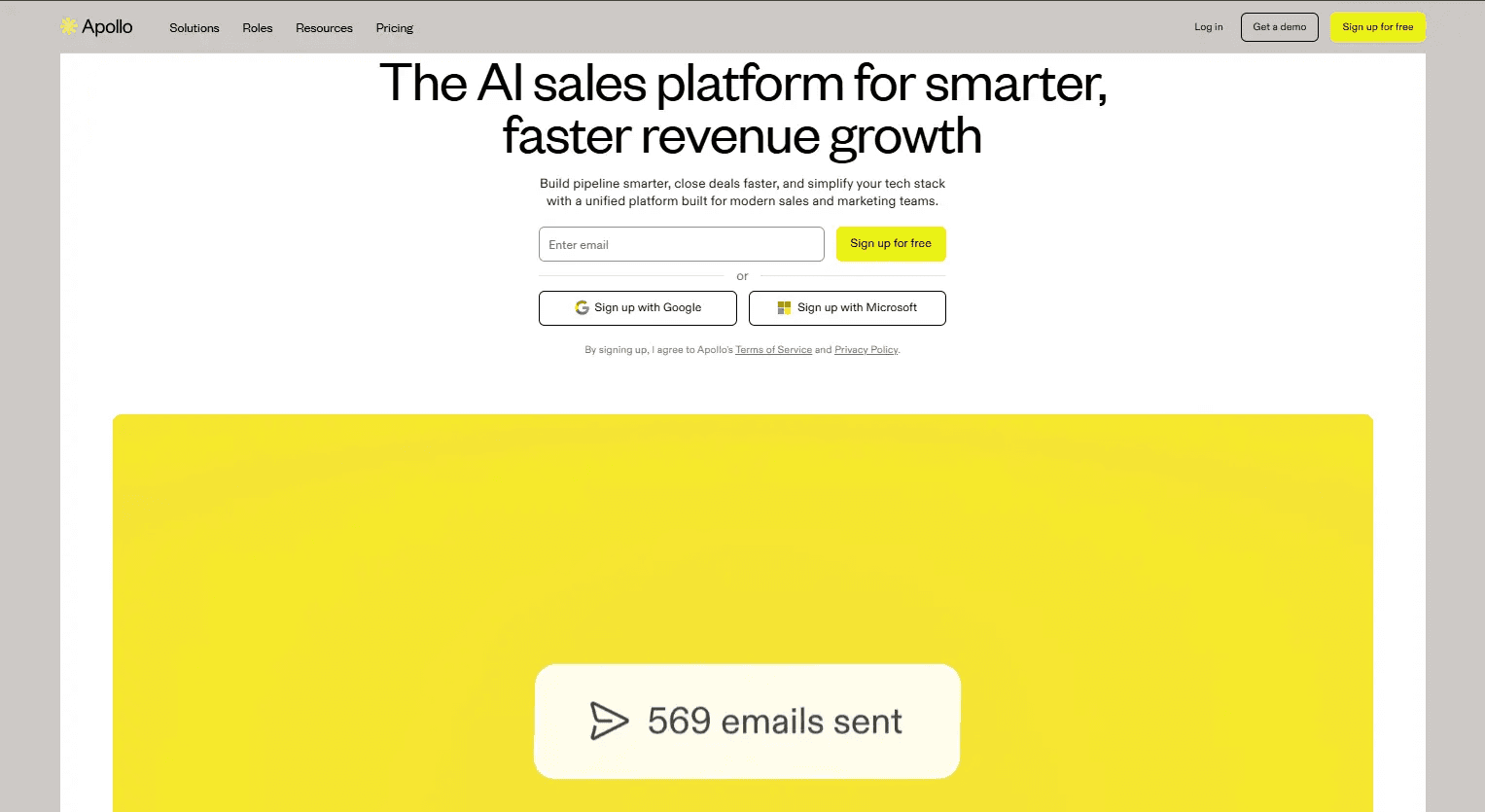
Apollo.io operates as a massive, all-in-one prospecting and engagement platform. With a database of over 230 million contacts, it gives sales teams direct access to high-accuracy email addresses and phone numbers. You do not just get a giant list of names to sort through; the platform includes over 65 search filters. It also comes with a highly useful browser extension that lets your reps pull verified contact data directly from LinkedIn profiles while they browse.
Beyond just finding data, Apollo actually helps you execute the outreach. It features Apollo AI, which assists reps in writing highly personalized emails and automating their outbound sequences. By keeping prospecting, engagement, and analytics unified in one single system, your team can automate their daily workflows and track campaign performance without constantly switching between different software tabs.
Pricing plans:
Free: $0/month. Provides 900 credits per user per year and includes basic features like the AI assistant and AI research tools.
Basic: $49/user/month (billed annually). Provides 30,000 credits per user per year. Includes waterfall enrichment, advanced filters, 6 intent topics, and intent filters.
Professional: $79/user/month (billed annually). Provides 48,000 credits per user per year. Adds automated workflows, call recordings, and AI insights, analytics, and pre-built reports.
Organization: $119/user/month (billed annually, minimum of 3 users). Provides 72,000 credits per user per year. Provides capabilities like the ability to use your own LLM API key, advanced security configurations, and customizable reports and dashboards.
Trends in B2B Lead Generation
B2B lead generation is moving rapidly away from high-volume spam and shifting entirely toward extreme personalization and B2B buyer intent. Buyers simply ignore generic outreach now. To get their attention, sales teams are relying heavily on artificial intelligence to score leads based on actual buying signals and automate highly specific, personalized messaging. There is also a major industry shift from traditional lead generation to demand generation. Instead of forcing buyers to fill out a form just to read a basic ebook, smart companies are giving away their best content for free. This builds genuine brand trust and allows the buyer to reach out on their own terms when they are actually ready to purchase.
The actual formats we use to communicate are changing as well. Short-form video is becoming a massive driver for B2B engagement, allowing busy executives to consume quick, educational insights on platforms like LinkedIn without committing to a long webinar. Alongside this, purpose-driven marketing is taking center stage, as modern buyers actively want to partner with companies that align with their own corporate values. To make all of this work, total sales and marketing alignment is no longer optional. Both teams must execute a unified, multi-channel approach where smart automations guide the buyer naturally from their very first website visit all the way to a closed deal.
Who conducts B2B lead generation?
Generating leads is a team effort. It requires marketing and sales to work together to move a prospect from a stranger to a paying customer.
The marketing team: They own the top of the funnel. Marketers run the paid ads, write the blog posts, and build the free templates that pull in early-stage prospects. Their goal is to collect contact information and pass warm leads over to sales.
The sales team: Sales Development Representatives (SDRs) take over the active outreach. They use that marketing data to make cold calls, send targeted emails, and book actual meetings with the buyers.
The RevOps team: To keep everything running smoothly, many companies use a strong revenue operations strategy (RevOps). This aligns both departments, so they share the same data and goals.
B2B Lead Generation Metrics
To know if your lead generation engine actually works, you have to track the right numbers. Vanity metrics like website traffic or social media followers might look nice on a report, but they do not pay the bills. You need to focus entirely on the core performance indicators that directly tie your marketing efforts to actual revenue.
Here are the three most important metrics you need to watch:
Cost Per Lead (CPL)
This metric tells you exactly how much money you spend to acquire a single new prospect. You calculate it by dividing your total marketing campaign spend by the total number of leads that campaign generated. If your CPL creeps too high, you are likely bidding on the wrong paid keywords or targeting an audience that is too broad, which will quickly drain your marketing budget.
Lead-to-Customer conversion rate
Generating a thousand leads means nothing if zero of them actually buy your product. This rate measures the exact percentage of leads that make it all the way through your pipeline and sign a final contract. A low conversion rate usually highlights a specific pipeline problem: either your marketing team is bringing in unqualified people, or your sales team is struggling with their pitch.
Return on Ad Spend (ROAS)
ROAS shows you the direct financial return of your paid advertising campaigns. It answers a very simple business question: for every single dollar you spend on ads, how much revenue comes back? Tracking this ensures your paid campaigns actually stay profitable and tells you exactly which channels deserve more of your budget next quarter.
Final thoughts
Building a successful B2B lead generation system requires time, precision, and continuous testing. There is no single magic tactic that will flood your pipeline with ready-to-buy prospects overnight.
The most reliable approach always combines highly targeted inbound content to attract buyers with precise outbound sales to engage decision-makers directly. When you back that strategy up with clean data from the right software tools, you stop guessing. You build a predictable revenue engine that consistently delivers high-value buyers straight to your sales team.
Frequently Asked Questions (FAQs)
How do lead generation tools actually help your sales team?
Manual data entry kills productivity. These tools automate the boring administrative work, so your team does not have to hunt for contact details across the internet. They pull verified corporate emails, track when a prospect opens a message, and automatically score buying intent.
How do you properly qualify a B2B prospect?
You have to ask direct discovery questions early in the conversation. You need to confirm they have the actual budget for your solution and the executive authority to sign off on a deal. You also need to verify that their operational problem is painful enough to fix right now. If they lack the money or the urgency, you disqualify them immediately to protect your team's time.
What features actually matter in a lead generation tool?
First, you have to identify your specific category and outline your main priorities. The right features depend entirely on what your sales team actually needs to do every day. For example, your top priority might be finding a platform that provides high-quality contact data backed by strict verification processes so your emails actually reach the inbox.
Once you know your must-have features, you need to check the pricing structure. Look closely at the number of credits the tool provides each month and ask yourself if the cost is actually worth the return. A great tool will give you a solid balance of accurate data, the exact features you need, and a clear pricing plan that fits your budget without forcing you to overpay for extras you will never use.
Which B2B lead generation strategies actually work best?
The most reliable pipeline comes from mixing inbound marketing with highly targeted outbound sales. You pull active buyers to your website by publishing deep-dive SEO guides, hosting educational webinars, and offering high-value lead magnets. At the same time, your sales reps should run account-based marketing campaigns and send hyper-personalized cold emails directly to the key decision-makers.



Other Articles
Cost Per Opportunity (CPO): A Comprehensive Guide for Businesses
Discover how Cost Per Opportunity (CPO) acts as a key performance indicator in business strategy, offering insights into marketing and sales effectiveness.
Cost Per Sale Uncovered: Efficiency, Calculation, and Optimization in Digital Advertising
Explore Cost Per Sale (CPS) in digital advertising, its calculation and optimization for efficient ad strategies and increased profitability.
Customer Segmentation: Essential Guide for Effective Business Strategies
Discover how Customer Segmentation can drive your business strategy. Learn key concepts, benefits, and practical application tips.