Sales intelligence tools are software platforms that collect, verify, and surface data about prospects and accounts so that sales teams can identify, prioritize, and engage the right buyers at the right time.
Without intelligence, reps spend the majority of their day on manual research: finding emails, validating phone numbers, checking company size, and guessing whether a prospect is in the market at all. The right tool eliminates most of that work before the first outreach is sent.
The sales intelligence market is projected to reach $10 billion by 2032, growing at over 11 percent annually. That growth reflects a fundamental shift in how B2B sales teams operate: data-first prospecting has become the standard, not the exception.
The 13 tools examined here span the full range of use cases: waterfall enrichment, contact databases, intent platforms, LinkedIn prospecting, and AI-driven account intelligence. Each solves a different problem for a different team profile.
What You Need To Know About Sales Intelligence Tools?
Not every sales intelligence tool delivers all of these capabilities, and not every team needs all of them. The tools examined here differ in which capabilities they prioritize, and those differences are what make the right tool so dependent on your specific sales motion.
Contact Discovery
Contact discovery finds verified email addresses, direct phone numbers, job titles, and LinkedIn profiles for decision-makers at target accounts. This is the baseline capability every sales intelligence tool claims to deliver, but quality varies dramatically by provider and architecture.
The verification method matters as much as the source coverage. SMTP confirmation for emails, carrier database matching for phones, and regular database refresh cycles are what separate tools with sub-1 percent bounce rates from those delivering lists with 15 to 30 percent bounce rates on export. Contact Data Enrichment is the underlying process that keeps CRM records accurate and complete over time.
Buyer Intent Data
Intent data surfaces accounts actively researching topics related to your solution before they raise their hand. It works by tracking content consumption, keyword searches, website visits, and engagement patterns across B2B publisher networks and proprietary data sources. When a target account spikes on topics relevant to your category, the tool alerts the rep to reach out before competitors identify the opportunity.
First-party intent, meaning behavior on your own website, is the strongest signal because it reflects direct interest in your brand. Third-party intent aggregated from publisher networks provides earlier signals but requires more qualification. Platforms like 6sense and ZoomInfo have built significant competitive advantages on the depth and breadth of their intent signal networks.
Technographic Data
Technographic data reveals which software tools, platforms, and infrastructure a company currently uses. For sales teams selling into specific tech stacks, this is one of the most precise targeting levers available. A company running Salesforce, HubSpot, and Outreach is a fundamentally different prospect than one on spreadsheets. Technographics tell you which category you are selling into before the first conversation starts.
CRM Enrichment
CRM enrichment automatically updates existing contact and account records in Salesforce, HubSpot, Pipedrive, and other CRMs as data changes. Without enrichment, CRM data decays at roughly 25 to 30 percent annually. CRM Contact Enrichmentis particularly valuable for RevOps teams managing large databases where manual hygiene is not operationally feasible.
AI and Predictive Scoring
AI-powered features in 2026 go well beyond basic lead scoring. The most advanced platforms use machine learning to analyze historical win data, engagement signals, intent patterns, and firmographic fit to predict which accounts are most likely to convert and when. Some generate personalized outreach drafts based on account intelligence. Others recommend the next best action based on where a prospect sits in the buying journey.
13 Best Sales Intelligence Tools in 2026
The 13 tools below cover the full range of sales intelligence use cases. They differ in data architecture, pricing model, geographic strength, and which part of the sales workflow they optimize. Coverage and features vary by tool because the accurate feature set varies by platform, and matching capabilities to your specific use case matters more than comparing uniform lists.
1. FullEnrich
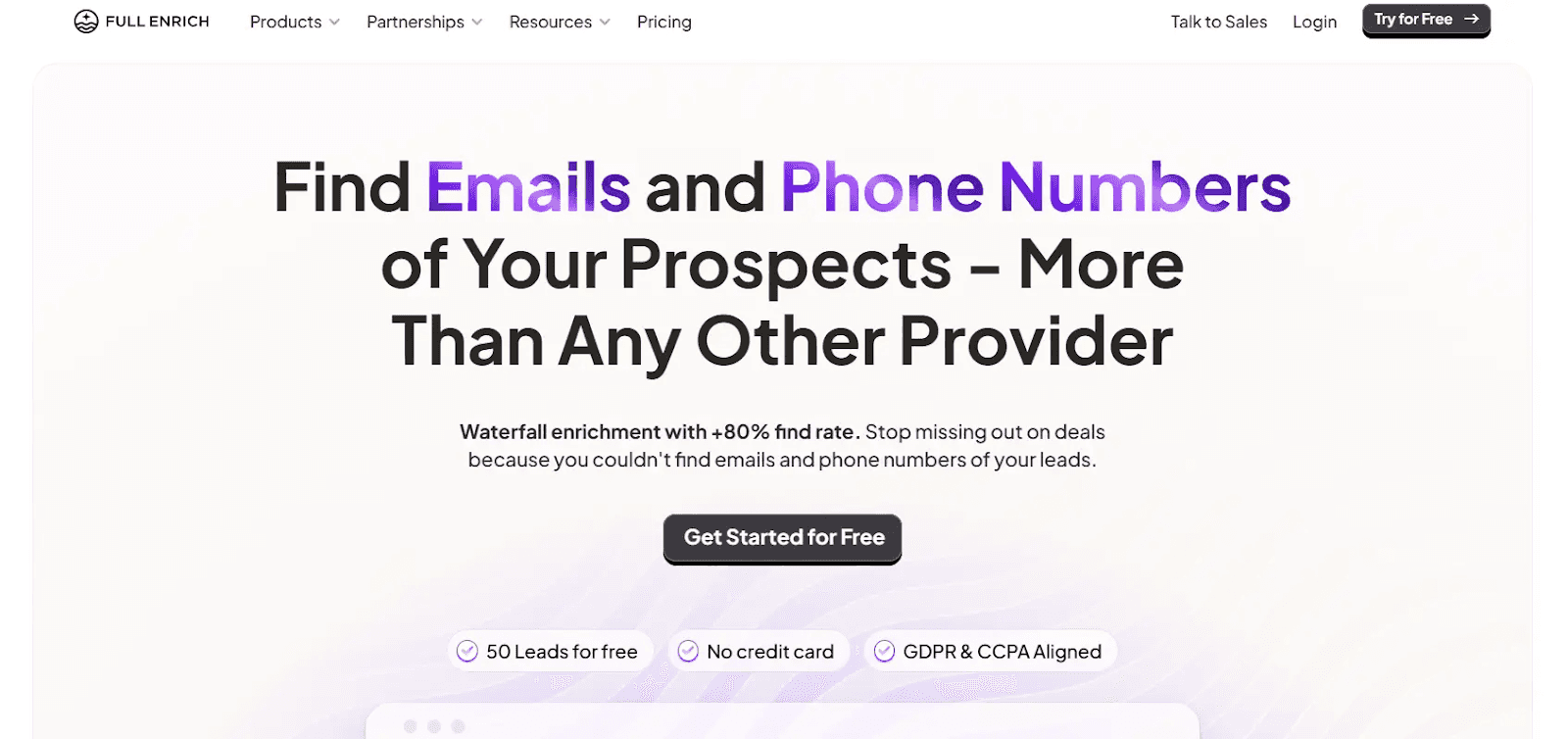
FullEnrich is a waterfall enrichment platform that queries 20+ premium data providers sequentially. Where one provider returns no result for a contact, FullEnrich moves automatically to the next until a verified match is found or all sources are exhausted. The distinction between waterfall and single-source enrichment is explored in detail under waterfall enrichment.
Key Features:
- FullEnrich returns work email, personal email, mobile phone number, LinkedIn job title, LinkedIn profile URL, company name, industry, company type, headcount, and company LinkedIn URL.
- Triple-layer verification runs on every attribute: SMTP handshake confirmation for emails and carrier database matching for phones.
- Bounce rates stay under one percent.
- Credits charge only on successful enrichment, so failed lookups cost nothing.
- Annual credits roll over for a full year.
- All plans include unlimited seats with no per-user fees.
- SOC2, GDPR, and CCPA compliance is built in, with on-demand data fetching rather than static database storage.
Pricing:
- Starter package at $29/month for 500 credits.
- Pro at $55/month for 1,000 credits.
- Scale from $500/month for 10,000+ credits.
Best for:
RevOps and outbound teams enriching existing prospect lists or CRM records at scale. Teams targeting multiple geographies where any single source consistently misses contacts. Organizations that want pay-on-success pricing with unlimited seats rather than per-user licensing.
Limitation:
FullEnrich enriches records you already have identifiers for. It is not a prospecting database for generating net-new contact lists from scratch. Waterfall queries take 30 to 60 seconds per contact versus near-instant results from single-database lookups.
2. Apollo.io
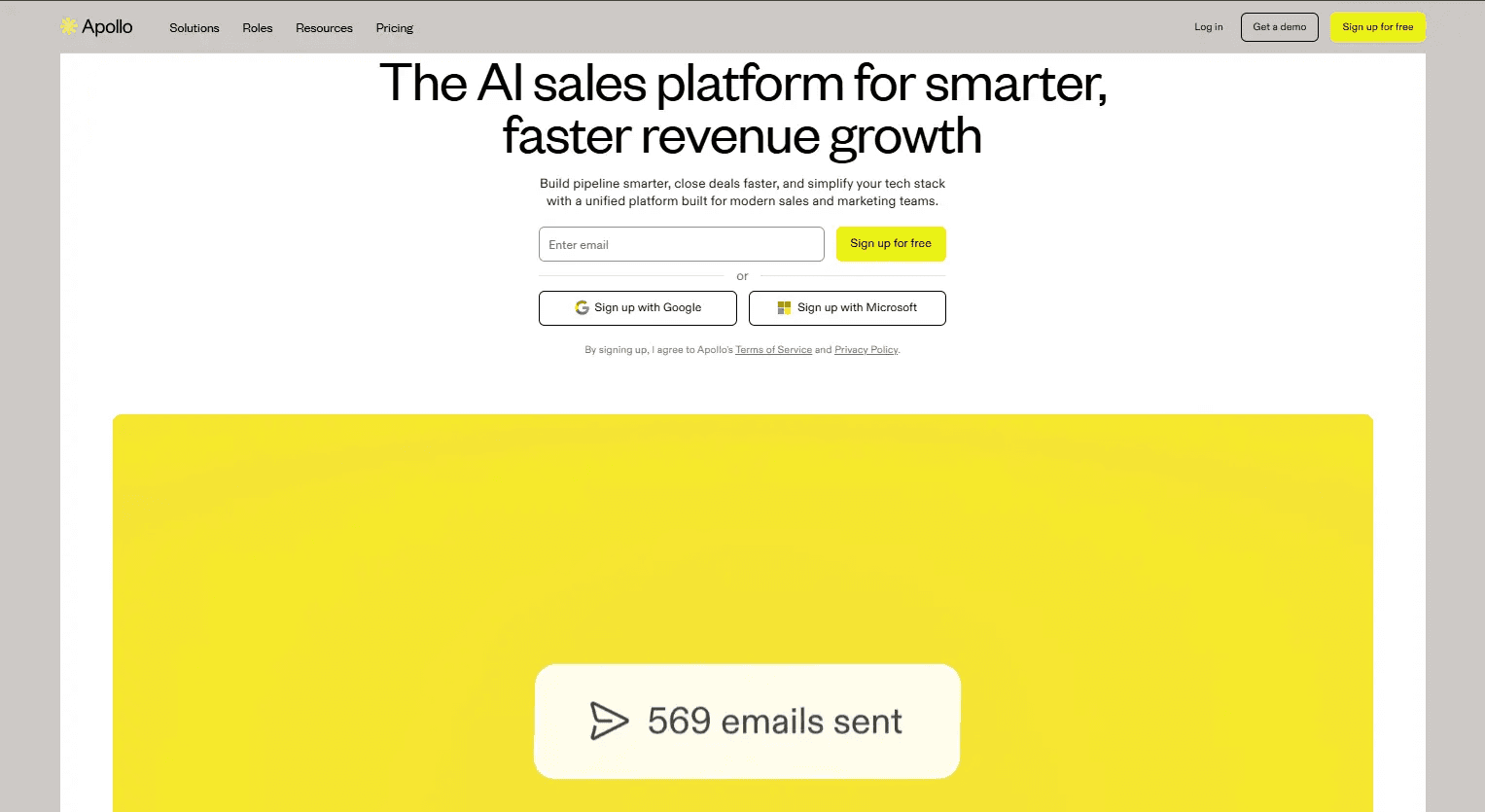
Apollo.io is a comprehensive sales intelligence and engagement platform combining a 275M+ contact database with built-in waterfall enrichment, email sequencing, a dialer, pipeline management, and CRM integration. Apollo recently rolled out native waterfall enrichment across 18+ trusted third-party data providers, which is now the default experience for all paid plan users. Admins can configure which providers to include, in what order, and whether to add a validation layer on top.
Key Features:
- Users can build prospect lists directly in Apollo using job title, company size, industry, location, and intent filters, then execute outreach from the same interface.
- The platform's AI email composer generates personalized outreach drafts, and its intent data module surfaces accounts actively researching relevant topics.
- Real-world email accuracy sits around 70 to 80 percent based on user reports, with bounce rates of 15 to 25 percent reported across G2 reviews.
- Basic at $49/user/month (billed annually) with 30000 credits
- Professional at $79/user/month (billed annually) with 48000 credits
- Organization at $119/user/month (billed annually) with a 3-user minimum and 72000 credits
Best for:
Small to mid-size teams that want prospecting, waterfall enrichment, sequencing, and dialing in one platform. Organizations building outbound programs from scratch where Apollo becomes the primary workflow hub.
Limitation:
Real-world email accuracy trails specialized enrichment providers, with bounce rates of 15 to 25 percent reported in user reviews. Per-user pricing compounds costs as teams grow. Credits expire monthly with no rollover.
3. ZoomInfo
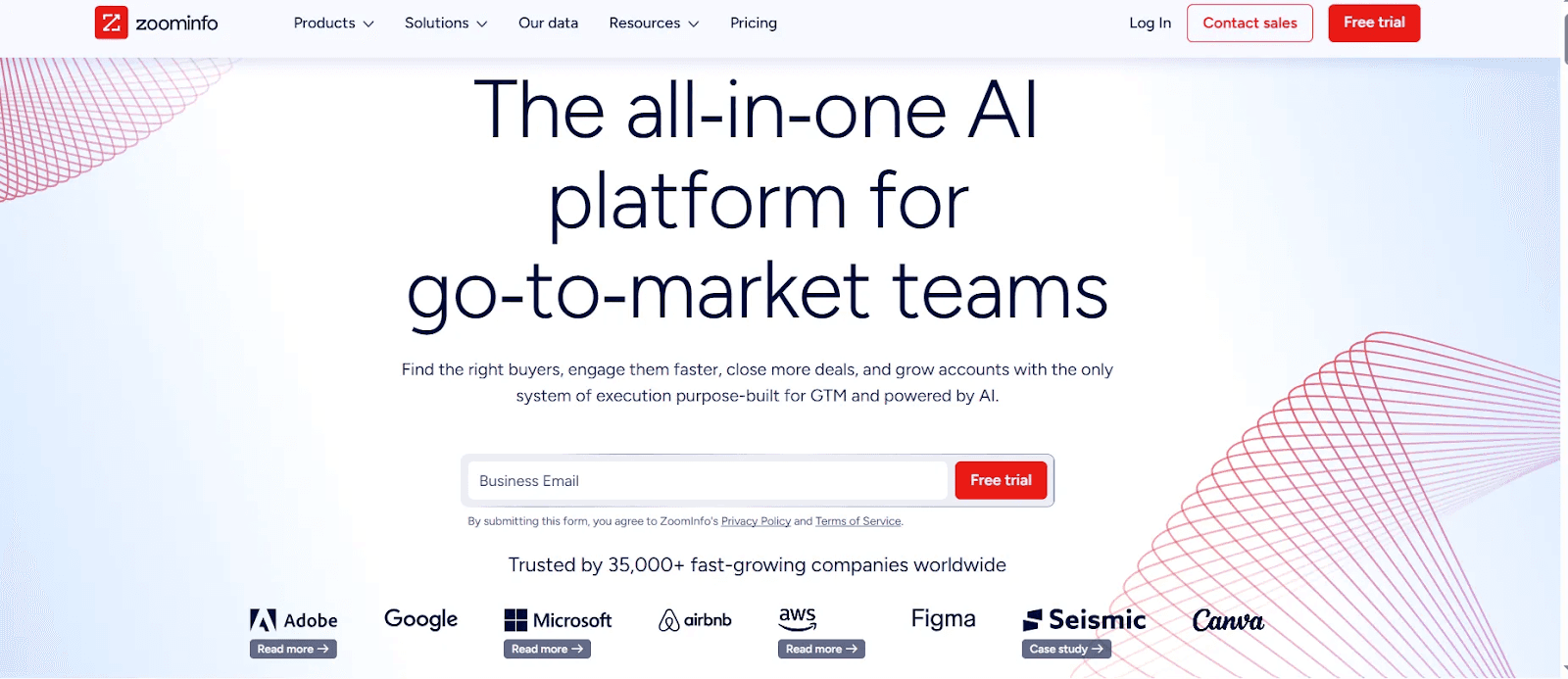
ZoomInfo has a great depth in North America but European and APAC coverage trails its domestic strength. Pricing is entirely quote-based with no public pricing page. For teams evaluating alternatives, ZoomInfo Competitors covers the full comparison landscape.
Key Features:
- ZoomInfo provides the largest B2B contact and company database available, with over 260 million professional profiles and 100 million company records.
- Beyond contact data, it delivers org charts, department budgets, technographic profiles, intent signals, and real-time alerts for trigger events including funding rounds, executive changes, and office expansions.
- ZoomInfo Copilot adds an AI layer for workflow recommendations and account summaries.
Pricing:
- No public pricing
- Professional at approximately $14,995/year for 3 seats with 5,000 annual bulk credits.
- Advanced at approximately $24,995/year adding intent data and 10,000 annual bulk credits.
- Elite at approximately $39,995/year adding AI features.
- No monthly billing option. Credits do not roll over.
Best for:
Enterprise B2B teams selling complex solutions with long sales cycles that need intent data, org chart intelligence, and technographics in one platform.
Limitation:
Pricing excludes most SMB and mid-market teams entirely. 12-month minimum contracts with auto-renewal and price increases of 10 to 20 percent at renewal. EU and APAC data is notably weaker than North American depth.
4. Kaspr
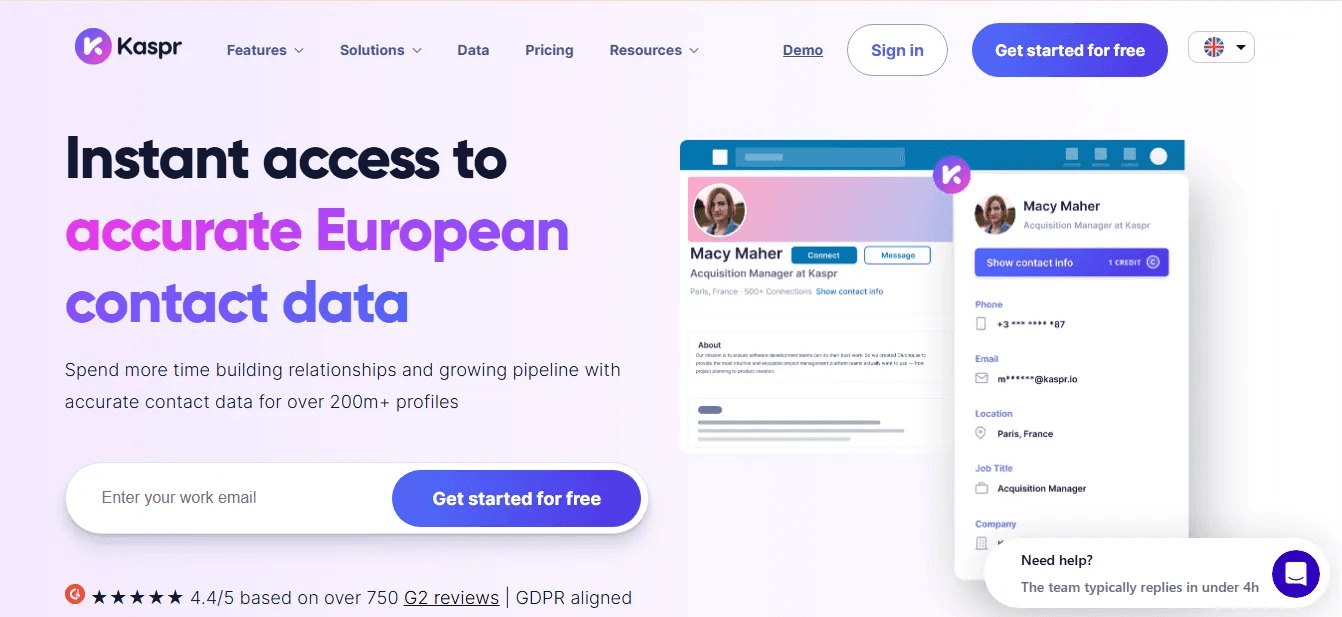
Kaspr is a LinkedIn-native sales intelligence tool with a Chrome Extension that surfaces verified email addresses and phone numbers directly from LinkedIn profiles, search results, groups, and events. Acquired by Cognism in 2022 but maintained as a separate product, Kaspr has particularly strong European coverage with data checked against 120+ sources..
Key Features:
- The platform runs four separate credit types: phone credits, direct email credits, unlimited B2B email credits on paid plans, and export credits.
- The platform includes LinkedIn workflow automation including connection request sequences, message automation, and CSV enrichment. It integrates natively with HubSpot, Pipedrive, Lemlist, and Salesforce.
- Starter at €49/month with unlimited B2B email credits, 1200 phone credits and 60 direct email credits
- Business at €79/month with unlimited B2B email credits, 2,400 phone credits and 2,400 direct email credits
- Organization with custom pricing, minimum 5 users, annual only.
- Unlimited B2B emails on all paid plans. Phone credits are capped at 100 per month on the Starter plan.
Best for:
European sales teams prospecting primarily through LinkedIn. Individual SDRs and small teams that need fast contact lookup without enterprise setup.
Limitation:
LinkedIn-only enrichment restricts use cases to contacts with a LinkedIn presence. Phone credits on lower tiers run out quickly for active callers. Phone number type (personal versus professional) is not always clearly distinguished in the interface. Organization plan requires an annual commitment and a minimum of 5 users.
5. Clearbit (Breeze Intelligence by HubSpot)
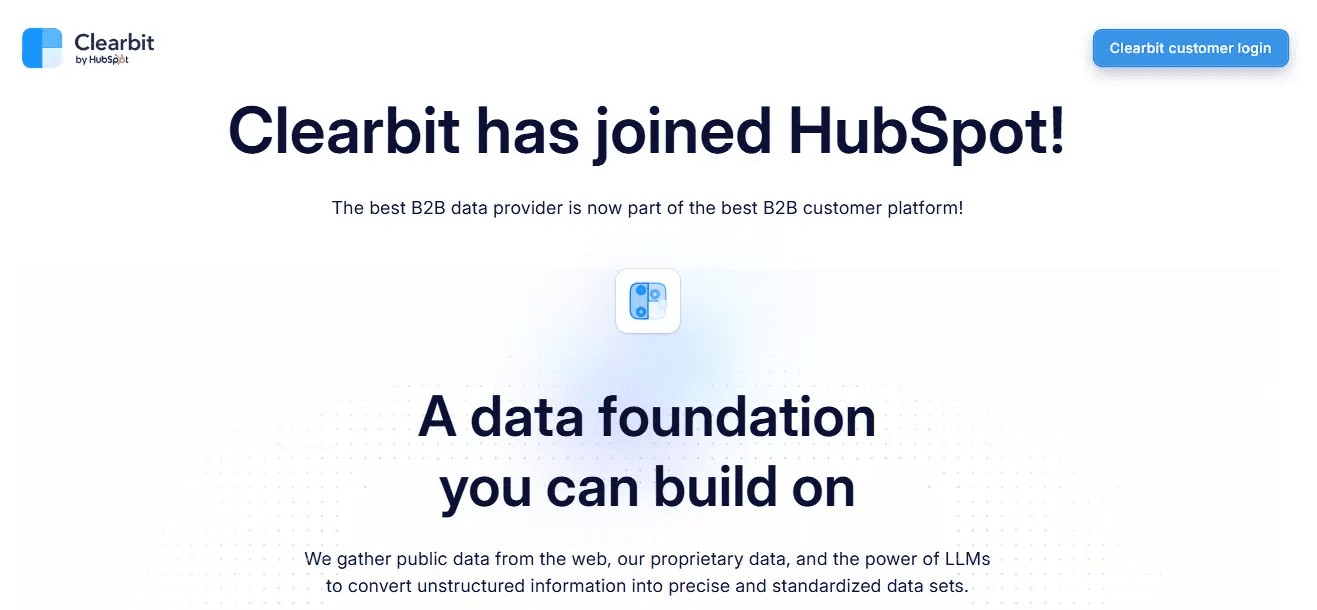
Clearbit was acquired by HubSpot in late 2023 and rebranded as Breeze Intelligence. It is no longer available as a standalone product. The platform specializes in real-time data enrichment and website visitor identification, functioning as a native layer within the HubSpot ecosystem. Its core differentiator is form shortening: Clearbit-powered forms request only an email address, then automatically append company name, size, industry, revenue, and technology stack before the record reaches the CRM..
Breeze Intelligence also identifies companies visiting your website through IP address matching, even when visitors never complete a form. This feeds ABM campaigns and enables outreach to warm accounts before they convert.
No longer sold as a standalone product as it is bundled with HubSpot plans via a credit system.
- Starter: $20/user/month (Includes 500 monthly credits).
- Professional: $100/user/month (Includes 3,000 monthly credits; typically requires a 5-seat minimum).
- Enterprise: $150/user/month (Includes 5,000 monthly credits; typically requires a 10-seat minimum).
Credits & Add-ons: Credits are used for data enrichment, buyer intent, and form shortening. While each plan includes a base allotment, additional credit packs can be purchased as add-ons (e.g., $45/month for 5,000 credits). Note that credits do not roll over and reset every 30 days.
Best for:
Teams already using HubSpot CRM that want native enrichment and form conversion optimization without adding a separate vendor relationship.
Limitation:
No longer available outside the HubSpot ecosystem. No phone number enrichment, only firmographic and technographic data. Coverage weakest outside North America.
6. Cognism
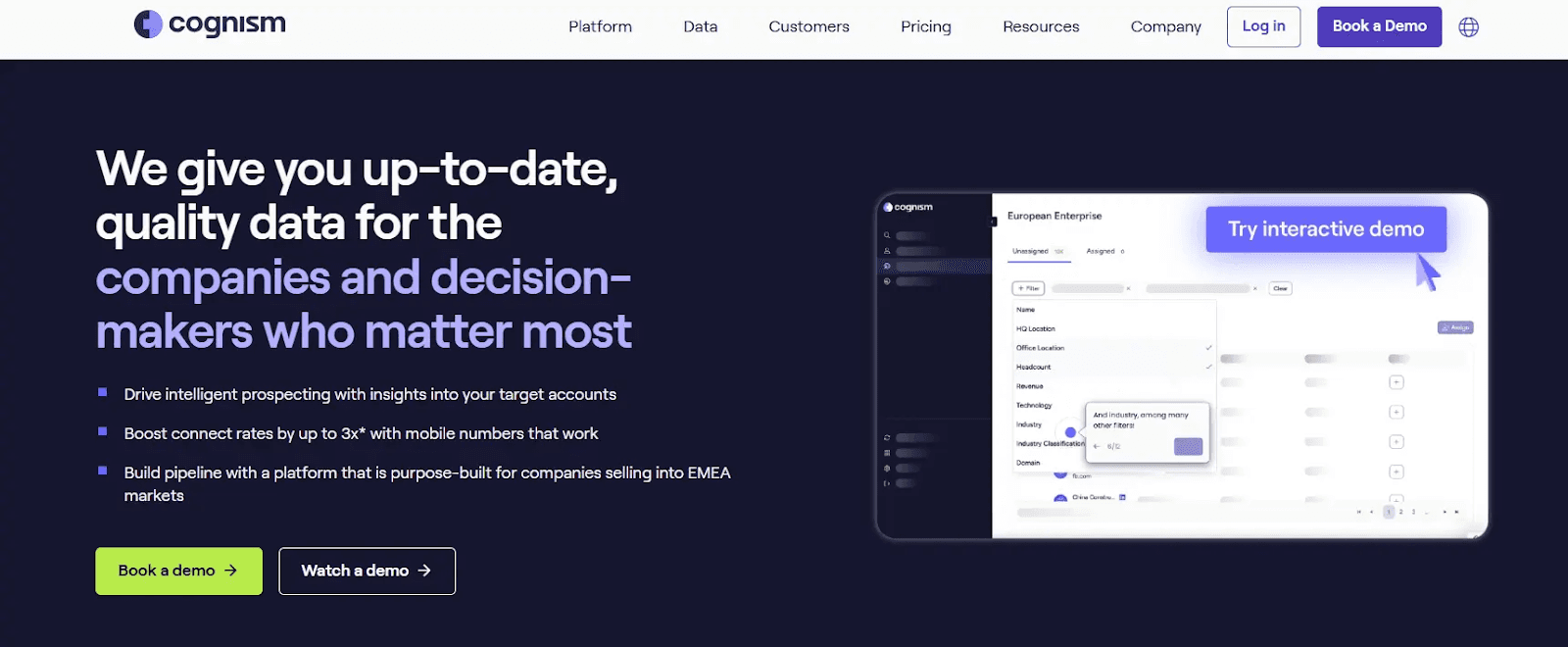
Cognism is the leading sales intelligence platform for teams selling into European markets. The platform covers 400M+ global profiles with particular depth in the UK, France, Germany, and Benelux markets.
Key Features:
- Cognism operates on two packages: Grow (formerly Platinum) and Elevate (formerly Diamond).
- Grow provides contact and company data including email and basic mobile numbers.
- Elevate adds Diamond Data phone-verified contacts, Bombora-powered intent data, and Diamonds on Demand.
- Fair use policy caps data access at approximately 2,000 records per user per month despite unlimited positioning.
- No public pricing. Quote-based with annual contracts and upfront payment required.
- Grow plan at approximately $15,000 platform fee plus $1,500/user/year.
- Elevate at approximately $25,000 platform fee plus $2,500/user/year.
- A 5-user Grow team typically costs around $22,500/year.
Best for:
Teams selling into European enterprises where GDPR compliance and verified mobile numbers are non-negotiable. Organizations with heavy cold calling programs targeting UK and European contacts.
Limitation:
North American data quality trails ZoomInfo and Apollo. Pricing requires a sales conversation with no published rates. Annual prepayment with no monthly option. Fair use caps apply despite unlimited positioning.
7. LinkedIn Sales Navigator
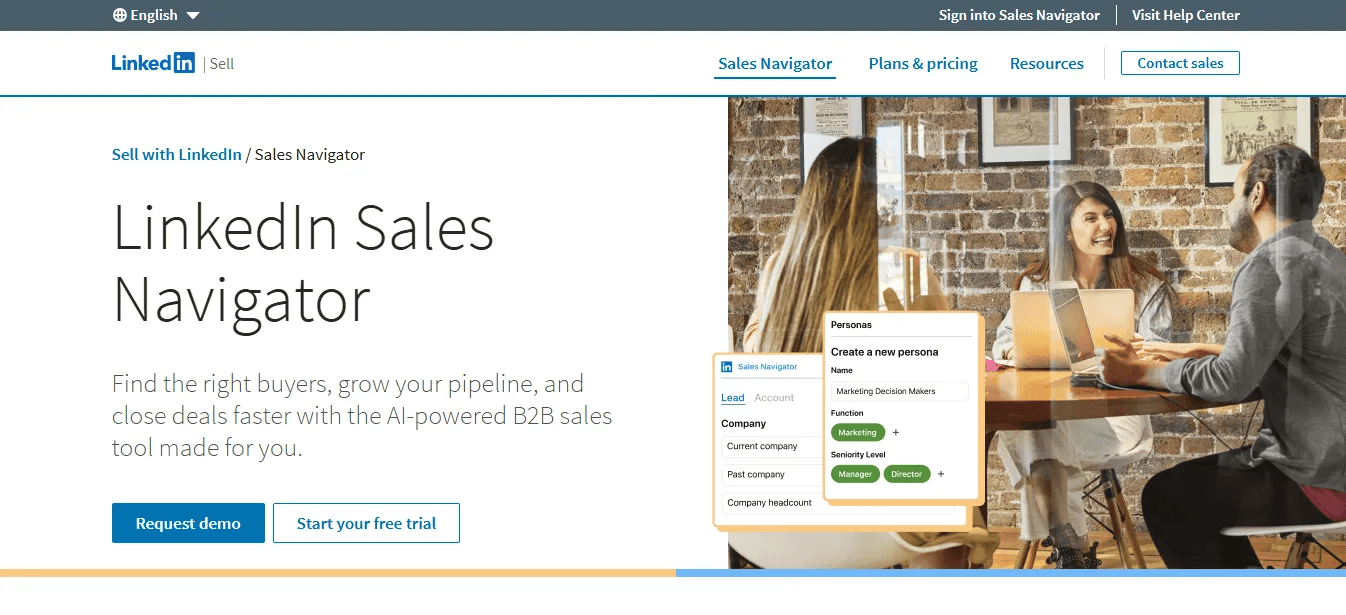
LinkedIn Sales Navigator gives sales teams advanced search and filtering across LinkedIn's 1 billion+ member network. Sales Navigator does not include email addresses or phone numbers. Most teams pair it with an enrichment tool to extract verified contact information from leads identified inside Sales Nav. CRM sync, TeamLink, and usage reporting are only available on Advanced and Advanced Plus plans.
Key Features:
- Filters include job title, seniority, company size, industry, geography, years in role, and growth signals.
- The platform surfaces real-time updates when prospects change jobs or get promoted.
- Relationship Explorer identifies the best paths to decision-makers through mutual connections.
Pricing:
- Core at $119.99/month
- Advanced at $159.99/month or $139.99/month billed annually ($1,679.88/year).
- Advanced Plus is custom-quoted, typically around $1,600/seat/year.
Best for:
Teams whose primary prospecting channel is LinkedIn. Enterprise teams mapping buying committees within named accounts. Relationship-driven sales motions where network connections matter as much as contact details.
Limitation:
No contact data. Pairing with an enrichment tool is required to make identified prospects reachable via email or phone. CRM integration requires Advanced or Advanced Plus plans, adding significant cost.
8. Seamless.AI
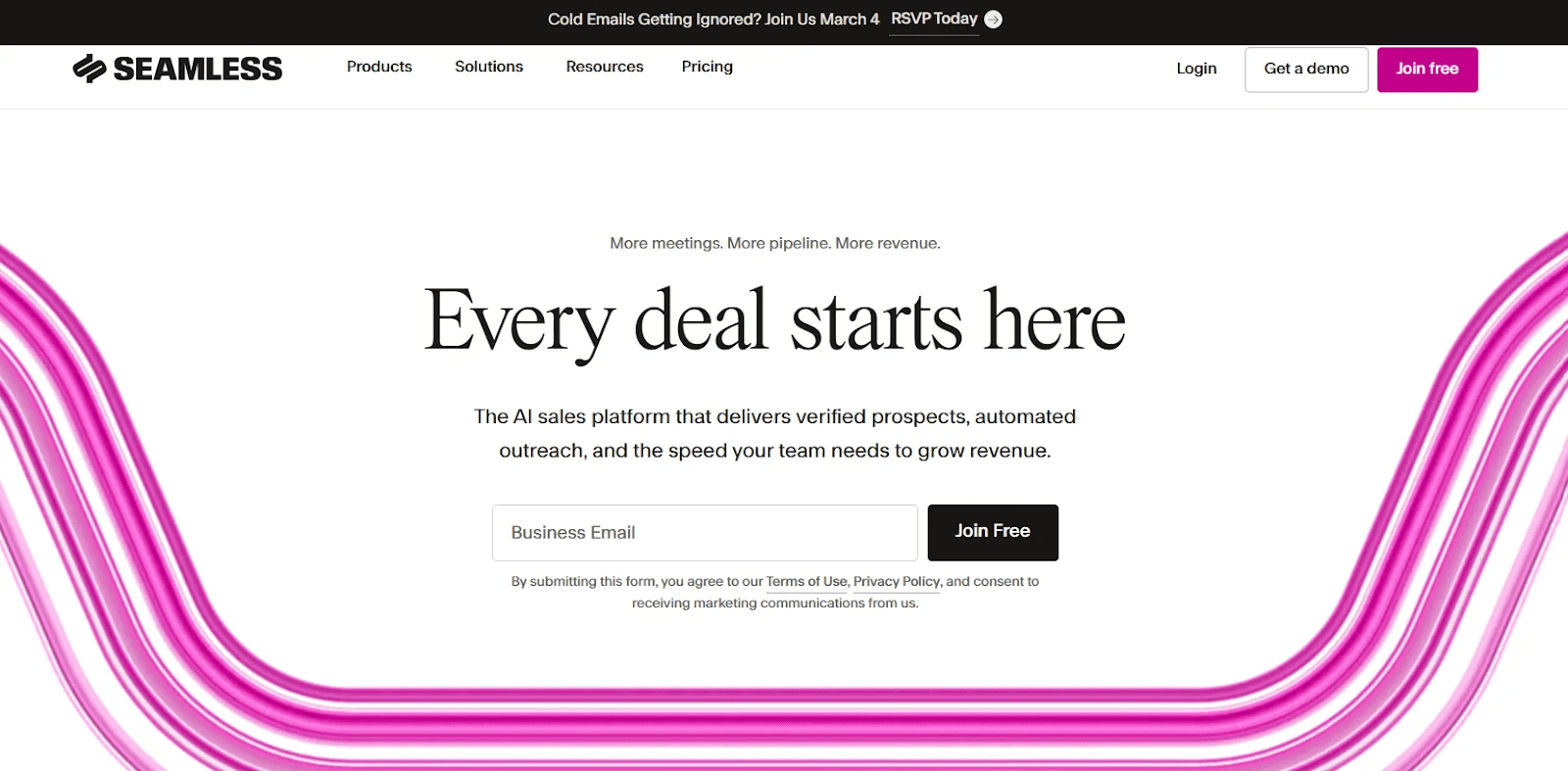
Seamless.AI operates as a real-time search engine for B2B contact data, finding and verifying prospect information at the point of search rather than pulling from a pre-built static database. Its data quality varies significantly by industry, geography, and contact seniority. User-reported cancellation and billing experiences are frequently flagged negatively in reviews.
Key Features:
- The platform includes a Chrome extension for LinkedIn enrichment, a built-in dialer, email sequencing, and CRM integrations with Salesforce, HubSpot, Salesloft, and Outreach.
- Buyer intent signals, job change alerts, and data enrichment are available on higher-tier plans.
Pricing:
- No transparent public pricing page.
- Common tiers include a Free trial (50 credits)
- Basic plan starts at approximately $147/month per user based on user reports.
- Pro and Enterprise pricing requires a sales conversation and custom quote.
Best for:
High-volume outbound teams that want prospecting, enrichment, and sequencing in one tool. Teams willing to validate data quality on their specific ICP before committing.
Limitation:
No transparent public pricing. Data accuracy varies significantly and requires pre-purchase validation. User-reported cancellation and billing practices are frequently flagged negatively in G2 and Capterra reviews.
9. LeadIQ
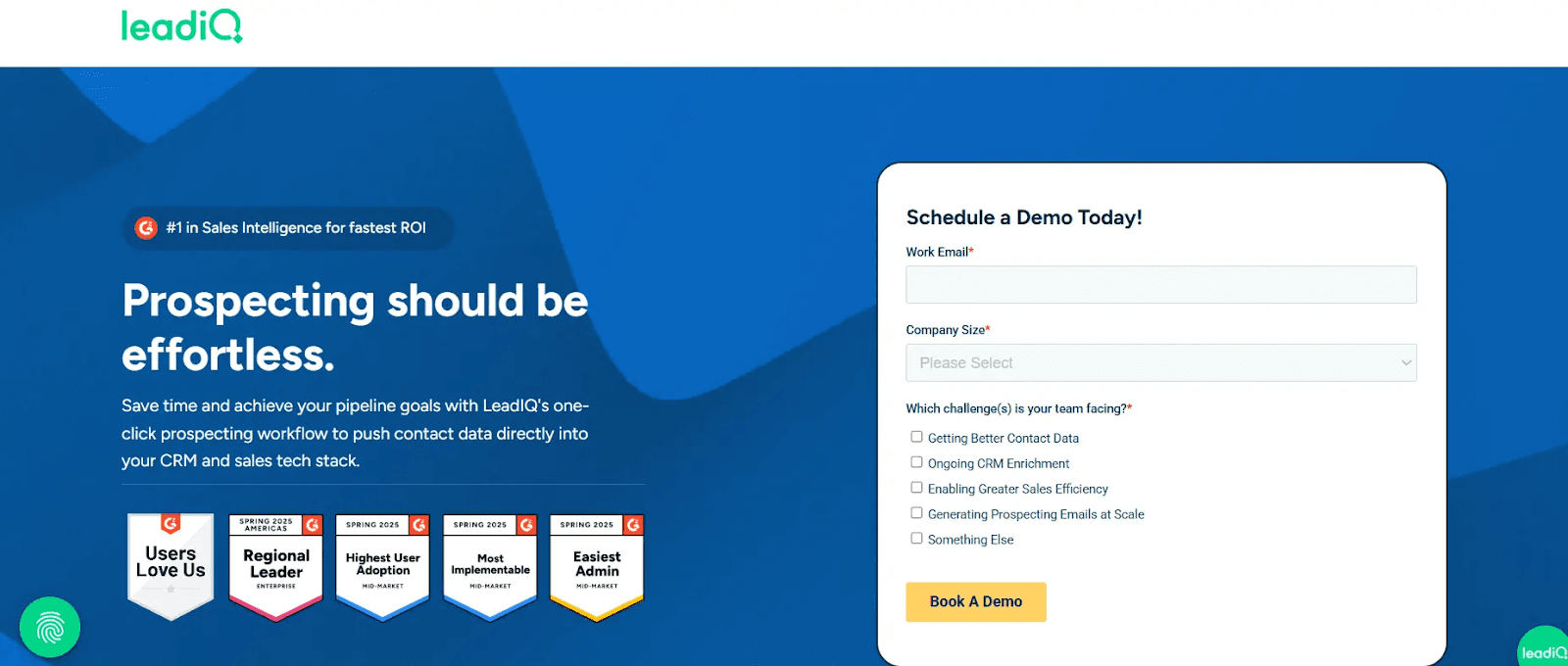
LeadIQ streamlines the SDR workflow from LinkedIn prospecting to CRM entry without manual data transfer. Its Chrome extension captures LinkedIn profiles and enriches them with verified email addresses and phone numbers, then pushes records directly into Salesforce or Outreach sequences in one click.
Key Features:
- The platform uses multi-source enrichment across 9 providers. Job change tracking alerts reps when contacts switch roles.
- Credits do not roll over between billing cycles..
- Essential at $45/user/month (monthly), including 1,000 emails and 50 phone numbers.
- Pro at $89/user/month (annual), including 2,000 emails, 100 phone numbers, intent data, and lookalike search.
- Enterprise with custom pricing.
Best for:
SDR teams prospecting through LinkedIn Sales Navigator who want frictionless capture and enrichment directly into Salesforce or Outreach.
Limitation:
Phone number quality is consistently flagged in user reviews as a weak point. Credits do not roll over, creating waste for teams with uneven prospecting cycles.
10. 6sense
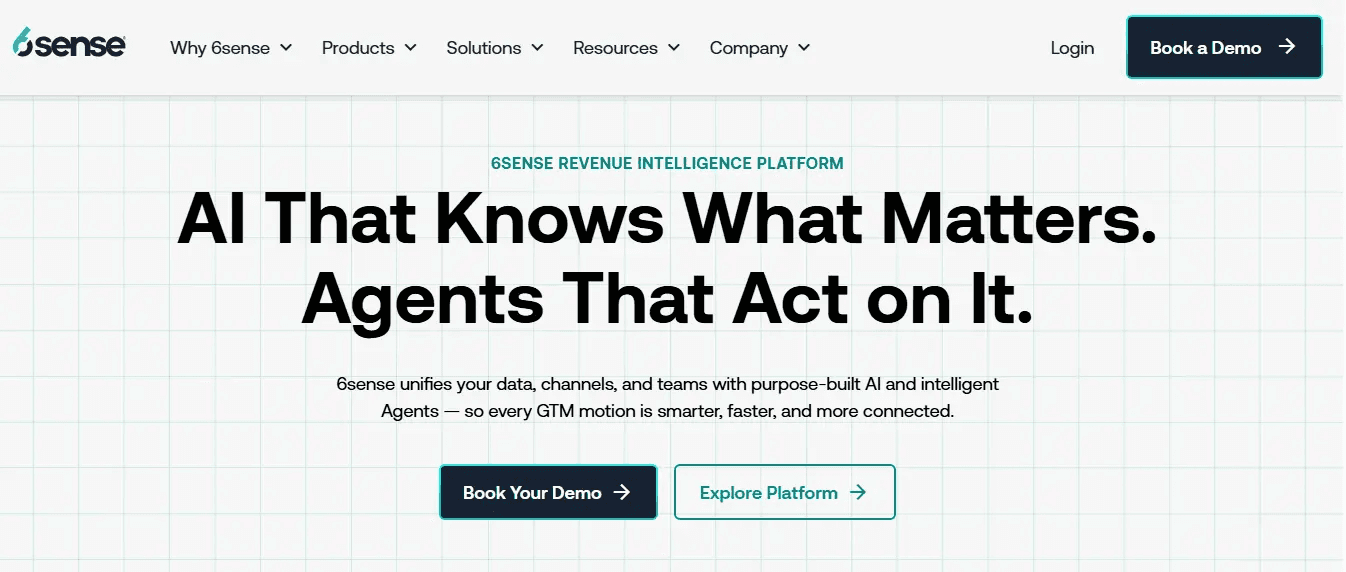
6sense is an AI-driven revenue intelligence platform built for enterprise ABM teams. Its core capability is predictive account scoring: using its 6AI engine, the platform analyzes over 500 billion intent signals across first-party and third-party sources to identify which accounts are in-market, what buying stage they are in, and which personas are most engaged..
Key Features:
- 6sense includes web visitor identification, technographic and psychographic data, intelligent workflow automation, and integrations with Salesforce, HubSpot, Marketo, and major sales engagement platforms.
- Sales Copilot delivers AI-recommended actions and account summaries directly to reps.
- The free plan offers 50 data credits per month for light prospecting
Pricing:
- Free plan with 50 data credits per month.
- Paid plans are fully custom-quoted.
- Based on Vendr transaction data, the median buyer pays approximately $55,000/year.
- Contracts typically range from $50,000 to $200,000+ annually depending on team size, modules, and accounts monitored.
Best for:
Enterprise sales and marketing teams running coordinated ABM programs where intent signal depth and predictive account scoring justify the investment. Organizations with dedicated RevOps capacity to implement the platform fully.
Limitation:
Pricing is prohibitive for most mid-market and SMB teams. The platform requires significant RevOps resources to implement effectively. Contact data accuracy occasionally requires manual verification, particularly for direct phone numbers.
11. Lusha
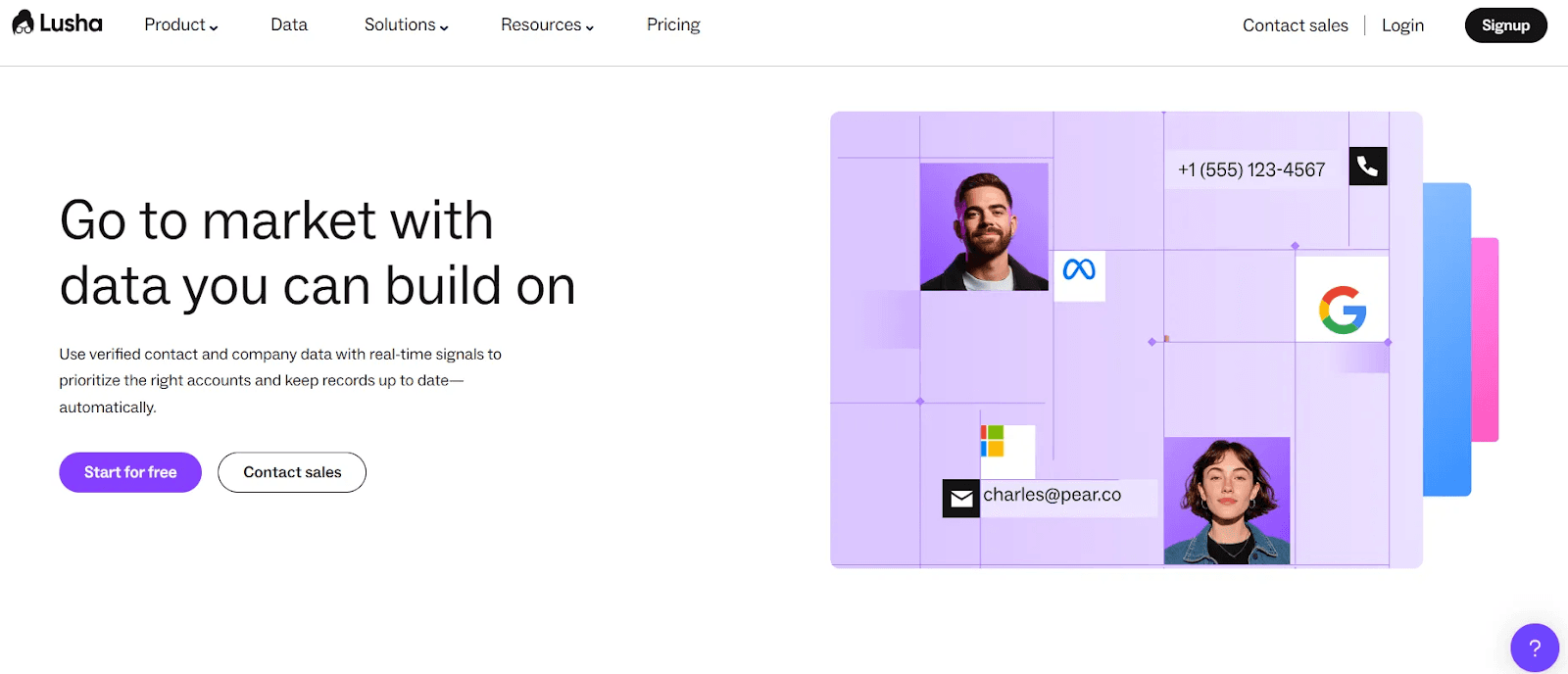
Lusha is a premium B2B contact data platform designed for sales teams that prioritize data quality over pure database volume. Its core strength is a Chrome extension that surfaces verified emails and direct-dial phone numbers instantly while browsing LinkedIn profiles or company websites. In 2026, Lusha remains a single-source provider, meaning it queries its own proprietary database rather than utilizing a native waterfall architecture.
While this single-source approach allows for high phone accuracy, it results in a lower match rate (coverage) compared to waterfall tools.
Key Features:
- For teams using HubSpot or Pipedrive, Lusha offers seamless one-click syncing, though its 2026 pricing has normalized at $37.45/user/month (billed annually), making it a premium "first-pass" tool that is often supplemented by a secondary enrichment layer to fill coverage gaps.
- Credits deduct only on successful finds.
- Unused credits do not roll over.
- CRM integration with Salesforce requires the Scale plan.
- Free plan with 5 credits per month.
- Starting plan at $37.45/month.
- Premium at $299.95 per month.
- Scale with custom pricing.
Best for:
Individual SDRs who need quick LinkedIn contact lookup. Small teams wanting accessible per-user pricing without enterprise minimums.
Limitation:
Single-source database architecture produces lower match rates, particularly for phone numbers, compared to waterfall enrichment platforms. Independent tests report phone accuracy around 51 percent. Salesforce integration requires the Scale plan. Annual credits are lost if unused at the end of the billing year.
12. Dealfront
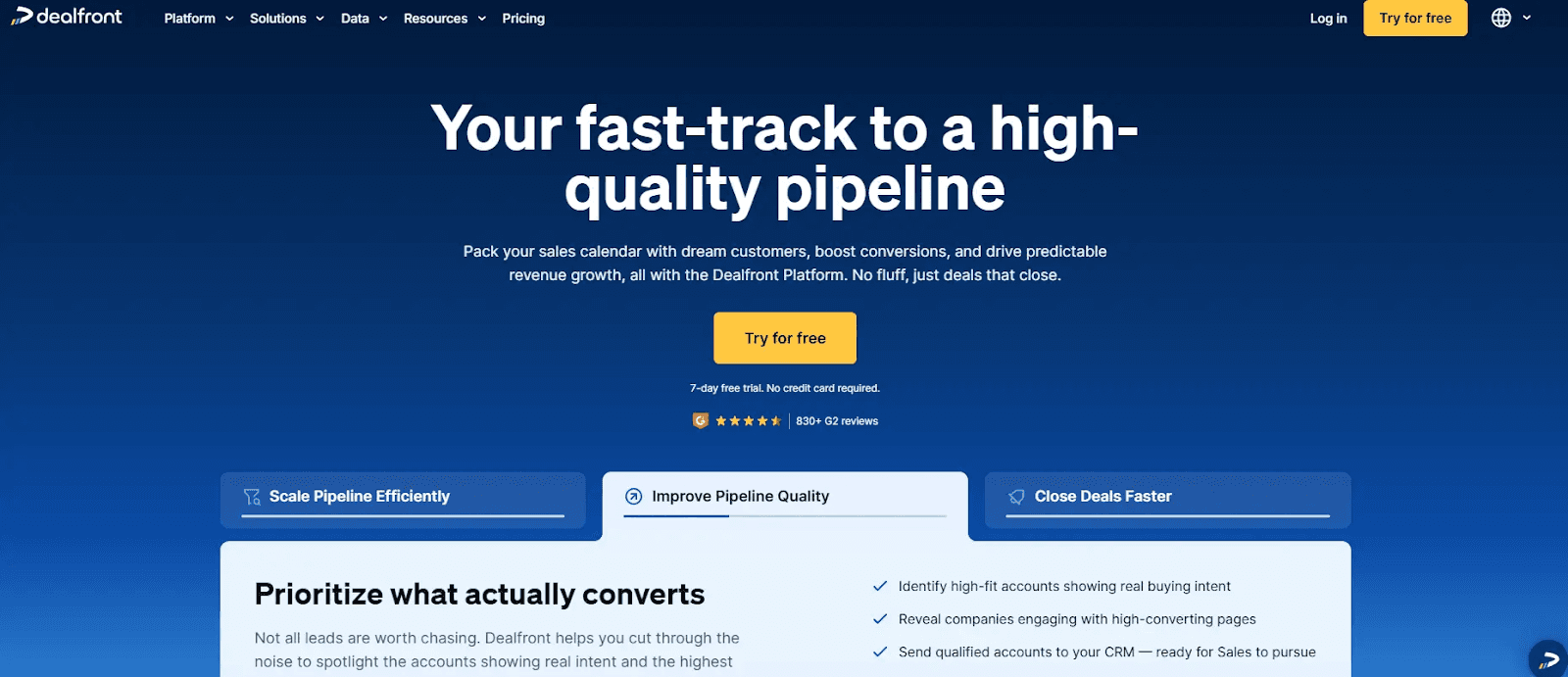
Dealfront is the primary European powerhouse in sales intelligence, formed by the merger of Echobot, Vainu, and the visitor-tracking giant Leadfeeder. It is specifically engineered for teams targeting the DACH region (Germany, Austria, Switzerland) and the Nordics, where data privacy regulations are strictest. Unlike US-based tools, Dealfront draws its data from official trade registers and public company filings, ensuring that every record is 100% GDPR-compliant.
Key Features:
- Identifies the specific companies browsing your website in real-time.
- A prospecting engine with 100+ filters optimized for European firmographics.
- Real-time alerts for news, hiring trends, and financial health indicators.
- An automated module for cleaning and enriching existing CRM data.
Pricing:
Web Visitors plan starts at $99/month while the Sales Intelligence suite is quote-based (typically starting around $1,500-$2,000/year)
Best for:
Sales teams focused primarily on DACH, Nordic, and broader European markets. Teams that need company signal intelligence alongside contact data rather than contact data alone.
Limitation:
Limited value for teams focused on North American or APAC markets. Decision-maker contact data is less comprehensive than Cognism or ZoomInfo for non-European geographies. Pricing opacity makes budget planning difficult.
13. HubSpot Sales Hub
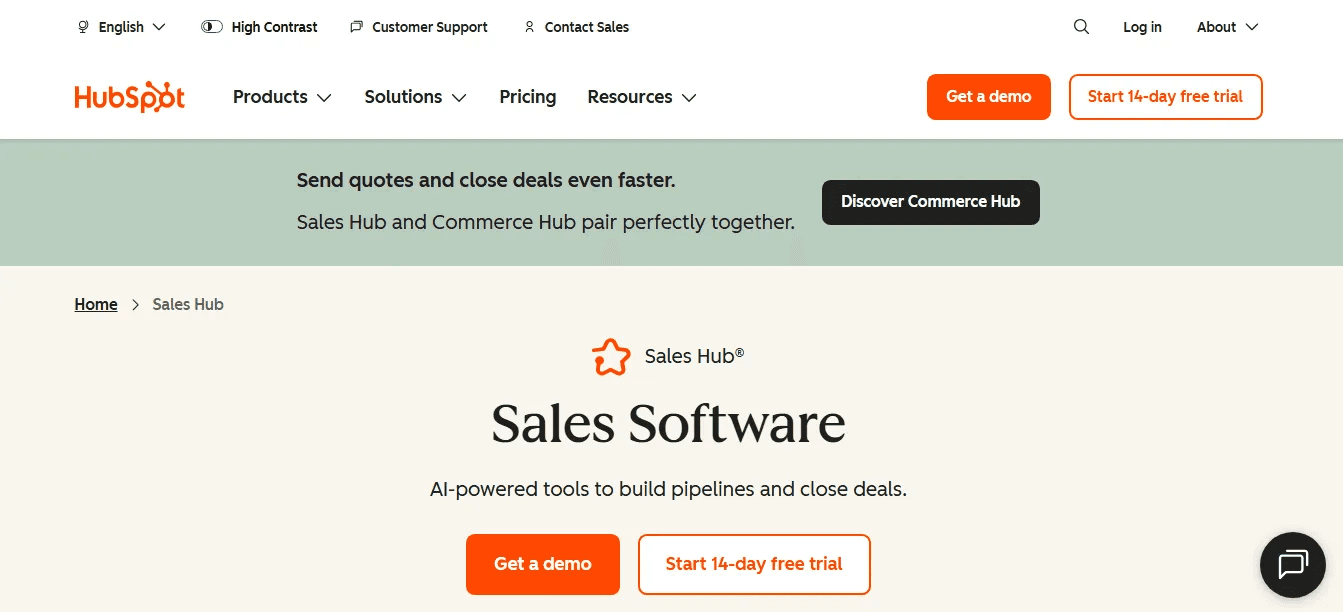
HubSpot Sales Hub is a CRM-native sales platform that layers AI-powered intelligence directly into the HubSpot CRM workspace. It features Breeze Intelligence (formerly Clearbit), which belongs in the "Data Enrichment & Intent" category. It competes with Apollo, ZoomInfo, and FullEnrich and provides firmographic context and intent signals.
HubSpot Sales Hub belongs in the "Sales Execution & CRM" category. It competes with Salesforce, Pipedrive, and Outreach.io.
Key Features:
- Executes autonomous research and personalized outreach based on custom selling profiles.
- Transcribes sales calls and uses AI to surface coaching opportunities and deal risks.
- AI-powered lead scoring and deal probability indicators based on real-time engagement data.
- A unified home for reps to manage tasks, leads, and sequences without switching tabs.
Pricing:
- Free Tools: $0 (Includes up to 2 seats and basic CRM functionality).
- Sales Hub Starter: $15/seat/month (Annual) or $20 (Monthly). Includes 500 HubSpot Credits. No annual commitment required for monthly billing.
- Professional: $90–$100/seat/month (Annual). Requires a 5-seat minimum ($450–$500/mo). Includes 3,000 HubSpot Credits.
- Enterprise: $150/seat/month (Annual). Requires a 10-seat minimum ($1,500/mo). Includes 5,000 HubSpot Credits.
Best for:
Teams already using HubSpot CRM that want embedded AI intelligence without adding a separate vendor relationship. Mid-market B2B teams manage both inbound and outbound pipelines from one platform.
Limitation:
Intelligence features are only as strong as the data already in HubSpot. Teams not in the HubSpot ecosystem face significant migration costs. Breeze Intelligence credits for enrichment are capped on lower tiers.
Why Do You Need To Use Sales Intelligence Tools?
Improved targeting precision: Verified firmographic and technographic data narrows outreach to the contacts most likely to convert before a single email is sent. This shifts the conversion equation from volume-dependent to fit-dependent, which consistently produces higher response rates and shorter sales cycles.
Reduced manual research time: SDRs and BDRs routinely spend 30 to 40 percent of their day on manual prospect research. Sales intelligence tools automate that layer, returning verified contact data, company context, and intent signals in seconds. This connects to the broader case for b2b pata providers as infrastructure rather than a discretionary expense.
Higher outreach relevance through intent data: Intent signals identify accounts actively researching topics related to your solution before they raise their hand. Reaching a prospect in the research phase rather than cold produces measurably higher response rates because the timing matches their decision-making cycle.
Automatic CRM hygiene: Data enrichment running in the background keeps CRM records current as contacts change roles, companies grow or shrink, and technologies shift. This eliminates the degradation cycle that turns a clean database into an unreliable one within 12 to 18 months without active maintenance.
Better compliance posture: GDPR in Europe and CCPA in California impose requirements on how contact data is sourced, stored, and used. Reputable sales intelligence platforms including FullEnrich, Cognism, and ZoomInfo operate under compliance frameworks that reduce legal exposure for the teams using their data.
How Do You Choose the Right Sales Intelligence Tool?
The right tool depends on three factors that vary by team: your target market geography, your primary sales motion, and the gap in your current stack that intelligence is meant to fill.
- Geography: Geography determines which providers can actually reach your ICP. Some providers dominate North American enterprise data; others lead for European coverage. FullEnrich's waterfall architecture adapts provider selection by geography, making it one of the strongest options for teams operating across multiple regions simultaneously. A tool rated highly for US tech companies may return 40 to 50 percent match rates on a DACH or APAC prospect list.
- Sales motion: It determines which capability matters most. High-volume outbound teams need maximum match rates on contact data and fast CRM sync. ABM teams need intent signals, account scoring, and technographic targeting. LinkedIn-first SDRs need a Chrome extension that enriches profiles without breaking their workflow. Relationship-driven enterprise reps need org chart mapping and job change alerts more than raw database access.
- Stack gap: Stack gap determines whether you need a point solution or a platform. Teams missing verified contact data need enrichment. Teams missing pipeline visibility need conversation intelligence or deal scoring. Teams missing outreach tooling need sequencing. In this regard, sales prospecting techniques can give you a better insight for the right tool for the right gap. Buying a platform that does everything when you only need one capability produces underutilization and overspend.
Before committing to any platform, request sample data for your actual target accounts in your actual target geographies. A platform with strong aggregate accuracy metrics may have significant blind spots in the specific verticals or regions your team focuses on. Real data on your real ICP is the only reliable evaluation criterion.
Frequently Asked Questions
What is a sales intelligence tool?
A sales intelligence tool is a software platform that collects, verifies, and surfaces data about prospects and accounts to help sales teams identify, prioritize, and engage the right buyers. The data typically includes verified contact details, company firmographics, technographic profiles, buyer intent signals, and trigger events such as funding rounds or executive changes. The goal is to replace manual research with automated, accurate intelligence so reps spend more time selling and less time finding information.
What is the 3 3 3 rule in sales?
The 3 3 3 rule is a prospecting framework: spend three minutes researching a prospect before reaching out, send a message no longer than three paragraphs, and follow up no more than three times before moving on. It is designed to keep outreach efficient and respectful of a prospect's time while maintaining enough persistence to break through inbox noise.
What are the 4 levels of sales intelligence?
The four levels are contact intelligence (who to reach and how), company intelligence (firmographics, financials, and structure), market intelligence (competitive landscape and industry trends), and behavioral intelligence (intent signals and engagement data showing who is actively in-market). Most sales intelligence tools operate across multiple levels, though they typically specialize in one or two.
What are the 5 P's of sales?
The 5 P's of sales are Product, Price, Place, Promotion, and People. Product is what you are selling and why it solves a problem. Price is how you position value relative to cost. Place is the channel through which you reach buyers. Promotion is how you communicate your offering. People refers to both the sales team executing the strategy and the customers they are serving.
What are the 5 F's in sales?
The 5 F's are Feel, Felt, Found, Feature, and Benefit. This framework handles objections: acknowledge how the prospect feels, note that others have felt the same way, share what they found when they moved forward, reference the relevant feature, and connect it to the specific benefit the prospect cares about. It is a structured empathy technique designed to move past resistance without dismissing the prospect's concern.
What are the 7 strategies of selling?
The seven strategies are prospecting, preparation, approach, presentation, handling objections, closing, and follow-up. Sales intelligence tools primarily strengthen the first two stages by ensuring reps are targeting the right people with accurate context before a single conversation begins.