So you're building a revenue engine, and the GTM landscape feels like a maze.
There's a tool for data. One for sequences. Another for signals.
Before you know it, your tech stack looks like a Frankenstein monster: expensive, disconnected, and somehow still missing half the information you need.
Sound familiar?
Well, you're in the right place.
We've been testing and using these go-to-market tools for years (which led us to build one).
Here's a practical breakdown of what actually helps GTM teams close deals for 2026.
Let's dig in 👇
TL;DR: Best Go-to-Market Tools at a Glance
Tool | Best For | Starting Price | G2 Rating |
|---|---|---|---|
FullEnrich | Waterfall data lookup, highest email/phone coverage | Free trial (50 credits) | 4.9/5 |
ZoomInfo | Enterprise sales intelligence | ~$15k/year | 4.4/5 |
Apollo | All-in-one prospecting + sequences | Free tier available | 4.8/5 |
HubSpot | All-in-one platform | Free tier available | 4.4/5 |
Salesforce | Enterprise database | ~$25/user/mo | 4.3/5 |
Outreach | Sales engagement at scale | Custom pricing | 4.3/5 |
Gong | Revenue intelligence | Custom pricing | 4.7/5 |
6sense | ABM + buying signals | Custom pricing | 4.3/5 |
Clay | AI-powered building | $149/mo | 4.9/5 |
UserGems | Job changes tracking | Custom pricing | 4.8/5 |
What to Look for When Choosing the Right GTM Stack
Before diving into the tools list, here's the thing: it's not about finding the "best" tool. It's about finding what actually works with your existing setup.
Four criteria that matter:
- Data Accuracy — Bad data kills everything downstream. Contact information needs to be fresh, verified, and complete.
- Integration — If a tool doesn't sync natively, you're creating manual work. Everything should connect seamlessly.
- Process Building — The best teams automate repetitive tasks. Look for platforms that trigger actions based on signals or engagement patterns.
- Compliance — GDPR isn't optional. Any data provider worth using should be transparent about their sources.
Now let's dig into the actual tools.
Sales Intelligence & Data go-to-market tools
This is where your GTM motion starts. Without quality data, every other GTM tool underperforms.
1. FullEnrich: Best for data enrichment
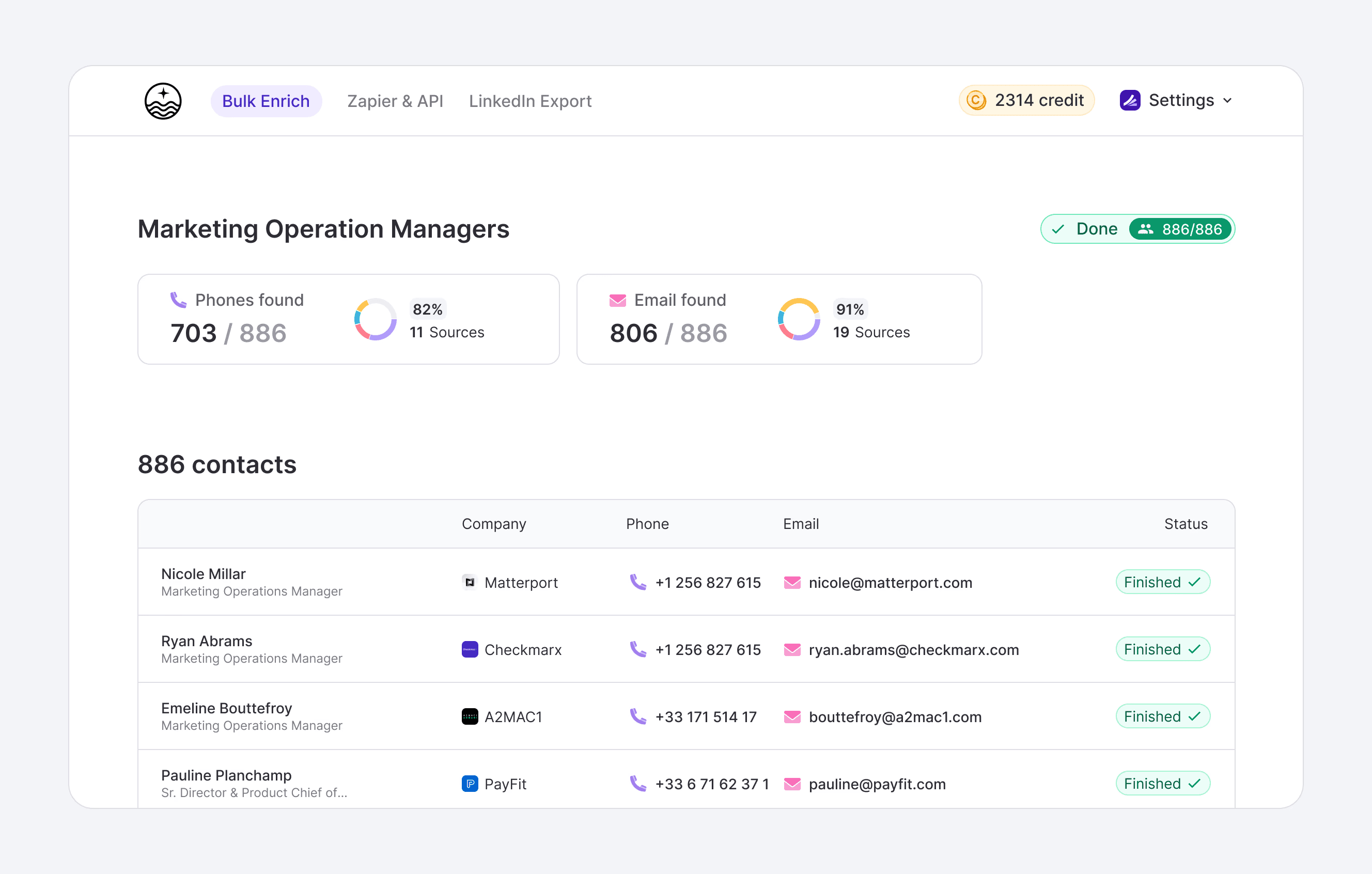
Here's the problem with most data providers: they rely on a single source. That means if your contact isn't in their database, you get nothing.
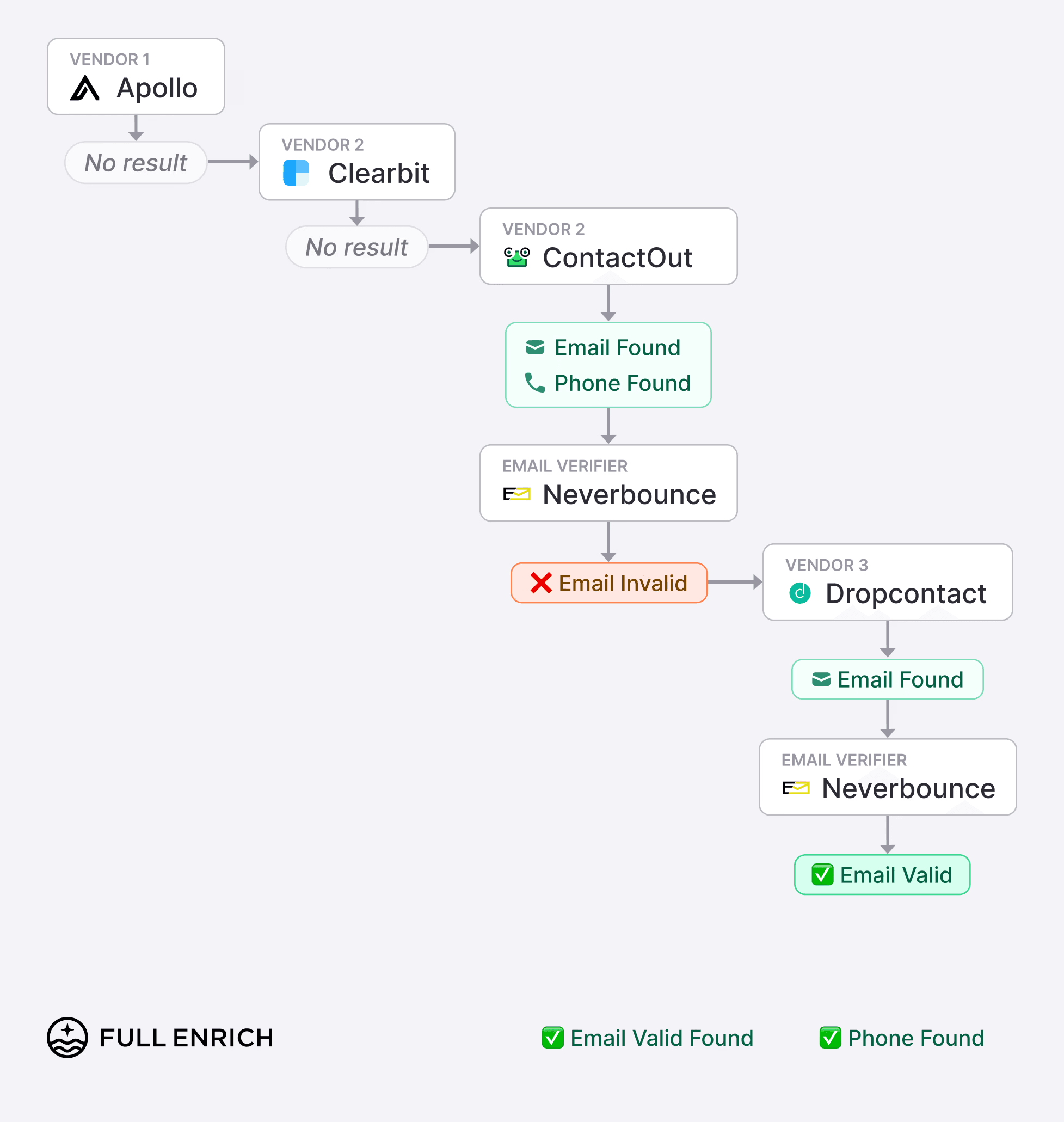
We take a different approach. Our waterfall method queries 20+ premium sources sequentially until we find verified contact information.
The result? Coverage rates that typically hit 85% for emails and 77% for mobile phones.
👉 Try Waterfall enrichment with 50 free credits
How it works:
Upload a list (or connect via HubSpot/Salesforce), and the waterfall kicks in. It starts with cost-effective sources and cascades through premium providers until it finds verified data.
Key Features:
- Waterfall lookup across 20+ providers
- Real-time email verification (no bounces)
- Direct dials and mobile phone lookup
- Native sync with major platforms
- API access for custom builds
- GDPR and CCPA compliant
- Credit roll-over for 3 Month
- You only get charged if you find data
👉 Compare with your current provider with 50 free credits
Pros:
✅ Highest coverage rates in the market
✅ Only pay for data you actually get
✅ Real-time verification reduces bounce rates
Cons:
❌ Credit-based pricing can be hard to predict for large volumes
❌ No built-in sequencing features
Pricing: Credit-based model. Starts with a free trial of 50 credits.
If your sales team struggles with incomplete contact data, we built a full enrichment to solve that problem. Particularly powerful for outbound teams needing verified mobile numbers.
👉 Try FullEnrich free with 50 credits
2. ZoomInfo: Best for Enterprise teams who need company-level intelligence alongside contact data
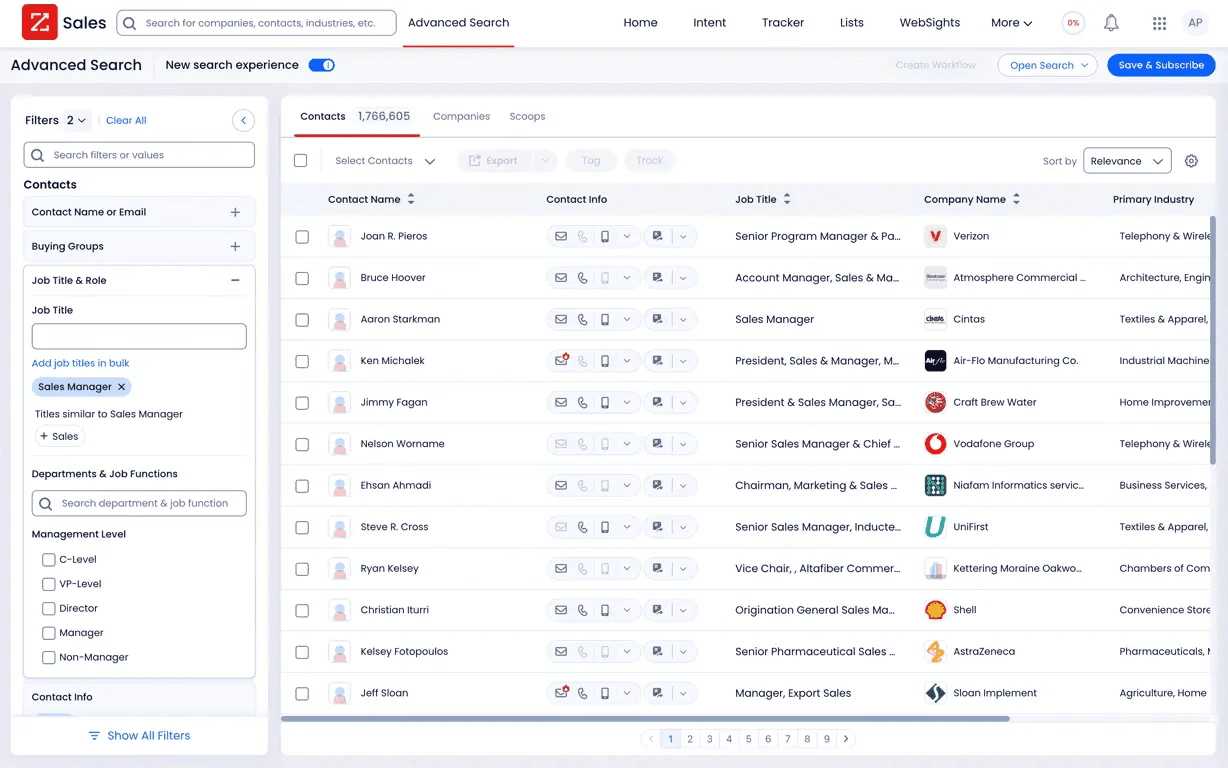
The heavyweight in sales intelligence. They've built one of the largest databases in the market.
Beyond basic contact lookup, they provide firmographic data, org charts, technographic insights, and buying signals.
Key Features:
- Comprehensive company and contact database
- Buying signal based on content consumption
- Org charts and reporting structures
- Conversation intelligence (via Chorus)
- Website visitor identification
Pros:
✅ Massive database with good company-level data
✅ Strong signal capabilities
✅ Excellent for account-based selling
Cons:
❌ Expensive—enterprise pricing
❌ Data accuracy varies by region
❌ Annual contracts with limited flexibility
Pricing: Custom pricing. Community reports suggest ~$15k/year starting.
Our Verdict: Great for enterprise teams with budget. For startups, the cost rarely justifies the ROI. Check our analysis of ZoomInfo's pricing structure.
3. Apollo.io: Best for Startups that want prospecting + outreach in one platform
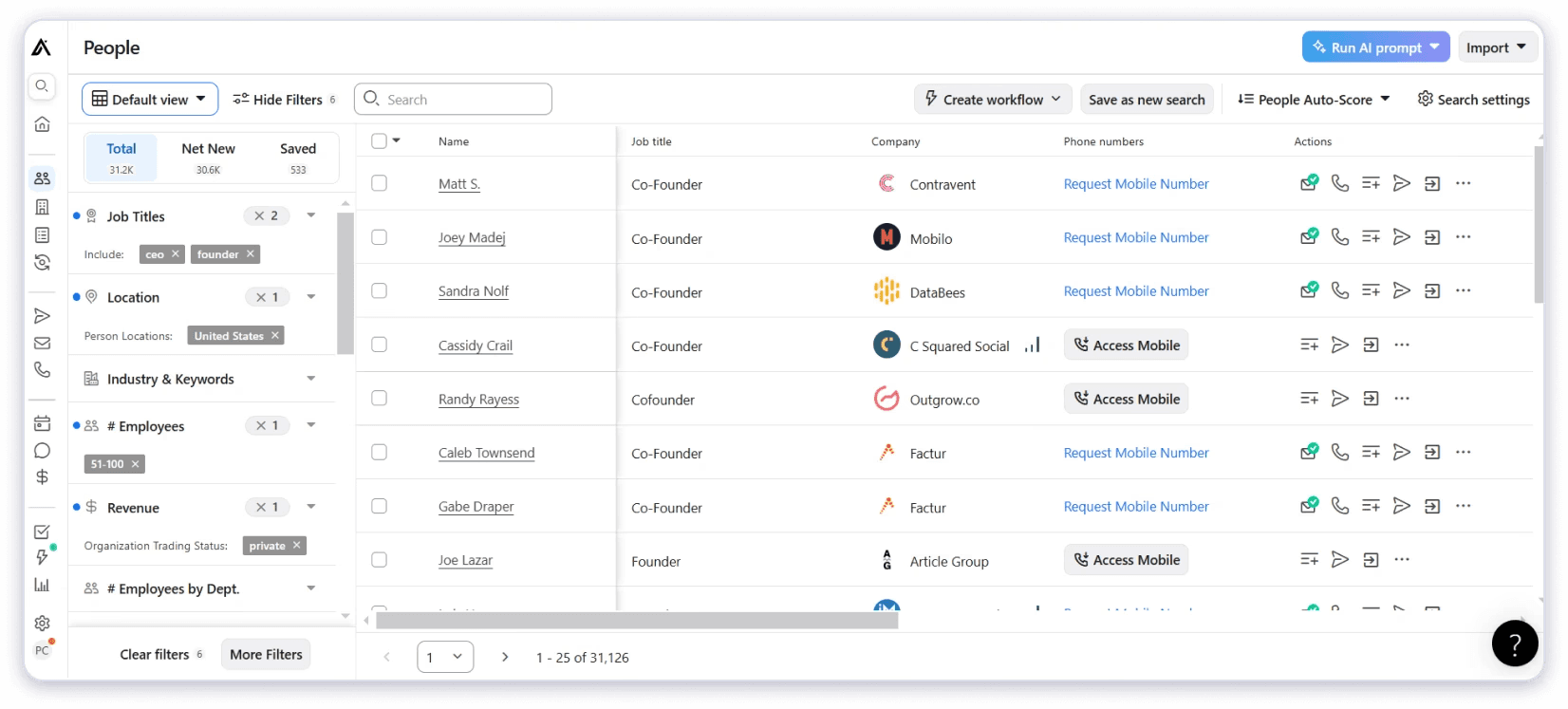
The scrappy challenger that's captured massive market share. Combines a contact database with built-in email sequencing.
Key Features:
- 270M+ contact database
- Email sequencing
- LinkedIn extension
- Meeting scheduling
- Reporting
Pros:
✅ Excellent free tier for early-stage teams
✅ All-in-one reduces tool sprawl
✅ Strong Chrome extension
Cons:
❌ Data quality can be inconsistent
❌ Deliverability suffers at scale
❌ Less robust than dedicated platforms
Pricing: Free tier available. Paid plans start at $49/user/month.
Our Verdict: Perfect for teams just getting started. As you scale, you'll need to supplement their data with a waterfall solution.
4. Cognism: Best for European teams who need GDPR-compliant data
Strong reputation in EMEA markets with focus on compliance and phone-verified mobile numbers.
Key Features:
- Phone-verified mobile numbers
- GDPR-compliant data collection
- Buying signals
- Browser extension
Pros:
✅ Strongest compliance posture for EU markets
✅ Phone verification improves connect rates
✅ Good EMEA coverage
Cons:
❌ North American coverage is weaker
❌ Premium pricing for verified data
❌ Limited building capabilities
Pricing: Custom pricing based on usage and regions.
Our Verdict: If you're selling into European markets, deserves consideration. For North American operations, other tools offer better coverage.
5. UserGems (Best for Tracking job changes and warming up cold accounts)
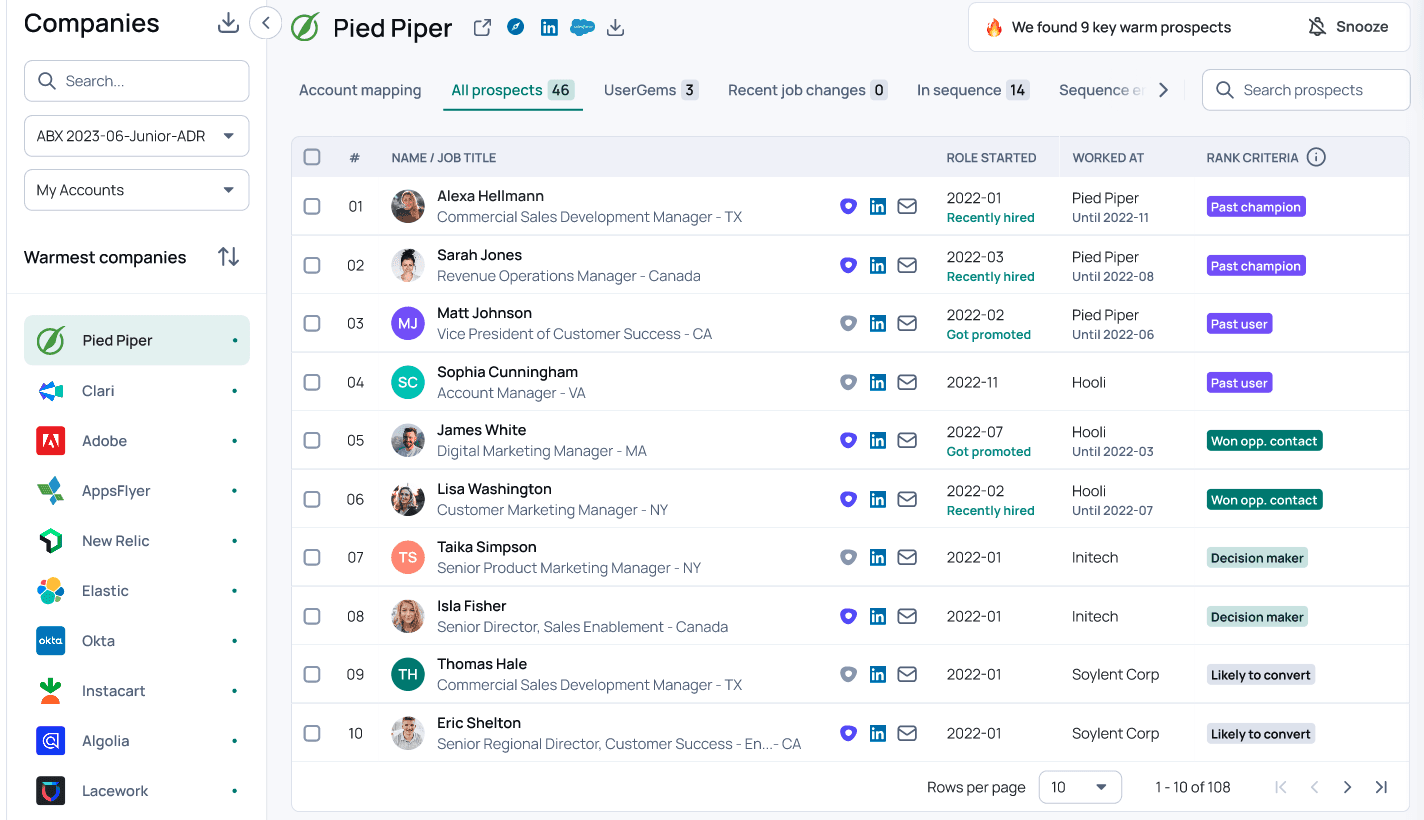
Does something clever: monitors your closed-won customers and tracks when they change jobs. When your champion moves to a new company, you get an alert.
Someone who bought from you before is 3x more likely to buy again at their new company.
Key Features:
- Job changes tracking
- Champion monitoring and alerts
- Account prioritization based on past relationships
- Record updates
- Reporting
Pros:
✅ Creates warm opportunities from existing relationships
✅ Fully automated once configured
✅ High conversion rates from alerts
Cons:
❌ Only valuable if you have existing customer relationships
❌ Doesn't help with net-new prospecting
❌ Premium pricing
Pricing: Custom pricing based on contacts monitored.
Our Verdict: A must-have for teams with established customer bases. If you're pre-revenue, the value isn't there yet.
Database Management
Your CRM is the source of truth for everything. These platforms help track deals, nurture leads, and report on pipeline with advanced analytics.
6. Salesforce (Best for Enterprise GTM teams who need unlimited CRM customization
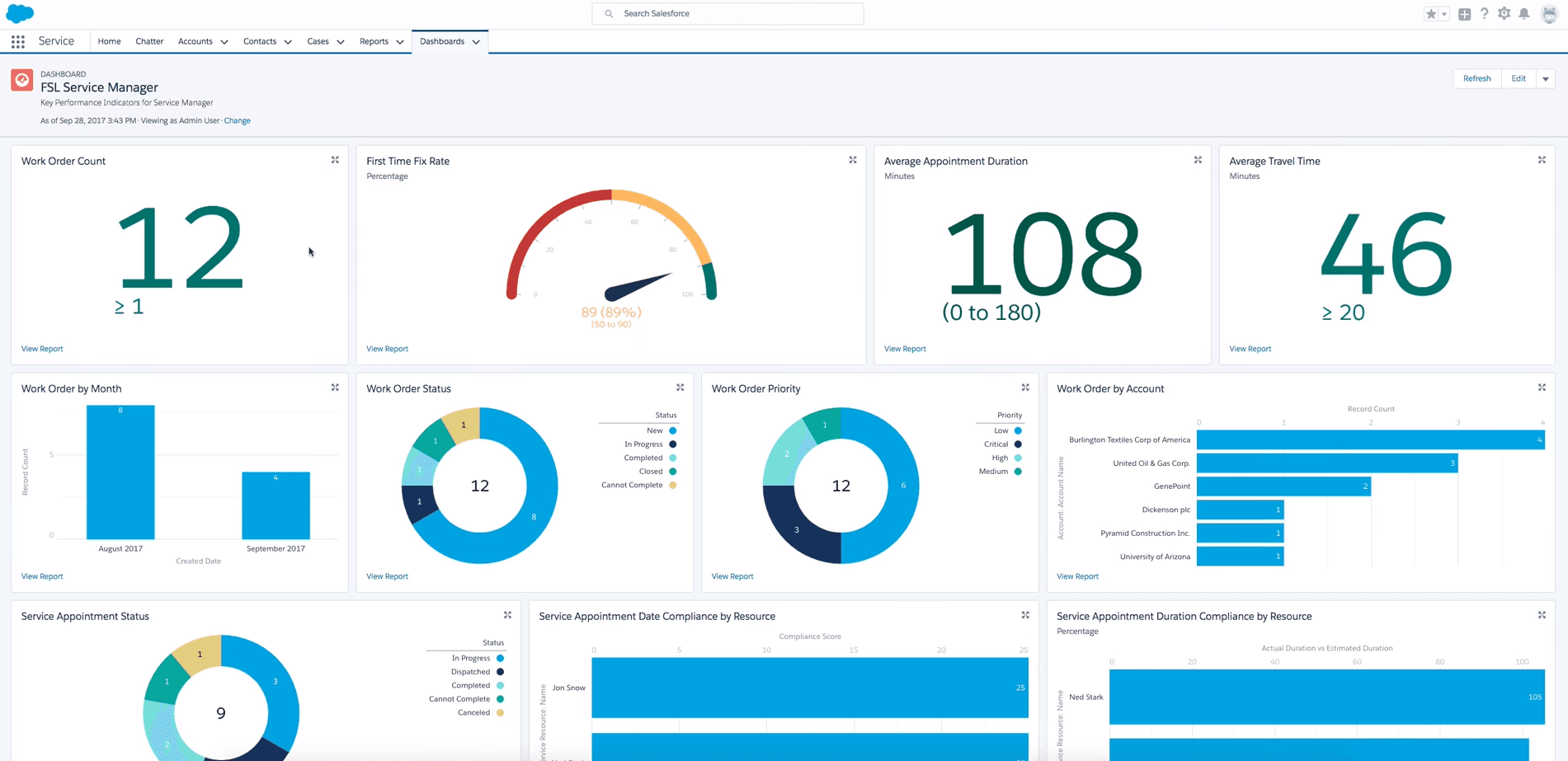
Best for: Enterprise GTM teams who need unlimited CRM customization
The 800-pound gorilla of CRM software. Not the easiest to use, but the most powerful—especially for complex enterprise sales processes.
Key Features:
- Infinite customization
- Massive ecosystem of connected apps
- Advanced reporting
- AI features via Einstein
- Revenue Cloud for complex deal management
Pros:
✅ Industry standard—everything connects with it
✅ Handles complex enterprise motions
✅ Powerful building with Flow Builder
Cons:
❌ Steep learning curve
❌ Expensive, especially with add-ons
❌ Requires admin expertise
Pricing: Starts at ~$25/user/mo. Enterprise deployments run higher.
Our Verdict: If you're building an enterprise GTM stack, probably non-negotiable. For smaller teams, HubSpot offers more immediate value.
7. HubSpot (best for SMBs and mid-market GTM teams who want everything in one place)
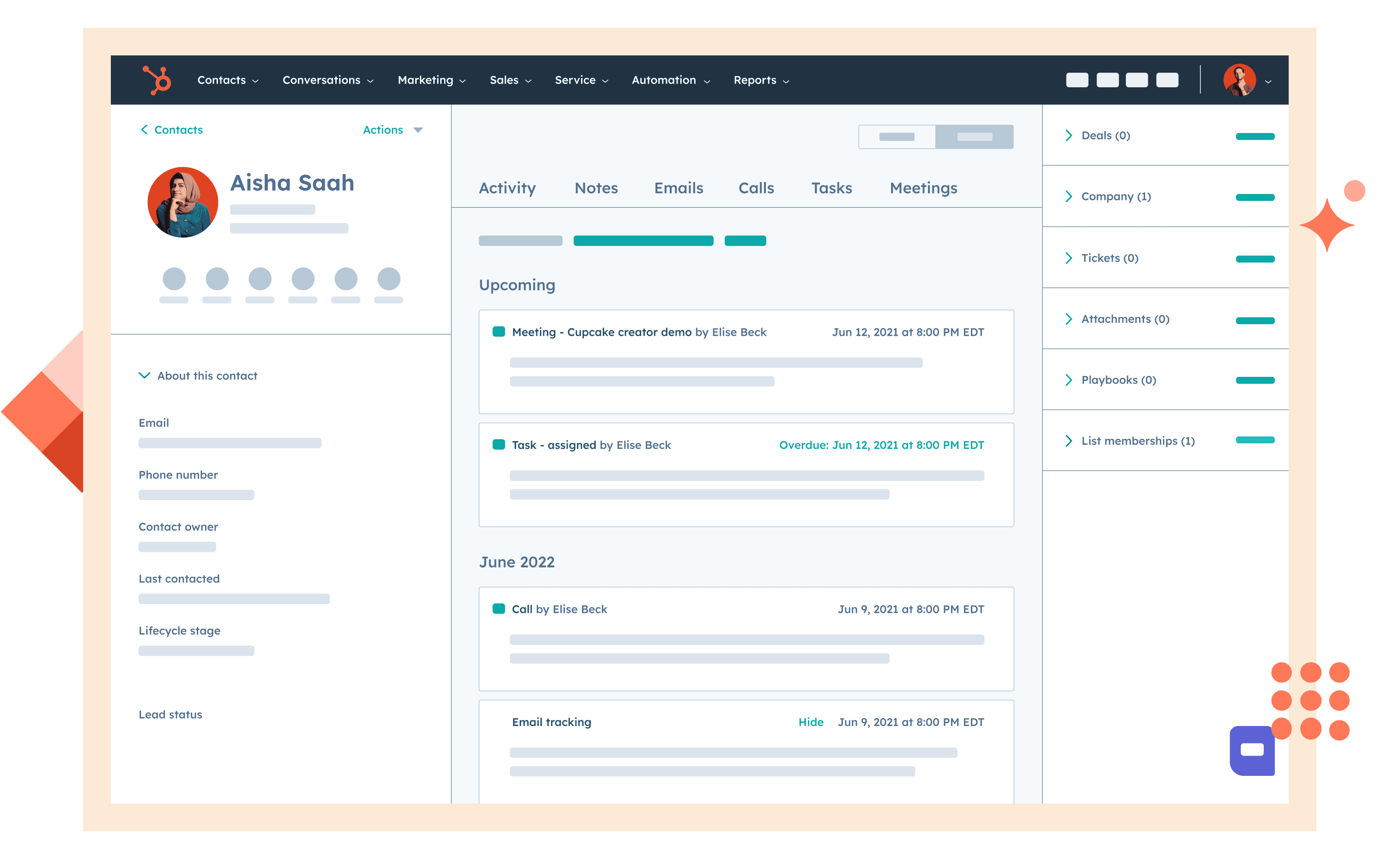
Has eaten massive market share by being genuinely easy to use. The free CRM is legitimately good.
Key Features:
- Free CRM with contact management
- Marketing features (emails, forms)
- Sales Hub with sequences
- Built-in meeting scheduling
- Pipeline analytics and reporting
Pros:
✅ Excellent free tier
✅ Intuitive interface—low training required
✅ All-in-one reduces tool sprawl
Cons:
❌ Less customizable than Salesforce
❌ Pricing jumps at higher tiers
❌ Some enterprise features feel bolted on
Pricing: Free tier available. Paid plans start at $45/month.
Our Verdict: Perfect for teams who want to move fast without dedicated ops resources.
Engagement & Sequences
Once you have quality data and a CRM, you need to actually reach people. These GTM tools help reps automate multi-channel sequences.
8. Outreach (Best for Enterprise SDR teams running high-volume GTM programs)
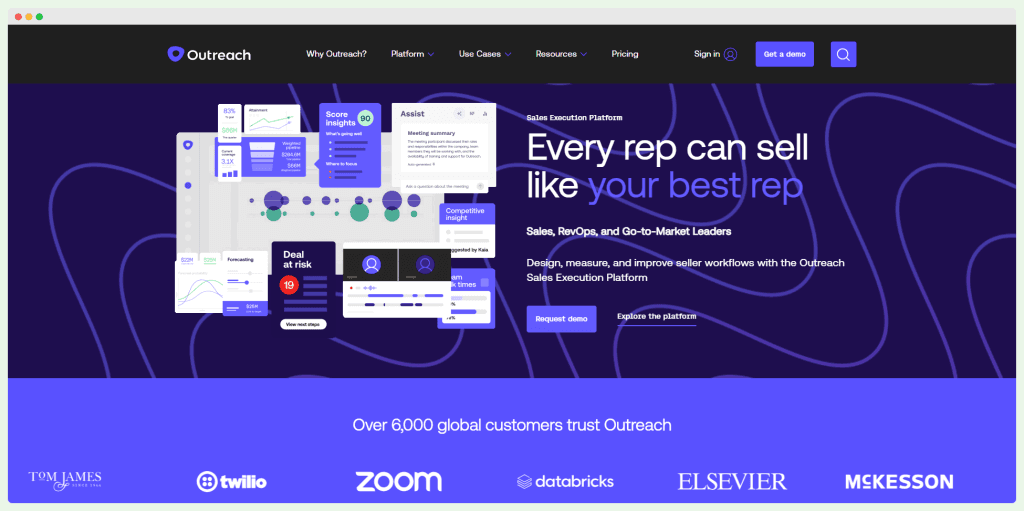
The category leader in sales engagement. Helps GTM teams build sequences, track engagement, and optimize messaging.
Combined with solid cold outreach strategies, these platforms transform how sellers engage.
Key Features:
- Multi-channel sequences (email, phone, LinkedIn, SMS)
- A/B testing for message optimization
- Conversation intelligence
- Forecasting
Pros:
✅ Most mature engagement platform
✅ Strong reporting helps optimize
✅ Good deliverability management
Cons:
❌ Complex interface takes time
❌ Expensive for smaller teams
❌ Some features require modules
Pricing: Custom pricing. Enterprise-focused.
Our Verdict: If you're running a scaled outbound motion with dedicated SDRs, it delivers.
9. Salesloft (Best for Mid-market teams who want engagement + revenue intelligence)
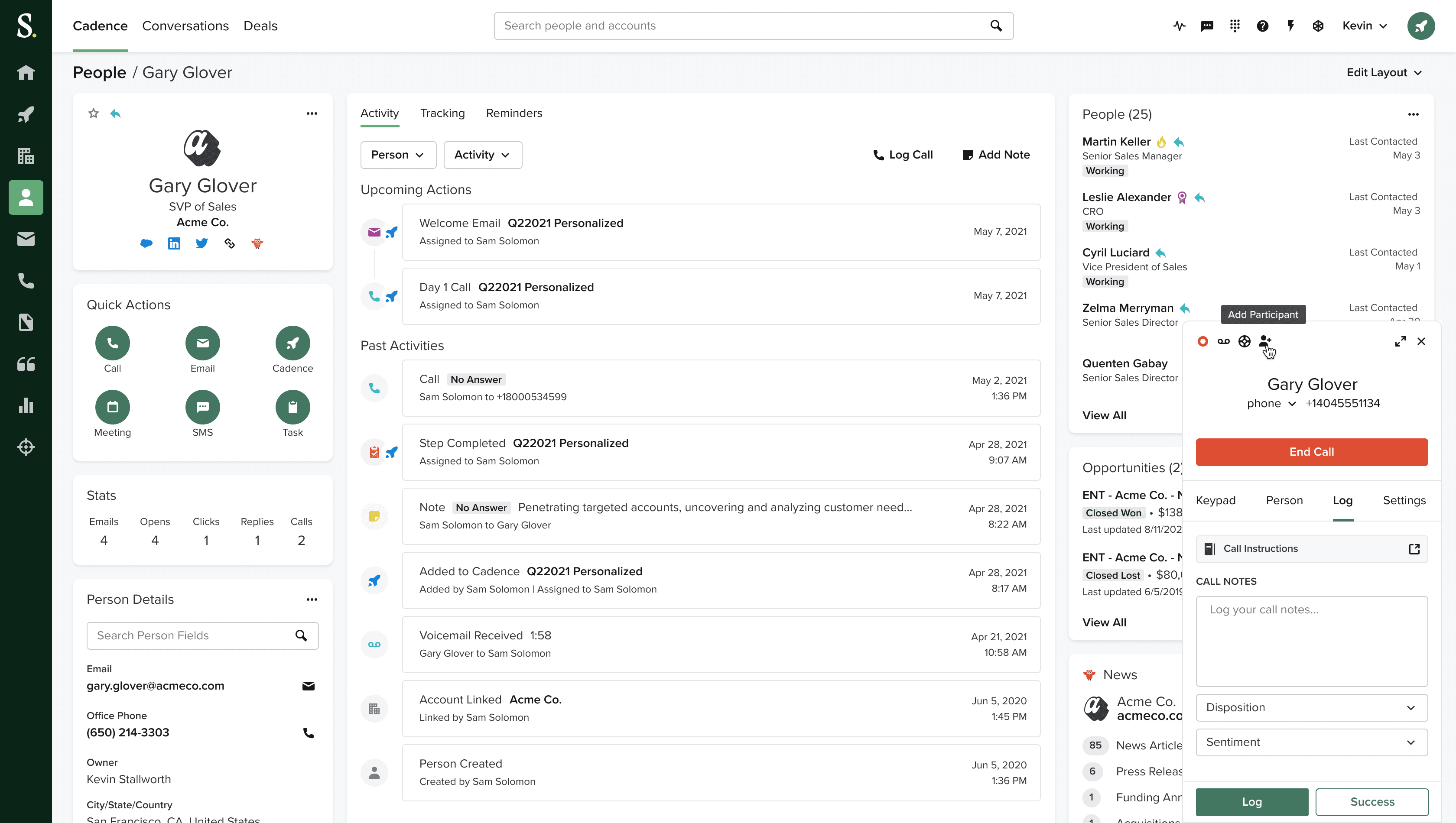
Competes directly with Outreach but has differentiated toward revenue intelligence.
Key Features:
- Cadence building across channels
- Call recording and coaching
- Deal intelligence
- Plays for rep enablement
- Mobile app
Pros:
✅ More intuitive for new users
✅ Strong conversation intelligence
✅ Good customer success reputation
Cons:
❌ Still expensive for SMBs
❌ Some connections require fees
❌ Reporting can be slow
Pricing: Custom pricing based on users.
Our Verdict: Both engagement platforms are excellent. Request demos of both.
10. Gong (Best for Revenue teams who want visibility into every customer conversation)
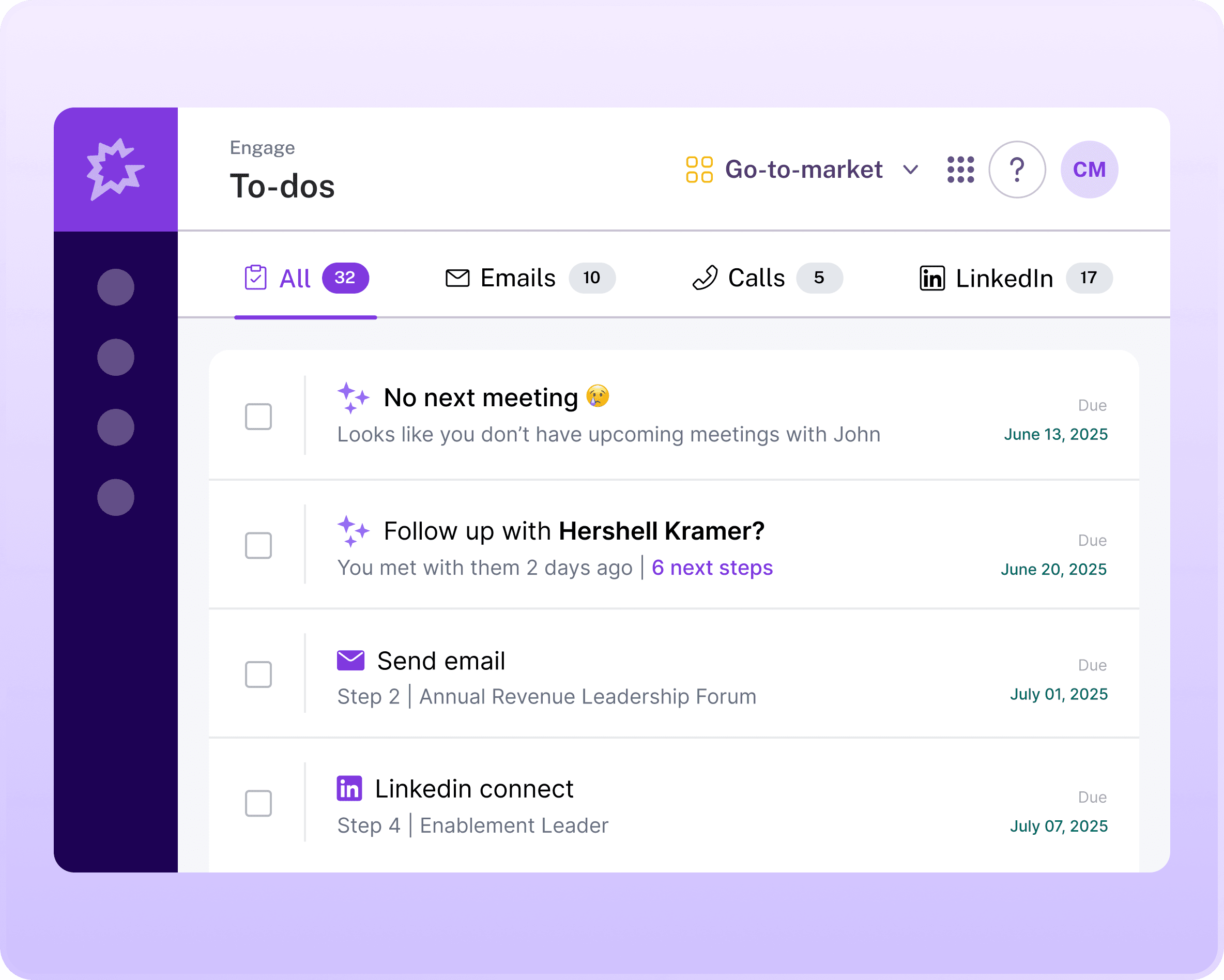
Best for: Revenue teams who want visibility into every customer conversation
Not a sequencing tool—it's a revenue intelligence platform. Records calls, analyzes conversations, surfaces insights.
Key Features:
- Call and meeting recording
- AI-powered conversation analysis
- Deal risk scoring
- Coaching features
- Competitive intelligence from mentions
Pros:
✅ Best-in-class conversation intelligence
✅ Actionable coaching insights
✅ Visibility across all deals
Cons:
❌ Expensive for small teams
❌ Privacy concerns in some regions
❌ Value scales with call volume
Pricing: Custom pricing. Generally starts around $100/user/month.
Our Verdict: If your strategy relies on calls and demos, provides visibility you can't get elsewhere.
Account-Based & Signal Platforms
ABM has evolved from buzzword to core GTM strategy. These platforms help identify accounts showing buying signals and drive pipeline.
11. 6sense (Best for Enterprise teams who want AI-powered account prioritization)
The most sophisticated account-based platform. Uses AI to predict which accounts are likely to buy based on intent signals.
Key Features:
- Intent data from multiple sources
- Account scoring and prioritization
- Website visitor identification
- Advertising orchestration
Pros:
✅ Best signal aggregation
✅ Helps prioritize accounts scientifically
✅ Reduces wasted effort
Cons:
❌ Very expensive (enterprise pricing)
❌ Complex implementation
❌ Requires organizational alignment
Pricing: Custom pricing. Generally $50k+ annually.
Our Verdict: Delivers real value for enterprise teams. If you're not ready for that investment, HockeyStack offers lighter-weight capabilities.
12. Demandbase (Best for Marketing teams who want ABM+ advertising in one platform)
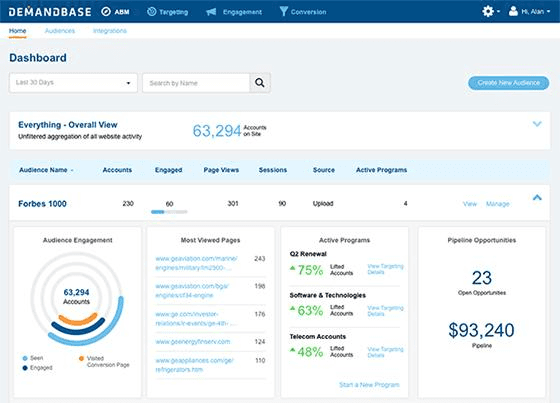
Combines account-based software with an advertising platform. Identify targets, score them, serve personalized ads.
You can even personalize website content by account.
Key Features:
- Account identification and scoring
- Advertising platform
- Buying signals
- Website personalization
- Attribution
Pros:
✅ Strong advertising capabilities
✅ Good for marketing-led motions
✅ Website personalization is powerful
Cons:
❌ Complex for sales-led organizations
❌ Advertising costs add up
❌ Implementation requires ops expertise
Pricing: Custom pricing based on modules.
Our Verdict: Shines when marketing owns the motion. For sales-led organizations, other platforms might align better.
13. HockeyStack (Best for Marketing teams who want attribution + signals without enterprise pricing)
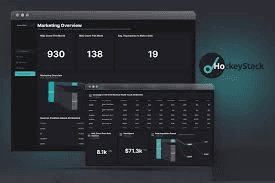
Strong alternative for teams who want buying signals and attribution without 6sense pricing.
Key Features:
- Multi-touch attribution
- Account-level journey tracking
- Signal detection
- Advertising connections
- Custom dashboards
Pros:
✅ More affordable than enterprise competitors
✅ Strong attribution capabilities
✅ Fast implementation
Cons:
❌ Less mature than enterprise competitors
❌ Signal depth is more limited
❌ Smaller ecosystem
Pricing: Starts around $1,500/month.
Our Verdict: Perfect for mid-market teams who need signals and attribution without enterprise commitments.
AI GTM Tools & Workflow Builders
This is where GTM gets interesting. AI agents and workflow builders help teams create sophisticated processes without code.
14. Clay (Best for RevOps teams who want to build custom Workflow without code)
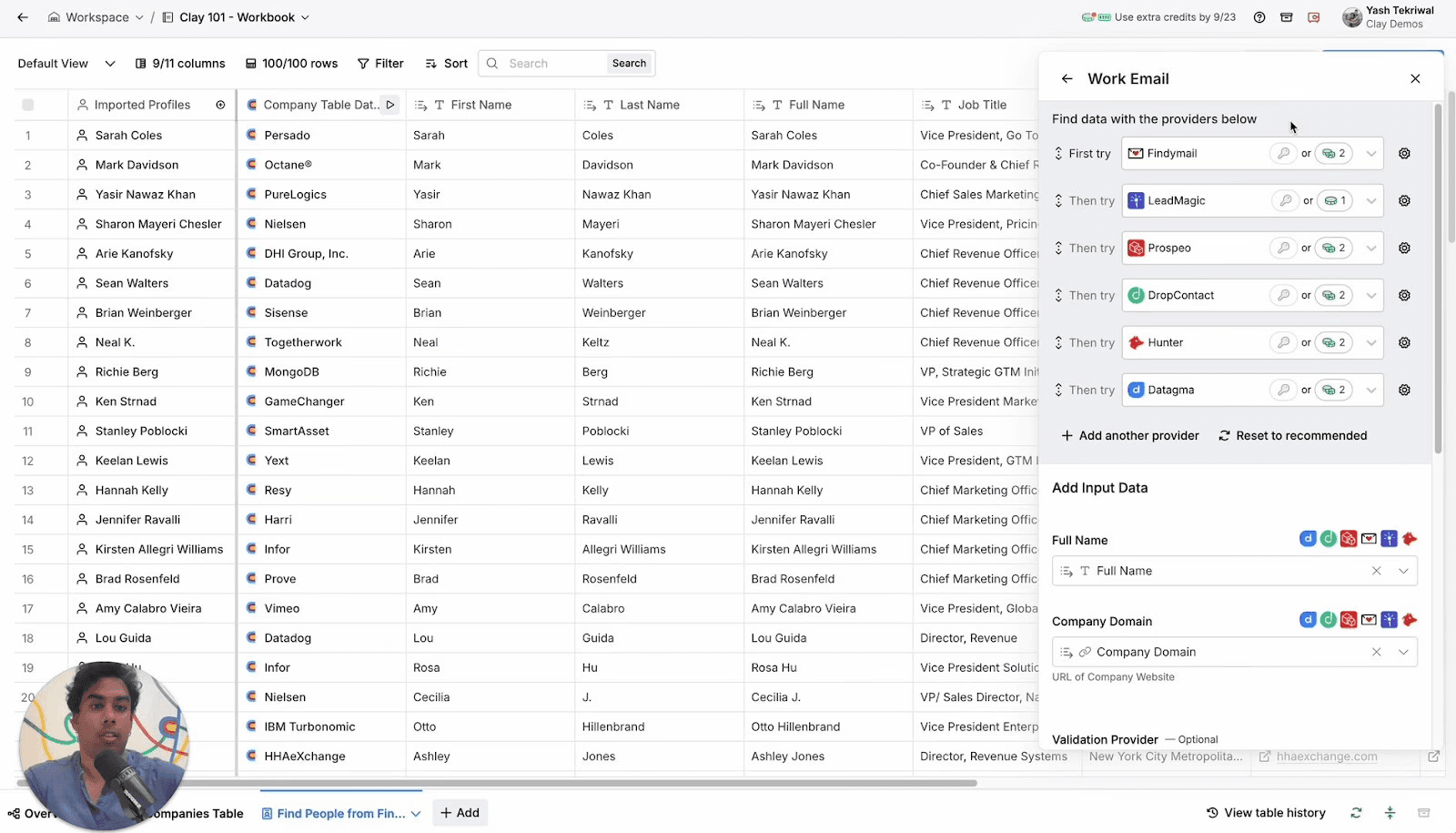
The darling of modern revenue teams. Spreadsheet-like interface that connects to dozens of data sources with drag-and-drop simplicity.
Key Features:
- Connections to 75+ data sources
- AI-powered personalization
- Prospect research
- Waterfall data lookup logic
- Connects with engagement platforms
Pros:
✅ Incredible flexibility for custom builds
✅ AI features add genuine personalization
✅ Strong community and templates
Cons:
❌ Learning curve for complex setups
❌ Credit costs can escalate
❌ Still requires engagement tool
Pricing: Free tier with limited credits. Paid plans start at $149/month.
Our Verdict: Powerful but requires investment to learn. For teams who want waterfall data lookup without complexity, FullEnrich offers a more focused solution.
💡 Tip: Many teams use FullEnrich for data and Clay for orchestration. They complement each other well.
15. Common Room (Best for Teams who want to capture community and product signals)
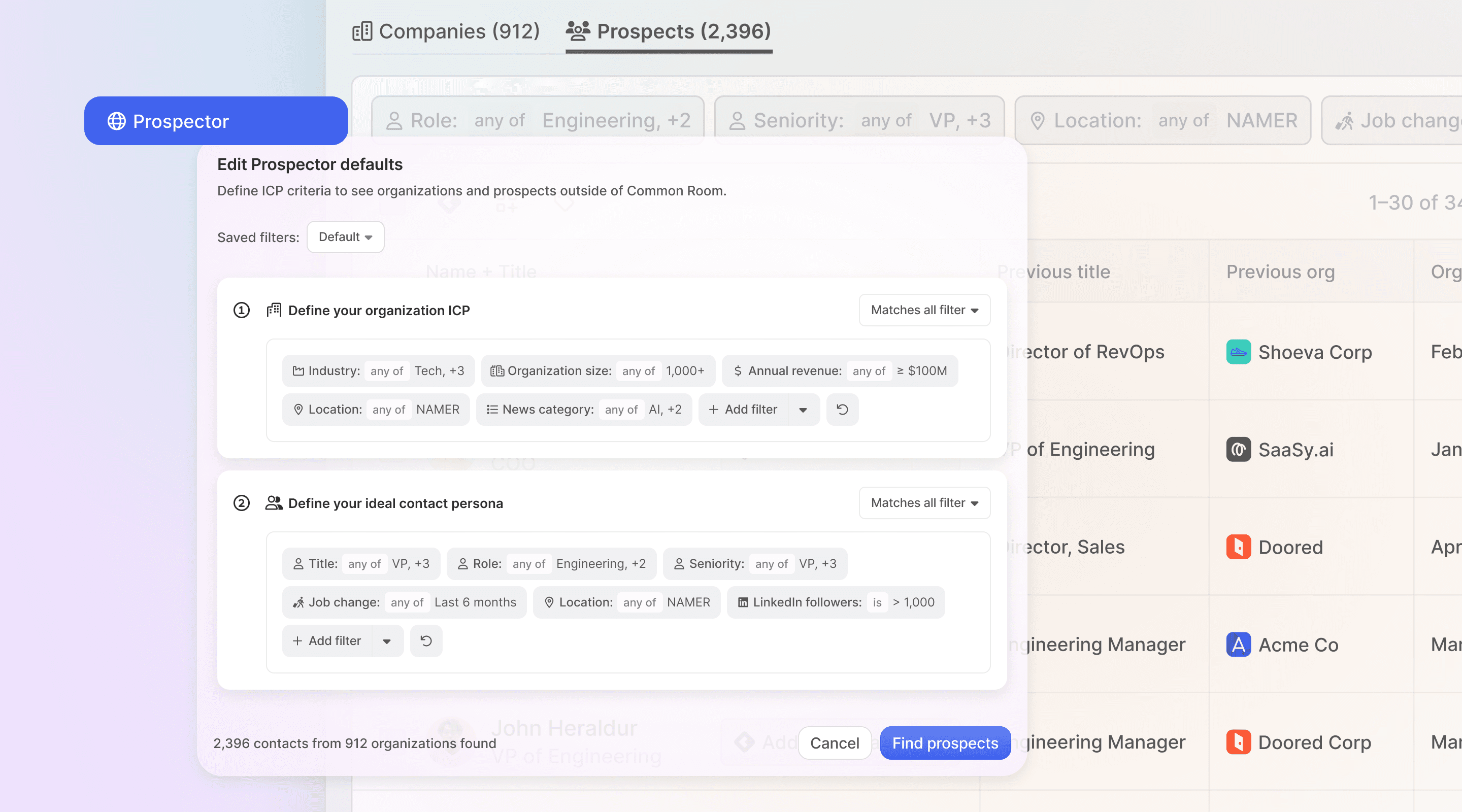
Aggregates signals from product usage, community channels, and social mentions.
Key Features:
- Signal aggregation from community sources
- Product usage connection
- Account scoring based on engagement
- Alerts
- Record updates
Pros:
✅ Unique signals others miss
✅ Great for PLG companies
✅ Helps prioritize based on engagement
Cons:
❌ Value depends on having community/product signals
❌ Requires setup
❌ Less useful for pure outbound
Pricing: Custom pricing based on usage.
Our Verdict: If you have a community or product-led motion, captures signals that help time contact perfectly.
16. Pocus (Best for Product-led teams who need to score and route product-qualified leads)

Helps PLG companies turn product usage into opportunities. Scores users based on user behavior and routes leads. Sales enablement for PLG.
Key Features:
- In-app behavior tracking
- PQL scoring and routing
- Account-level signals
- Playbook building
Pros:
✅ Purpose-built for PLG
✅ Helps focus on likely to buy accounts
✅ Good signal visualization
Cons:
❌ Only valuable for product-led models
❌ Requires clean instrumentation
❌ Newer platform
Pricing: Custom pricing based on tracked users.
Our Verdict: If your motion includes self-serve signups, helps product teams hand off qualified users.
17. Clearbit (now part of HubSpot)
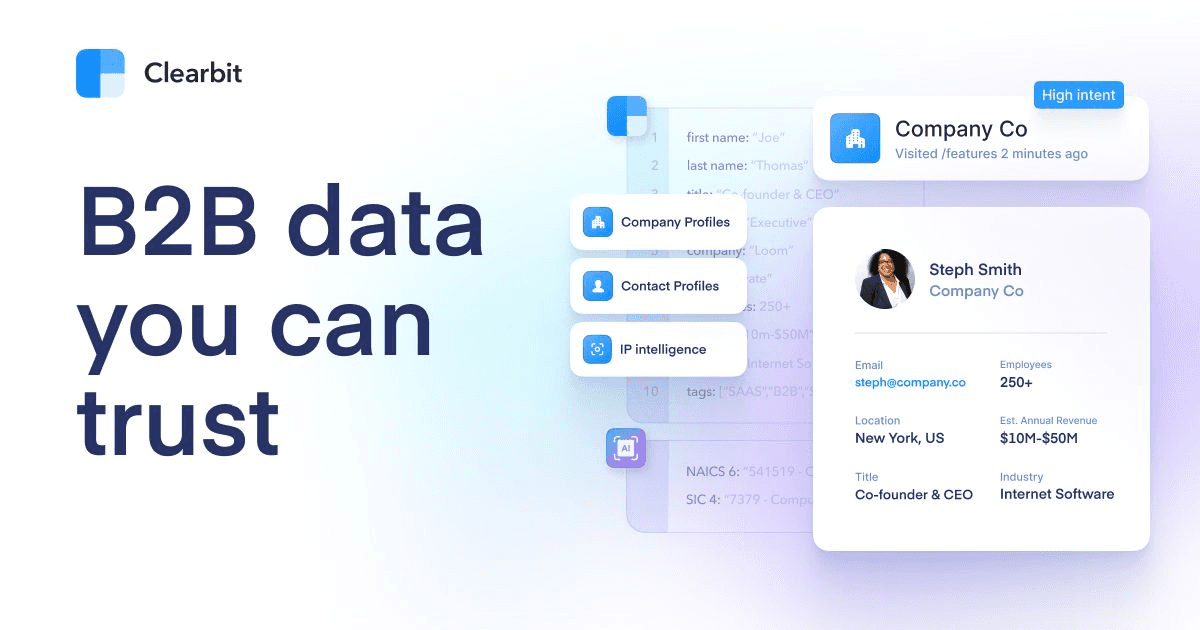
Best for: HubSpot users who want native data lookup and lead qualification
Built reputation on real-time data lookup and reveal (identifying anonymous visitors).
Key Features:
- Real-time form completion
- Website visitor identification
- Company and contact data
- Lead scoring based on attributes
Pros:
✅ Seamless for HubSpot users
✅ Good for qualifying inbound leads
✅ Real-time form shortening
Cons:
❌ Data coverage varies (single source)
❌ Less valuable outside that ecosystem
❌ Development has slowed
Pricing: Bundled with HubSpot plans.
Our Verdict: For HubSpot-centric stacks, adds value. For maximum coverage, pair with waterfall data lookup from FullEnrich.
18. Unify (Best for Teams who want to consolidate multiple tools into one platform)
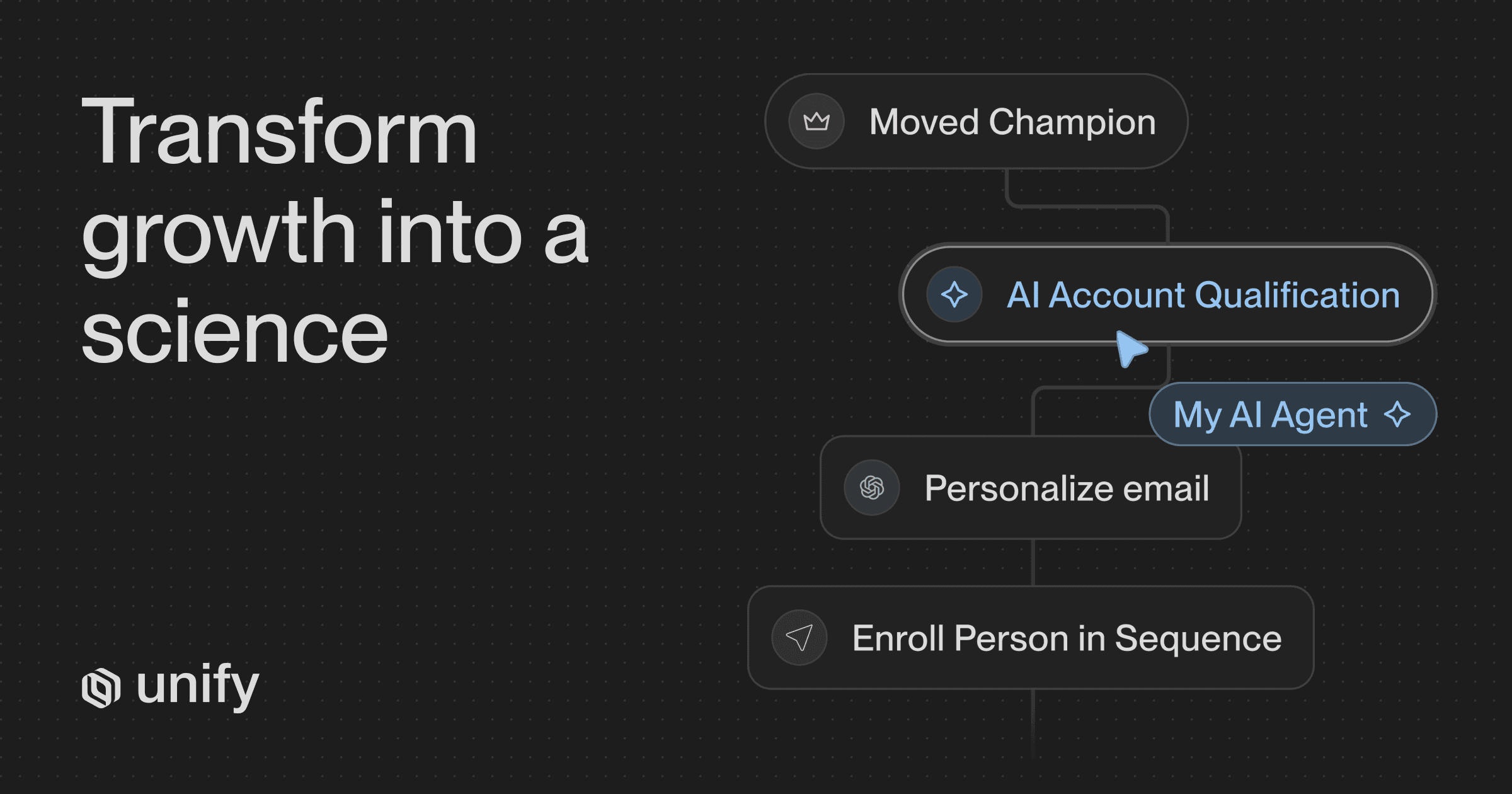
Positions itself as the "all-in-one" platform—combining data, signals, sequences, and reporting.
Key Features:
- Data from multiple sources
- Signal aggregation
- Email and LinkedIn messaging
- Reporting
- AI research and personalization
Pros:
✅ Reduces tool sprawl
✅ Unified data model
✅ Designed for modern operations
Cons:
❌ Jack of all trades, master of none
❌ Newer platform with maturing features
❌ Premium pricing
Pricing: Custom pricing based on features.
Our Verdict: Worth watching. For outbound, the individual best-in-class tools still outperform bundles.
19. Warmly (Best for Teams who want to engage website visitors with real-time chat)
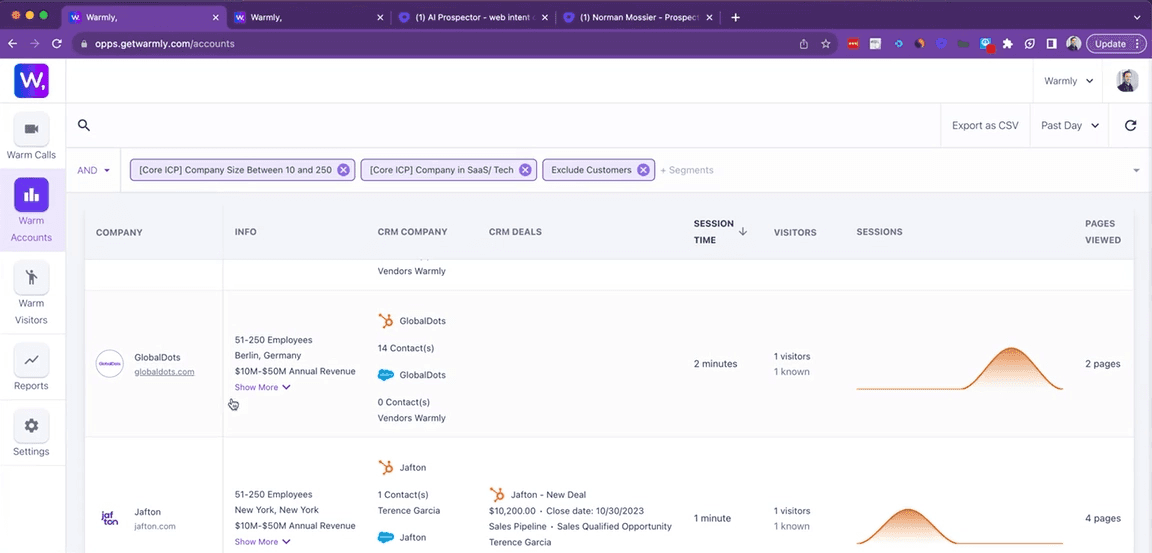
Identifies website visitors and enables real-time engagement through chat, video, and orchestrated follow-up.
Key Features:
- Website visitor identification
- Real-time chat and video
- Alerts and routing
- Intent-based triggers
- Connects with engagement platforms
Pros:
✅ Captures visitor signals in real-time
✅ Enables immediate engagement
✅ Good for high-intent pages
Cons:
❌ Requires meaningful website traffic
❌ Can feel intrusive
❌ Best for specific use cases
Pricing: Starts around $700/month.
Our Verdict: If your strategy relies on converting website traffic, helps engage at the moment of highest intent.
How to Choose Your Stack
Here's the thing: more isn't better.
The best teams run lean stacks with tools that actually work together. Effective sales prospecting depends more on data quality than tool quantity.
Early Stage (Seed to Series A):
- Database: Free tier option
- Data: FullEnrich (pay-per-result)
- Sequences: Apollo (free tier)
- Total monthly cost: $0-500
Growth Stage (Series A-B):
- Database: Your choice of platform
- Data: FullEnrich (waterfall for coverage)
- Engagement: Outreach or Salesloft
- Signals: HockeyStack
- Revenue Intelligence: Gong
- Total monthly cost: $3,000-10,000
Enterprise:
- Database: Enterprise platform
- Data: FullEnrich + ZoomInfo
- Account-based: 6sense or Demandbase
- Engagement: Outreach
- Revenue Intelligence: Gong
- Building: Clay + FullEnrich
- Total monthly cost: $15,000+
Key principle: Start with quality data. If your data is bad, everything downstream underperforms.
Build Your Stack Today
The landscape keeps evolving, but the fundamentals don't change: you need accurate data, efficient processes, and visibility.
Start with your foundation—quality data. Everything else builds on top.
👉 Try FullEnrich free with 50 credits — See how waterfall data lookup delivers higher coverage than any single provider.
Happy selling! 🎯
Frequently Asked Questions
What is a go-to-market tool?
A go-to-market tool is any software that helps identify, reach, and convert buyers. These span databases, sales intelligence, engagement, account-based platforms, and reporting.
What's the best free option?
For data, FullEnrich offers a free trial with 50 credits. For databases, there are genuinely useful free tiers. For prospecting + sequences, Apollo's free plan provides real value.
How much should I spend on tools?
Most growing companies spend 2-5% of revenue. Early-stage companies can build effective stacks for under $1,000/month.
What's the difference between sales intelligence and buying signals?
Sales intelligence tools like FullEnrich and ZoomInfo provide contact-level data. Signal tools like 6sense tell you which accounts are actively researching. Both support lead generation, but they serve different purposes.
Should I use multiple data providers?
Yes—and that's exactly what waterfall data lookup solves. Instead of managing multiple tools, platforms like FullEnrich query multiple sources automatically.