By Grégoire Démogé, Co-founder & CPO at FullEnrich
ZoomInfo is a B2B database and intelligence platform that provides verified contact information (emails and phone numbers), intent signals, and sales intelligence to help businesses find, connect with, and close their ideal customers faster.
Think of it as your sales team's research department, comprehensive database, and buyer intelligence system rolled into one.
But here's the thing: ZoomInfo is not just another contact database. It's an entire ecosystem of tools designed to power your revenue operations from prospecting to closing.
Whether you're an SDR hunting for fresh leads, a marketer building ABM campaigns, or a recruiter sourcing passive candidates, ZoomInfo claims to have you covered with B2B data that sales and marketing teams actually need.
Let's dig in.
What is ZoomInfo Used For? (And who can benefit from using it)
The beauty (and complexity) of ZoomInfo is that it serves multiple go-to-market functions. ZoomInfo helps sales and marketing teams find, research, and engage with prospects more efficiently. Here's how different teams actually use ZoomInfo to power their lead generation efforts:
🎯 Sales Teams
If you're in sales, ZoomInfo is basically your prospecting sidekick. This sales intelligence platform streamlines lead generation by giving you instant access to contact details you'd otherwise spend hours hunting down. Here's what it helps with:
- Finding decision-makers fast — No more guessing who the VP of Sales is at that prospect company
- Getting direct dial phone numbers — Skip the gatekeeper and get straight to your buyer's mobile
- Building targeted lead lists — Filter by industry, company size, tech stack, job title, and more
- Reducing research time — Instead of spending 20 minutes per prospect on LinkedIn, get everything in seconds
Sales teams use ZoomInfo to export contact lists, enrich their CRM with up-to-date information, and get real-time alerts when prospects change jobs or their companies hit key triggers. The platform provides the contact and company information needed to fill your pipeline with qualified leads.
📊 Marketing Teams
Marketing teams love ZoomInfo for a different reason — it helps them target the right accounts at the right time and supercharge their marketing efforts:
- Account-Based Marketing (ABM) — Build laser-focused account lists and target them across channels
- Form enrichment — Convert anonymous website visitors into known leads (hello, FormComplete)
- Intent data targeting — Identify companies actively researching solutions like yours
- Ad targeting — Use ZoomInfo's MarketingOS to run display and programmatic ads to specific accounts
- Lead generation optimization — Fill your funnel with prospects showing buying intent
Here's a real-world example: Let's say you sell marketing automation software. With ZoomInfo's intent data, you can see which companies are currently researching "email marketing tools" or visiting competitor websites. These intent signals tell your marketing team exactly when prospects are in buying mode. That's your signal to strike while the iron's hot.
💼 Recruiters (TalentOS)
Yep, ZoomInfo isn't just for sales and marketing professionals. TalentOS helps talent acquisition teams streamline their recruiting process:
- Source passive candidates — Find top talent who aren't actively job hunting
- Get direct contact info — Reach out to candidates via email or phone without going through LinkedIn InMail
- Build talent pipelines — Create lists of potential hires based on skills, experience, and company
- Engage candidates directly — Skip the noise and connect with the right people faster
If you're tired of relying solely on LinkedIn Recruiter or job boards, TalentOS gives you another channel to tap into for talent acquisition.
What features does ZoomInfo offer?
Alright, let's break down the actual ZoomInfo ecosystem and the key ZoomInfo features that make it valuable. Because when people say "ZoomInfo," they're usually talking about one (or all) of these products that deliver comprehensive business data:
SalesOS (The Flagship)
This is the product most people think of when they hear "ZoomInfo." SalesOS is the prospecting powerhouse that gives you access to a massive database of business contacts and company profiles. Here's what ZoomInfo provides:
- Contact & company database — Access to 100M+ business contacts and 14M+ detailed company profiles
- Direct dial phone numbers — Mobile and office numbers for decision-makers
- Email addresses — Verified business emails with deliverability scores
- Buying signals — Know when prospects are hiring, expanding, or showing purchase intent
- Chrome extension — Look up contact information while browsing LinkedIn or company websites
The database includes detailed company and contact information, from firmographics to technographics, giving you everything you need to prospect smarter.
MarketingOS
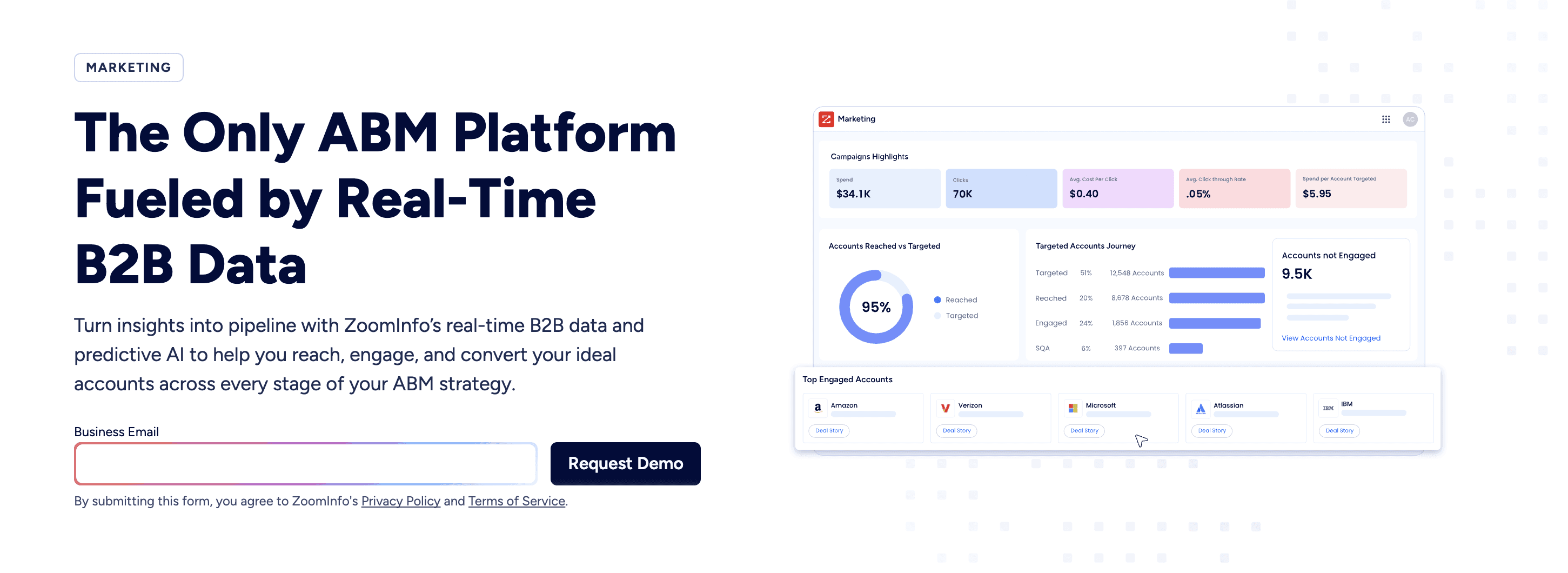
This is for demand gen and ABM teams who want to maximize their lead generation:
- Run targeted ad campaigns — Push display ads to specific companies and decision-makers
- Enrich marketing automation — Sync clean data into HubSpot, Marketo, or Pardot
- Track website visitors — See which companies are visiting your site (even anonymously)
- Build lookalike audiences — Find companies similar to your best customers in the database
MarketingOS helps teams leverage the same B2B data that powers SalesOS for advertising and demand generation campaigns.
OperationsOS
This one's for your RevOps team who needs better data management. OperationsOS helps you:
- Clean your CRM — Remove duplicates, fix bad data, and standardize fields
- Enrich existing records — Add missing emails, phone numbers, and firmographic data
- Set up workflows — Automate data enrichment via APIs and integrations
- Reduce manual data entry — Let automation handle the tedious work
OperationsOS ensures your database stays clean and up-to-date without the manual effort.
Chorus.ai (Conversation Intelligence)
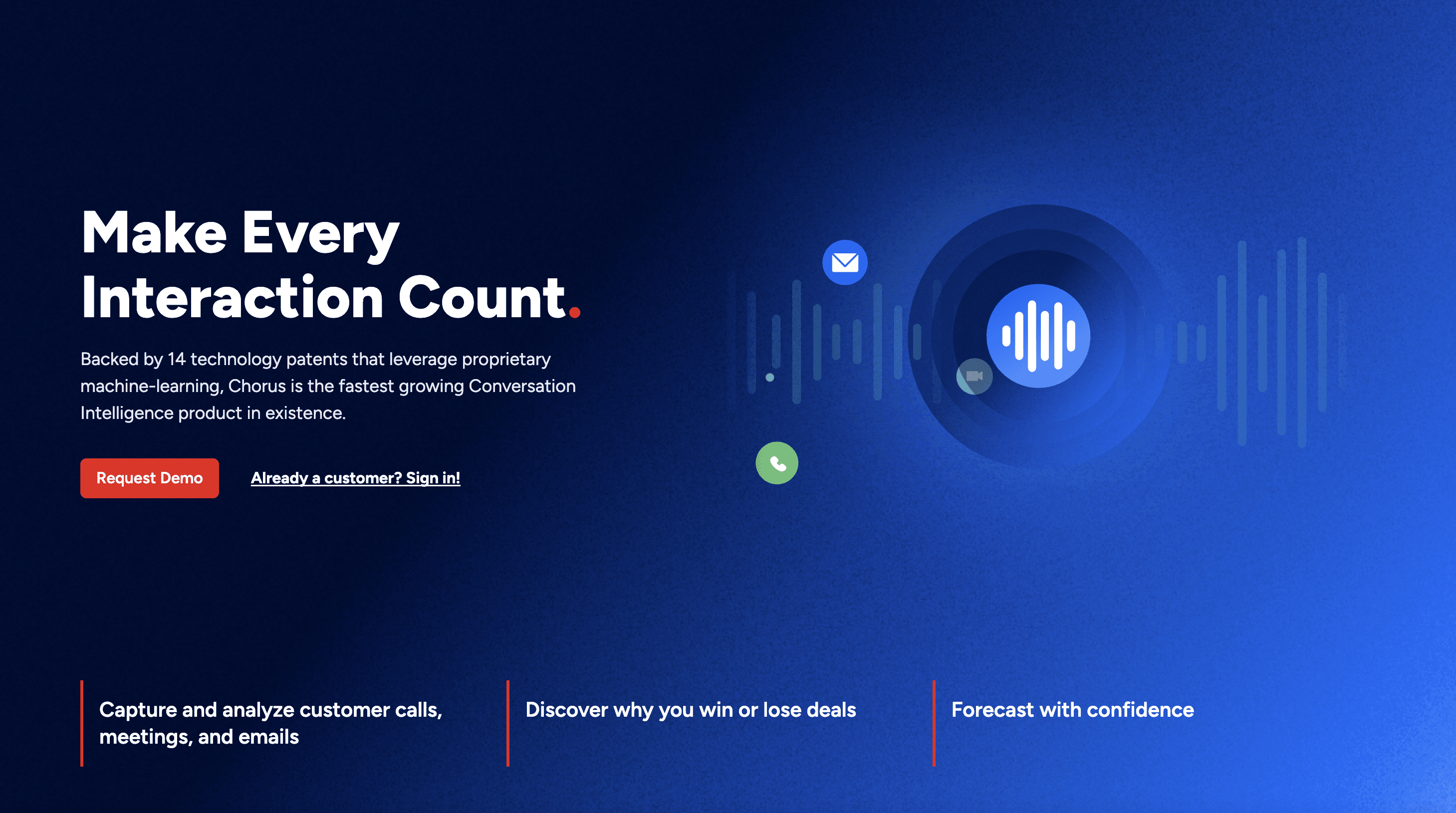
ZoomInfo acquired Chorus.ai to add AI-powered sales call analysis. It helps sales teams understand buyer intent and improve their pitch:
- Records and transcribes calls — Automatically logs sales conversations
- Analyzes deal risk — Identifies red flags or positive buying intent signals
- Provides coaching insights — Helps managers coach reps based on what actually happens on calls
- Tracks key metrics — Monitor talk-to-listen ratios, competitor mentions, and more
ZoomInfo Copilot
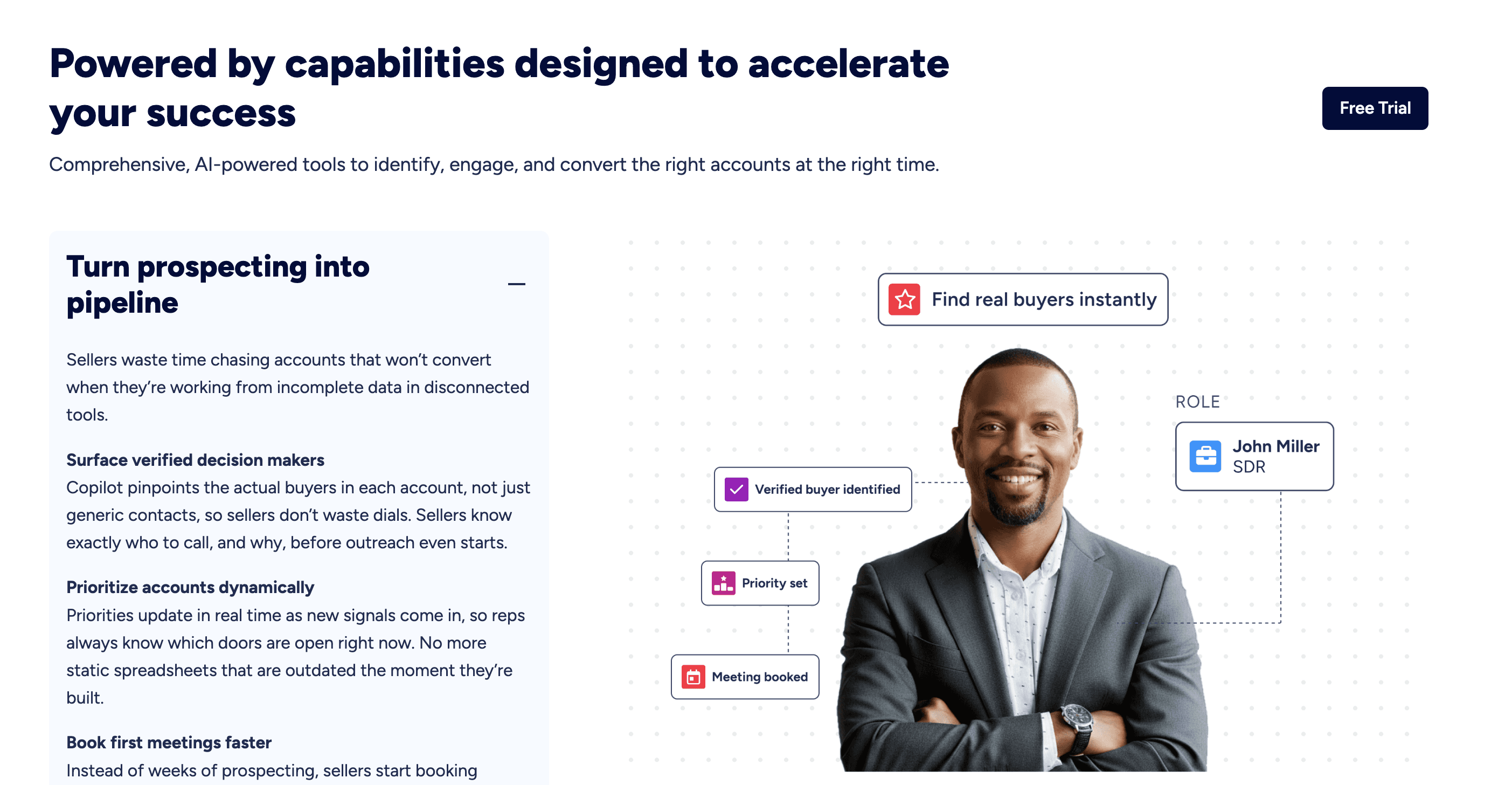
ZoomInfo Copilot is the AI-powered assistant that helps sales professionals work more efficiently:
- AI-generated insights — Get recommendations on when and how to reach out to prospects
- Automated data entry — Copilot can suggest updates and additions to your CRM
- Smart recommendations — Helps prioritize which prospects to contact based on intent signals
- Workflow automation — Streamlines repetitive tasks so you can focus on selling
GTM Studio
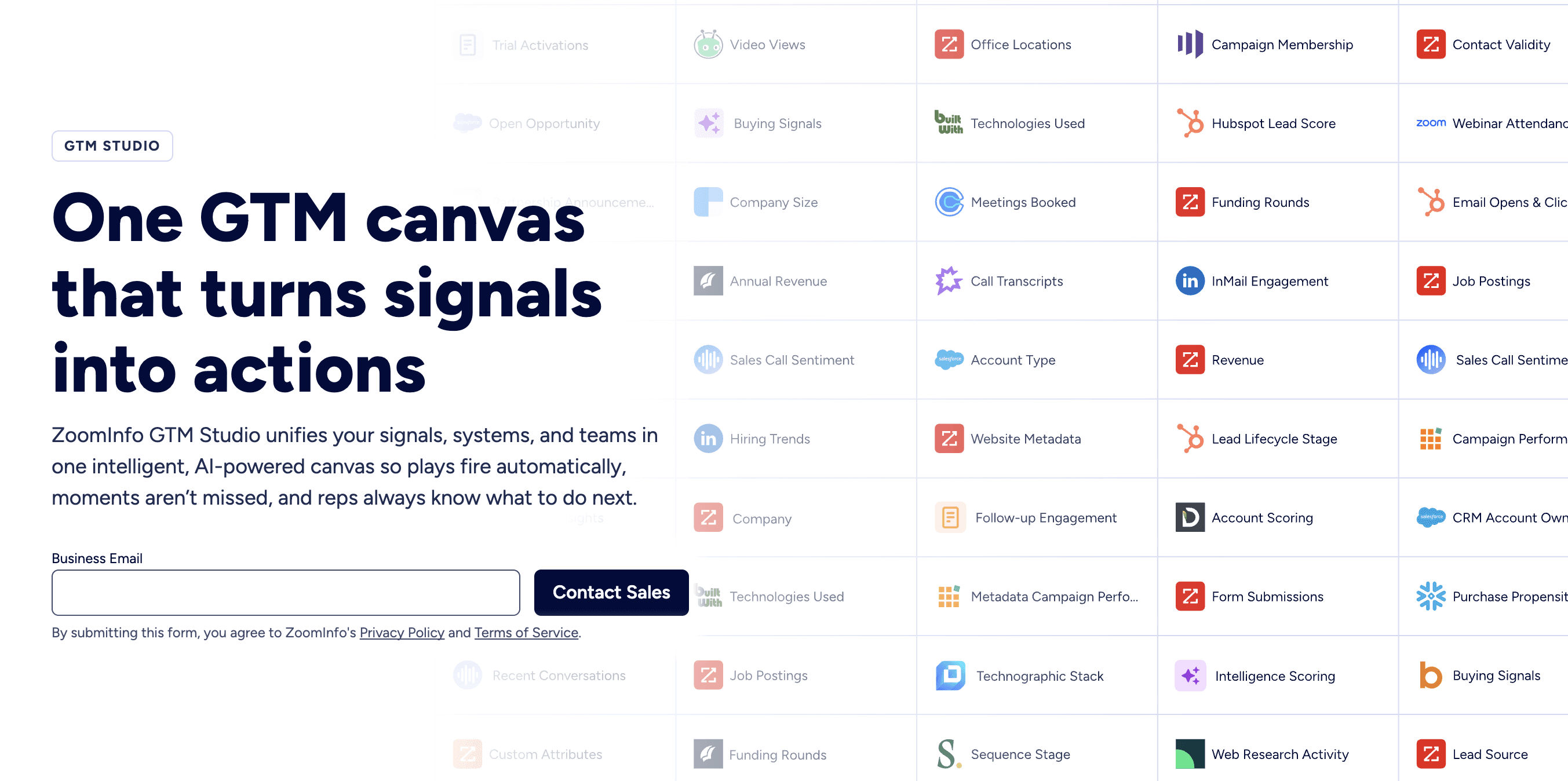
GTM Studio is ZoomInfo's AI-powered canvas for orchestrating go-to-market campaigns in real time. Think of it as the control center where revenue operators design, build, and activate GTM plays:
- Natural language interface — Type requests like "Show me B2B SaaS companies in North America hiring CROs" and get instant results
- Unified data management — Combines CRM data, ZoomInfo intelligence, and third-party data in one dynamic canvas
- AI-powered workflows — Automatically detect signals and trigger actions like routing leads or updating records
- Campaign orchestration — Launch multi-channel campaigns across email, ads, and direct mail based on buyer behavior
- Real-time enrichment — Instantly enrich your database with company profiles and contact details
What are ZoomInfo Plans & Pricing ?
Alright, let's talk money. ZoomInfo pricing is notoriously secretive — there's no public pricing page, and they require you to book a demo to get a quote. This is one of the biggest frustrations users have with ZoomInfo plans.
But here's what we know from industry reports and user feedback about pricing:
The Tier Structure
ZoomInfo offers plans at different levels, though exact pricing varies:
- Professional — Entry-level access (limited credits and features)
- Advanced — More credits, advanced filters, and integrations
- Elite — Full access, highest data limits, and premium features like intent data
Each tier provides different levels of access to the database and features.
The Credit System
ZoomInfo uses a credit-based model. Every time you export a contact's email or phone number, it costs credits. Plans typically include:
- A set number of credits per year (e.g., 5,000–10,000+)
- Additional credits can be purchased as needed
Estimated Costs
Based on user reports, here's what you can expect for pricing:
- Small teams (1-3 users): $15,000–$25,000/year
- Mid-sized teams (5-10 users): $30,000–$60,000/year
- Enterprise teams (10+ users): $60,000+/year (often $100k+ for large deployments)
ZoomInfo is definitely an enterprise-level investment with pricing that's 3-17x higher than many alternatives. If you're a solo founder or early-stage startup, the pricing might push you toward more affordable options (more on that below).
Is There a Free Trial?
ZoomInfo offers a Community Edition where you can use ZoomInfo with limited data for free if you contribute your own contacts. There's also a free trial option if you book a demo, but it's typically limited to a few days or weeks.
Most teams who want to use ZoomInfo seriously will need a paid plan to access the full database and features.
How Does ZoomInfo Get Its Data? (Trust & Compliance)
Okay, so this is the question everyone asks (and honestly, it's a fair one): How does ZoomInfo get their data legally? Understanding ZoomInfo's data collection process is important for evaluating the platform. Here's how ZoomInfo gathers information from various sources:
The Contributory Network
Here's how it works: ZoomInfo has a Community Edition where users can access the platform for free if they contribute their own email contact book. Think of it like a data co-op — you share your business contacts, and in return, you get access to everyone else's.
This is how ZoomInfo scales its database so quickly. Sales reps, recruiters, and marketers upload their address books with business contacts and company information, and ZoomInfo aggregates and enriches that data from various sources.
Web Crawling & Public Records
ZoomInfo also gathers data from various sources including:
- Web scraping — Scanning millions of company websites, press releases, and public directories to collect information about companies
- Public records — Pulling data from SEC filings, patent databases, and other government sources
- User-generated content — Monitoring LinkedIn profiles, conference speaker lists, and company blogs
This multi-source approach helps ZoomInfo provide information directly from where it's published, though it also means data accuracy depends on how current those sources are.
Is It Legal? (GDPR & CCPA Compliance)
Short answer: Yes, ZoomInfo is legal.
They comply with:
- GDPR (General Data Protection Regulation) for European contacts
- CCPA (California Consumer Privacy Act) for California residents
- CAN-SPAM for email marketing compliance
ZoomInfo allows people to opt out and remove their data through their privacy portal. So while the data collection might feel invasive, they're playing by the rules.
That said, just because it's legal doesn't mean every contact will be thrilled to hear from you. Always follow best practices for cold outreach (personalize, provide value, respect opt-outs).
What Integrations Does ZoomInfo Offer?
One of the biggest reasons sales and marketing teams love ZoomInfo is how seamlessly it plugs into your existing tech stack. ZoomInfo offers integrations with pretty much every major platform you're already using, which means you can enrich your database without switching between a million tabs.
CRM Integrations
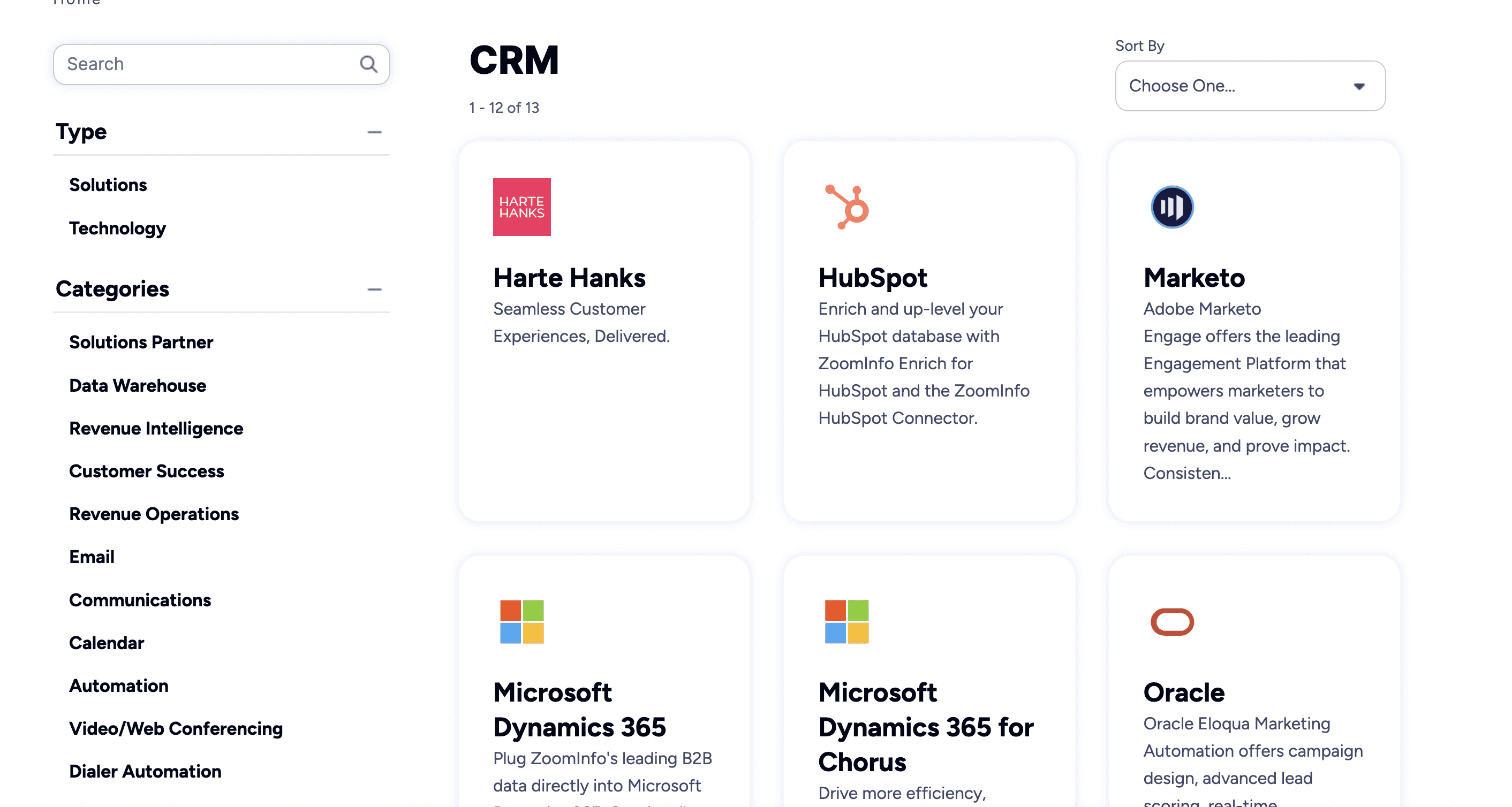
ZoomInfo provides native integrations with all the major CRMs:
- Salesforce — Bi-directional sync keeps contact information up-to-date in both systems
- HubSpot — Automatically enrich leads and contacts with B2B data
- Microsoft Dynamics — Push and pull contact data seamlessly
- Pipedrive — Enrich your pipeline with verified contact details
- Zoho CRM — Sync company profiles and contact information
These integrations help eliminate manual data entry and ensure your CRM always has the information needed for outreach.
Sales Engagement Platforms
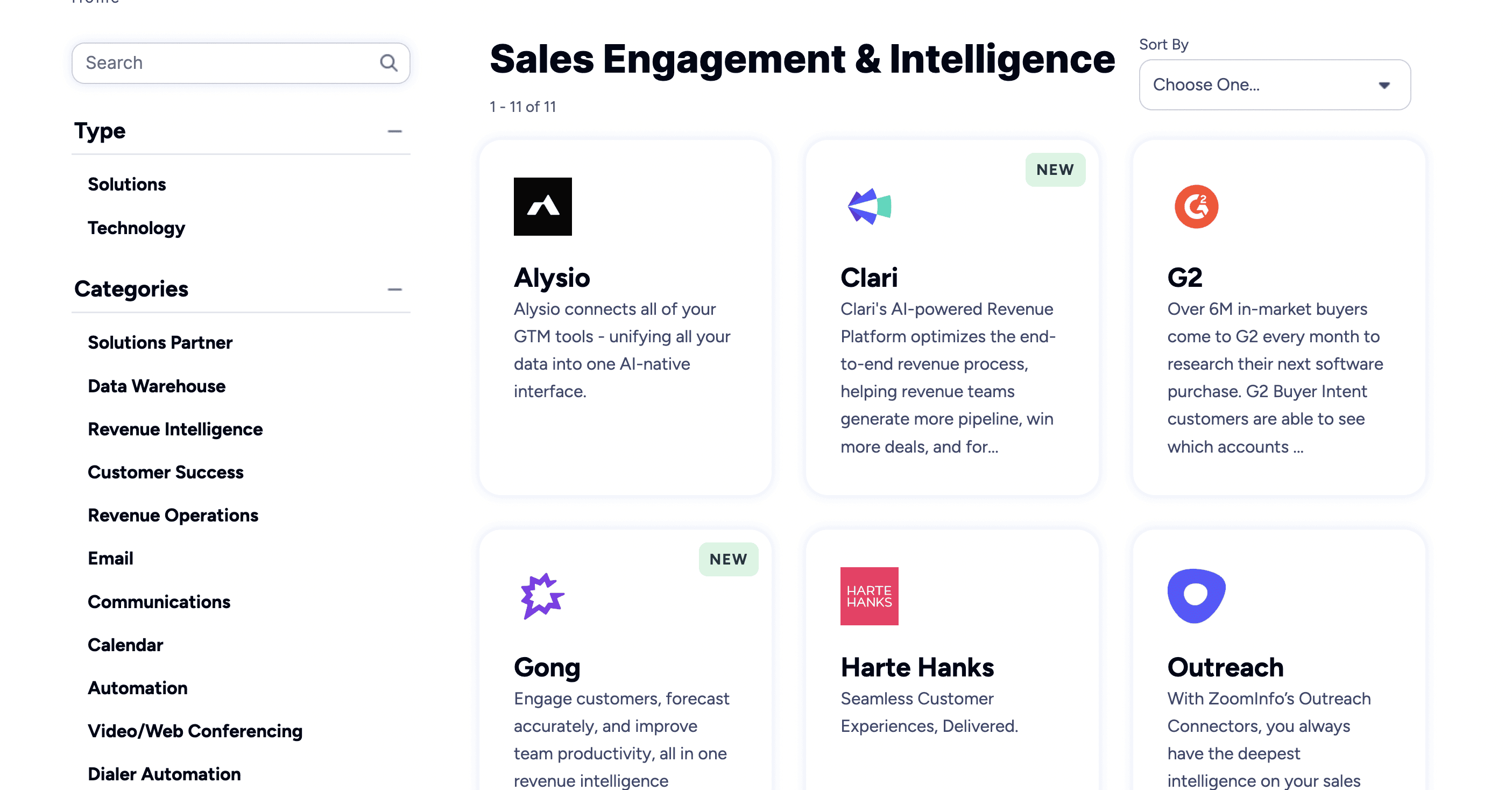
For teams running sequences and cadences, ZoomInfo offers integrations with:
- Outreach — Export prospects directly into your sequences
- Salesloft — Build cadences with enriched contact data
- Apollo.io — Combine databases for better coverage
- Groove — Streamline your prospecting workflow
These integrations help your sales team move from research to outreach in seconds.
Marketing Automation
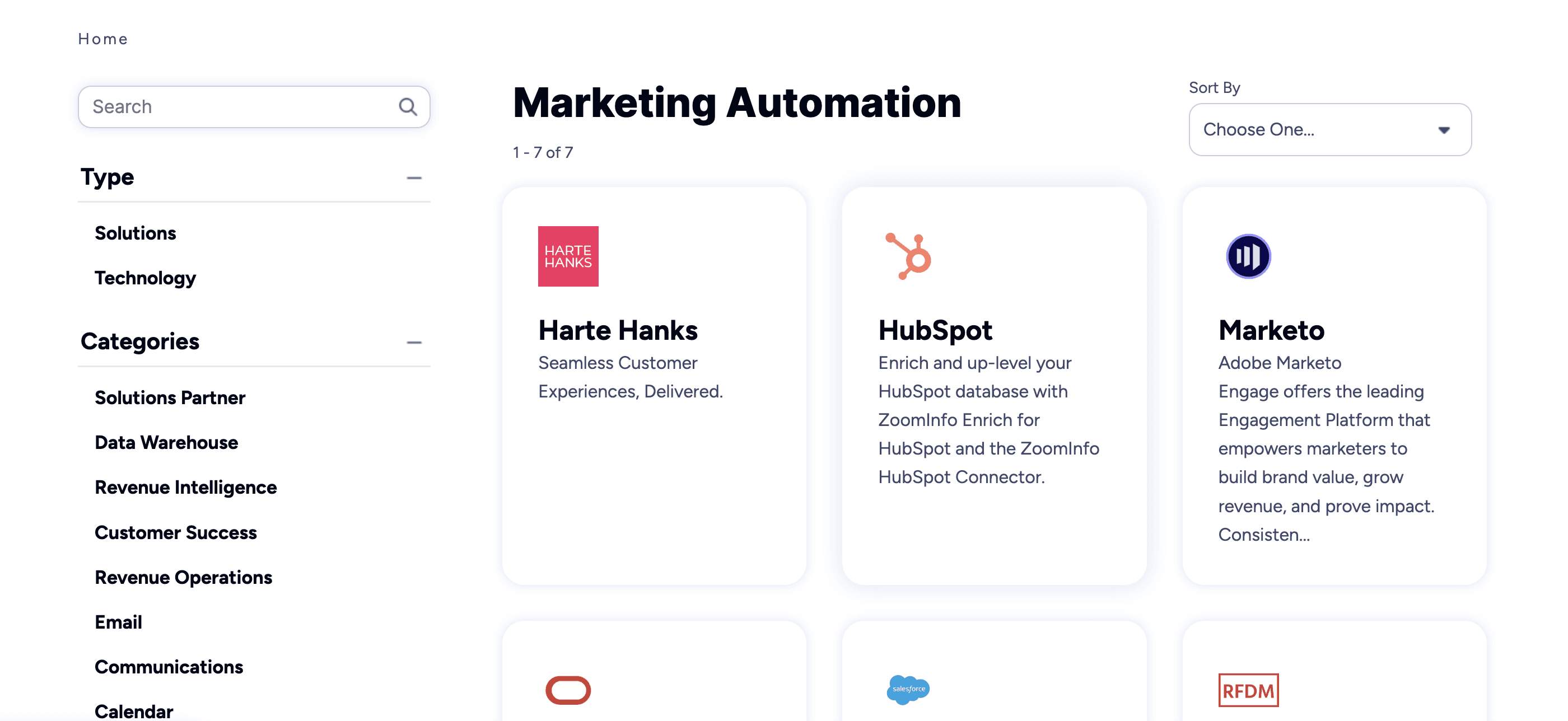
Marketing teams can leverage ZoomInfo's integrations with:
- Marketo — Enrich leads with intent signals and company data
- Pardot — Improve lead scoring with firmographic data
- Eloqua — Sync B2B data for better segmentation
- ActiveCampaign — Power your marketing efforts with verified contacts
ZoomInfo helps marketing teams fill their automation platforms with high-quality, up-to-date information.
Communication & Collaboration Tools
Keep your team aligned with integrations for:
- Slack — Get alerts when prospects hit buying intent triggers
- Microsoft Teams — Share prospect insights across your organization
- Gmail & Outlook — Access contact details directly from your inbox
Data & Analytics
For RevOps and analytics teams, ZoomInfo offers:
- Snowflake — Push data into your data warehouse
- Tableau — Visualize your prospecting and pipeline data
- Power BI — Create dashboards with ZoomInfo data
Top ZoomInfo Alternatives & Competitors
Look, ZoomInfo is powerful, but it's not the only game in town. If you're evaluating a ZoomInfo alternative or researching ZoomInfo competitors, depending on your budget, use case, and data needs, these alternatives might be a better fit:
FullEnrich — Best for Data Accuracy via Waterfall Enrichment
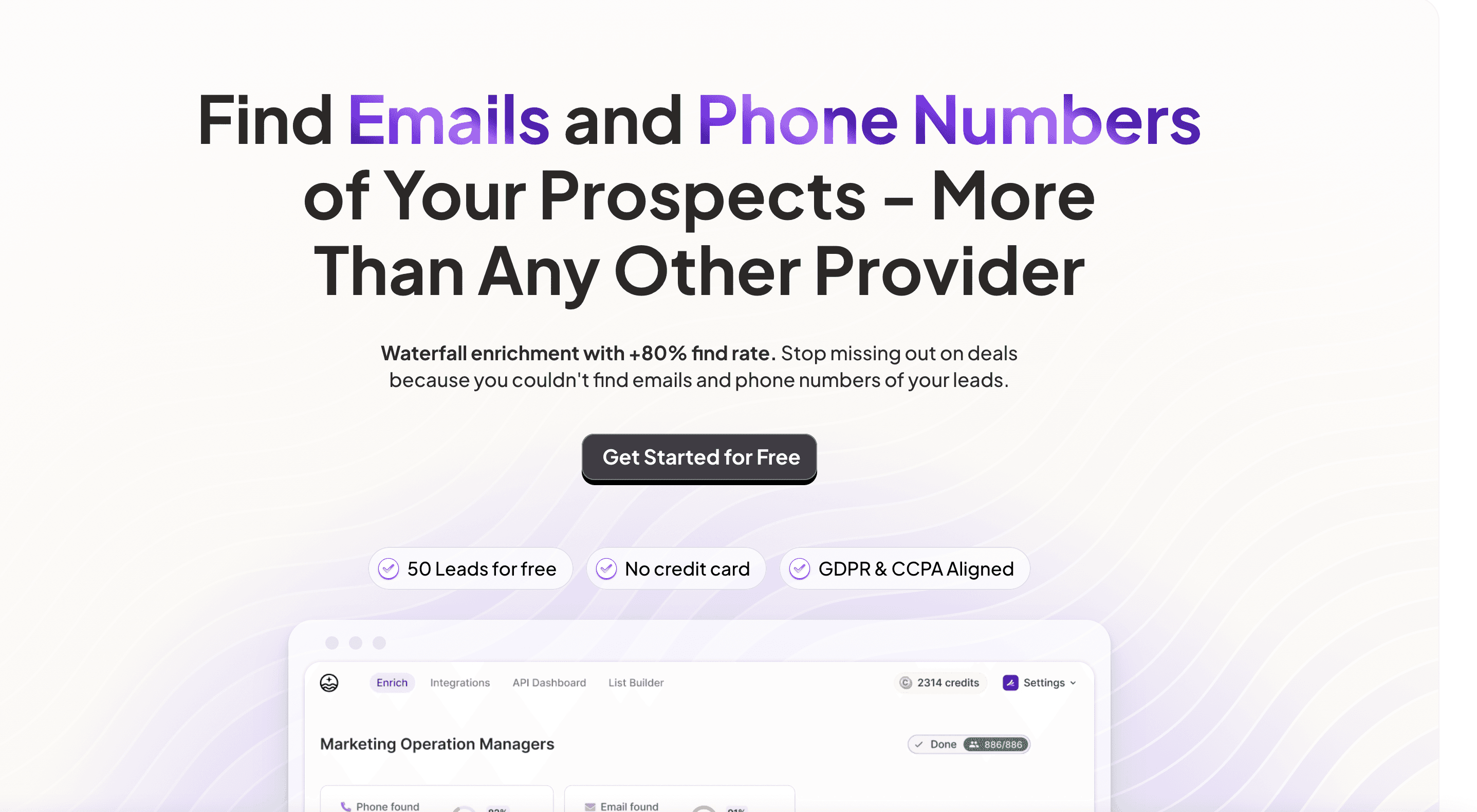
What it is: A contact enrichment platform that uses waterfall enrichment across 20+ premium data sources to find the most accurate contact information.
Why you should choose it:
- Triple-verified data — Pulls from 20+ sources and returns the most validated result
- Higher accuracy rates — By checking 20+ databases, you get better coverage than relying on a single source
- Pay-per-contact pricing — No annual contracts or unused credits going to waste (pricing is significantly more flexible than ZoomInfo)
- API-first approach — Perfect for enriching your existing CRM or CSV files with up-to-date information
- Great for teams that prioritize data quality over database size
Trade-off: It's an enrichment tool, not a full sales intelligence platform. You won't get intent data, technographics, or buyer signals like you would with ZoomInfo. But if you need accurate emails and phone numbers? FullEnrich delivers.
Apollo.io — Best for Affordable/Freemium Access
What it is: An all-in-one sales intelligence platform with a generous free tier and affordable pricing.
Why choose it:
- Free forever plan with access to 10,000+ contact credits/year
- More affordable pricing ($49–$99/user/month for paid plans)
- Built-in email sequencing and automation for lead generation
- Access to a large database of contacts
- Great for startups and small sales teams
Trade-off: Data accuracy isn't quite as high as ZoomInfo or FullEnrich, and the interface can feel clunky.
Lusha — Best for Ease of Use/Browser Extension
What it is: A lightweight prospecting tool that's crazy easy to use for finding contact information.
Why choose it:
- Chrome extension makes it super simple to grab emails and phone numbers while browsing LinkedIn
- Clean, intuitive interface
- More affordable pricing ($29–$99/user/month)
- Great for individual contributors or small sales teams
- Quick access to contact details without switching platforms
Trade-off: Smaller database (especially for international contacts) and fewer advanced features.
Seamless.AI — Best for "Real-Time" Search
What it is: A real-time search engine that finds contact data on demand (no static database).
Why choose it:
- Real-time data verification (claims to check emails and phones before showing them)
- Unlimited searches on higher-tier plans
- Good for aggressive prospecting
- Finds prospect information on-the-fly rather than from a pre-built database
Trade-off: Data accuracy can be hit-or-miss compared to ZoomInfo's verified database, and the UI feels a bit spammy.
Cognism — Best for European Data/GDPR Strictness
What it is: A European-focused sales intelligence platform with GDPR-compliant B2B data.
Why choose it:
- Diamond Data® — Phone numbers verified by humans (not bots)
- Strong European coverage in their database
- Built with GDPR in mind from day one
- Great for international sales teams
- Competitive pricing for European markets
Trade-off: More expensive than Apollo, and US data coverage isn't as strong as ZoomInfo.
Final Thoughts: Is ZoomInfo Worth It for you?
Here's my honest take.
ZoomInfo is worth it if:
- You're a mid-sized or enterprise company with a serious sales and marketing budget ($15k–$100k+/year)
- You need high-quality contact data at scale (not just a few hundred leads)
- You have a sales team that will actually use the data (buying it and letting it sit is a waste)
- You want advanced features like intent data, Conversation Intelligence, or ABM targeting
- Your sales and marketing strategies require comprehensive B2B data and intelligence
ZoomInfo is NOT worth it if:
- You're an early-stage startup or solo founder with a tight budget
- You only need a few hundred contacts for lead generation (Apollo or Lusha would be cheaper)
- You're not ready to invest in training your team on how to use ZoomInfo effectively
- You just need accurate contact enrichment (FullEnrich might be a better fit)
- The pricing doesn't align with your current sales and marketing efforts
At the end of the day, ZoomInfo is a powerful sales intelligence platform, but it's not magic. You still need a solid outreach strategy, personalized messaging, and a team that knows how to follow up. The database is just the first step.
Want to explore more affordable alternatives? Check out our in-depth comparisons of FullEnrich vs ZoomInfo, Apollo.io vs ZoomInfo, and Lusha vs ZoomInfo to see which tool fits your needs, pricing requirements, and lead generation goals.
Happy prospecting! 🎯
Related Resources
- Email Enrichment — waterfall enrichment across 20+ sources
- Data Enrichment Tools — the full comparison
- Waterfall Enrichment — why cascading sources beats a single database
- What Is Data Enrichment? — the complete guide
Frequently Asked Questions
How much does ZoomInfo cost?
ZoomInfo pricing is not publicly listed. Plans require annual contracts, typically starting at $15K–25K/year. Per-seat pricing and minimum commitments vary by package.
Is ZoomInfo worth it for small teams?
For teams under 10 reps, ZoomInfo's annual contract and per-seat pricing is often hard to justify. Credit-based alternatives like FullEnrich ($29–55/mo, unlimited seats, no annual lock-in) offer comparable coverage at a fraction of the cost.
How does ZoomInfo compare to FullEnrich?
ZoomInfo queries one large database with strong US coverage but requires annual contracts and per-seat pricing. FullEnrich waterfalls across 20+ sources for ~80% find rate, charges per match (not per seat), and has no annual commitment.