Choosing the right sales intelligence platform can be challenging, especially when you're weighing cost against coverage and features.
UpLead and ZoomInfo are two prominent lead generation & data enrichment tools designed to help sales teams find and connect with prospects.
UpLead is known for its verified contact data and transparent pricing starting at $99/month.
ZoomInfo excels in providing comprehensive buyer intent data and organizational charts, though you'll need to negotiate pricing with their sales team and commit to $15,000+ annually.
Both platforms face the same limitation:single-source data that decays 20-30% every year. Even with real-time verification, you're still managing ongoing data quality issues.
I've worked with both platforms to understand their strengths and limitations. In this comparison, I'll walk you through the key differences to help you decide which platform fits your sales team GTM needs.
I've also included FullEnrich for good measure, a waterfall enrichment platform that takes a different approach to the coverage gaps both single-source providers face.
TLDR;
- UpLead wins on verified accuracy and transparent pricing.
- ZoomInfo wins on database scale and intent signals for enterprise ABM.
- FullEnrich solves the single-source problem with waterfall enrichment across 20+ providers. Credits roll over on all plans, and you're not charged for inaccurate data.
At a Glance: UpLead vs ZoomInfo vs FullEnrich
Feature | UpLead | ZoomInfo | FullEnrich |
|---|---|---|---|
Best For | SMBs needing verified emails | Enterprise ABM with intent data | Teams wanting max coverage without lock-in |
Starting Price | $99/month | ~$15,000/year | $29/month |
Free Tier | ✅ 7-day trial | ❌ No | ✅ Yes |
Contract Terms | Monthly or annual | Annual only | Monthly |
Database | 160M contacts | 320M contacts | 20+ sources (waterfall enrichment) |
Credit Rollover | ❌ Monthly / ✅ Annual | ❌ No | ✅ All plans |
Intent Data | ❌ No | ✅ Yes | ❌ No |
API Access | Professional tier | Enterprise tier | ✅ Included |
GDPR/Compliance | SCCs, upon request | SOC 2, ISO 27701 | DPA available |
Looking beyond Zoominfo and UpLead? There are some Zoominfo alternatives or UpLead alternatives like FullEnrich worth exploring.
1. Data quality
The quality of your contact data directly impacts deliverability, reply rates, and pipeline. Here's how UpLead and ZoomInfo compare.
Metric | UpLead | ZoomInfo | FullEnrich |
|---|---|---|---|
Total Contacts | 160M+ | 320M+ | 20+ sources aggregated |
Geographic Strength | Global (unspecified depth) | North America (50% of database) | Multiple sources = better global coverage |
Verification Method | Real-time at unlock | Periodic updates | Real-time across waterfall |
Accuracy Guarantee | 95%+ emails (credit refunds) | 95% claimed (US-focused) | Smart ranking by freshness |
UpLead distinguishes itself with real-time email verification. Every email gets verified at unlock, with a 95%+ accuracy guarantee. Bounced emails? You get the credit back automatically.
The platform covers 160 million contacts across 200+ countries. Phone numbers are included (direct dials, not company main lines), but the credit-back guarantee only applies to emails, not phone numbers.
ZoomInfo excels with massive scale and direct dial strength. Their extensive database has 320 million contacts, including 70 million unique emails and 49 million mobile numbers in the US alone. ZoomInfo's real differentiator is the high data accuracy depth of phone numbers.
However, Data accuracy drops significantly outside North America. Users targeting Europe report bounce rates from 20-50%. One reviewer called it "extremely US-centric" with "the worst accuracy in Europe." ZoomInfo also uses a dual credit model where accessing direct dials or technographic data costs extra credits on top of seat licenses.
Both platforms rely on single-source databases. When their source doesn't have accurate contact data, you've spent the credit with nothing to show.
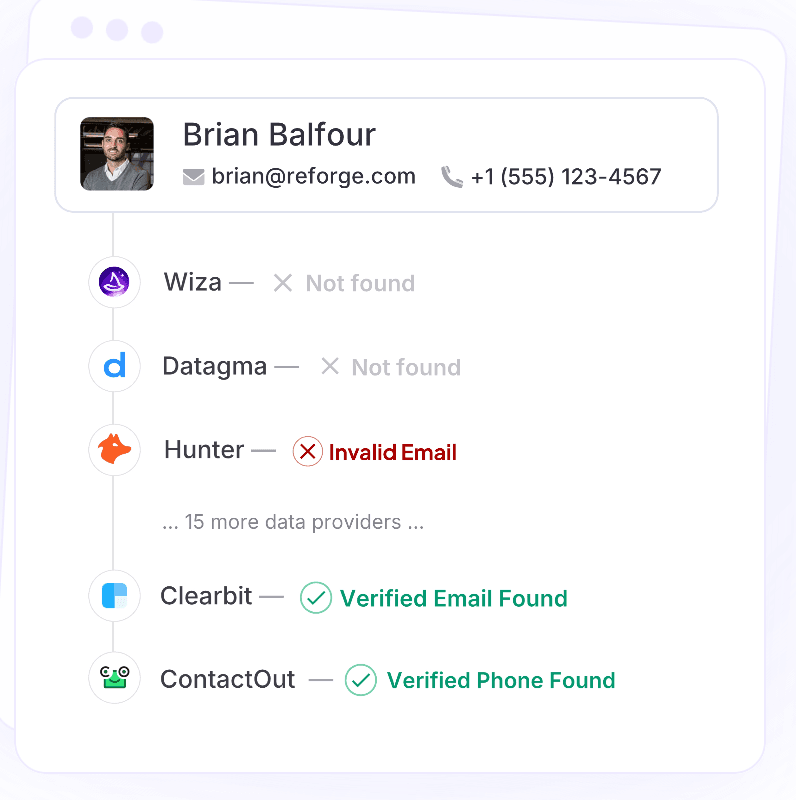
Waterfall enrichment solves the data accuracy problem by querying 15+ sources sequentially. If one provider doesn't have the contact, it checks the next, then the next. You're not locked into one provider's data enrichment gaps.
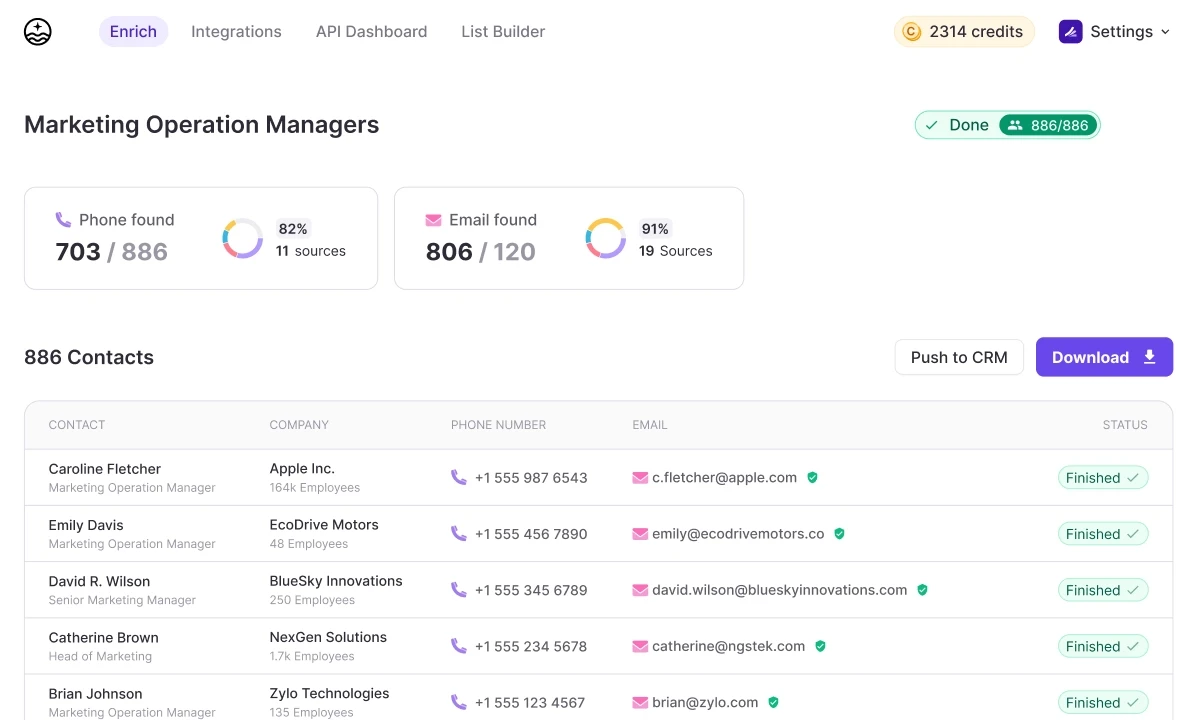
This approach particularly benefits:
- SDRs and BDRs: Bulk CSV enrichment with automated sequencing to CRM
- RevOps teams: API-first architecture for custom workflows without vendor lock-in
- GTM engineers: Webhook and polling endpoints for scalable enrichment pipelines
- International teams: Global data access without expensive add-ons
Starting at just $29/month with 50 free credits to test, FullEnrich delivers enterprise-quality data without enterprise complexity.
👉 Start using Full Enrich for Free with 50 credits No credit card required.
Uplead vs ZoomInfo: Who Has the Best Data Quality?
For North American phone prospecting: ZoomInfo's direct dial depth wins, if you have the budget.
For verified email data accuracy : UpLead's real-time verification and credit-back guarantee (emails only) deliver better reliability.
For maximum coverage, FullEnrich solves what both single-source platforms struggle with, leading to accurate data enrichment.
👉 ✓Start free with 50 credits ✓ No credit card required
2. Pricing & Plans
Pricing is where UpLead and ZoomInfo diverge dramatically, not just in cost but in transparency and contract terms.
Pricing Factor | UpLead | ZoomInfo | FullEnrich |
|---|---|---|---|
Transparency | ✅ Published online | ❌ 100% custom quotes | ✅ Published online |
Entry Price | $99/month | ~$15,000/year | $29/month |
Pricing Model | Credit-based | Credit + seat licenses | Usage-based (pay per enrichment) |
Contract Flexibility | Monthly or annual | Annual only | Monthly |
Credit Rollover | ❌ Monthly / ✅ Annual pools | ❌ Never | ✅ All plans |
Seat Minimums | 1 user (self-service) | 3 seats minimum | No minimums |
UpLead's Pricing & Plans
UpLead posts their prices publicly.
👉 Learn more about Uplead pricing & plans here
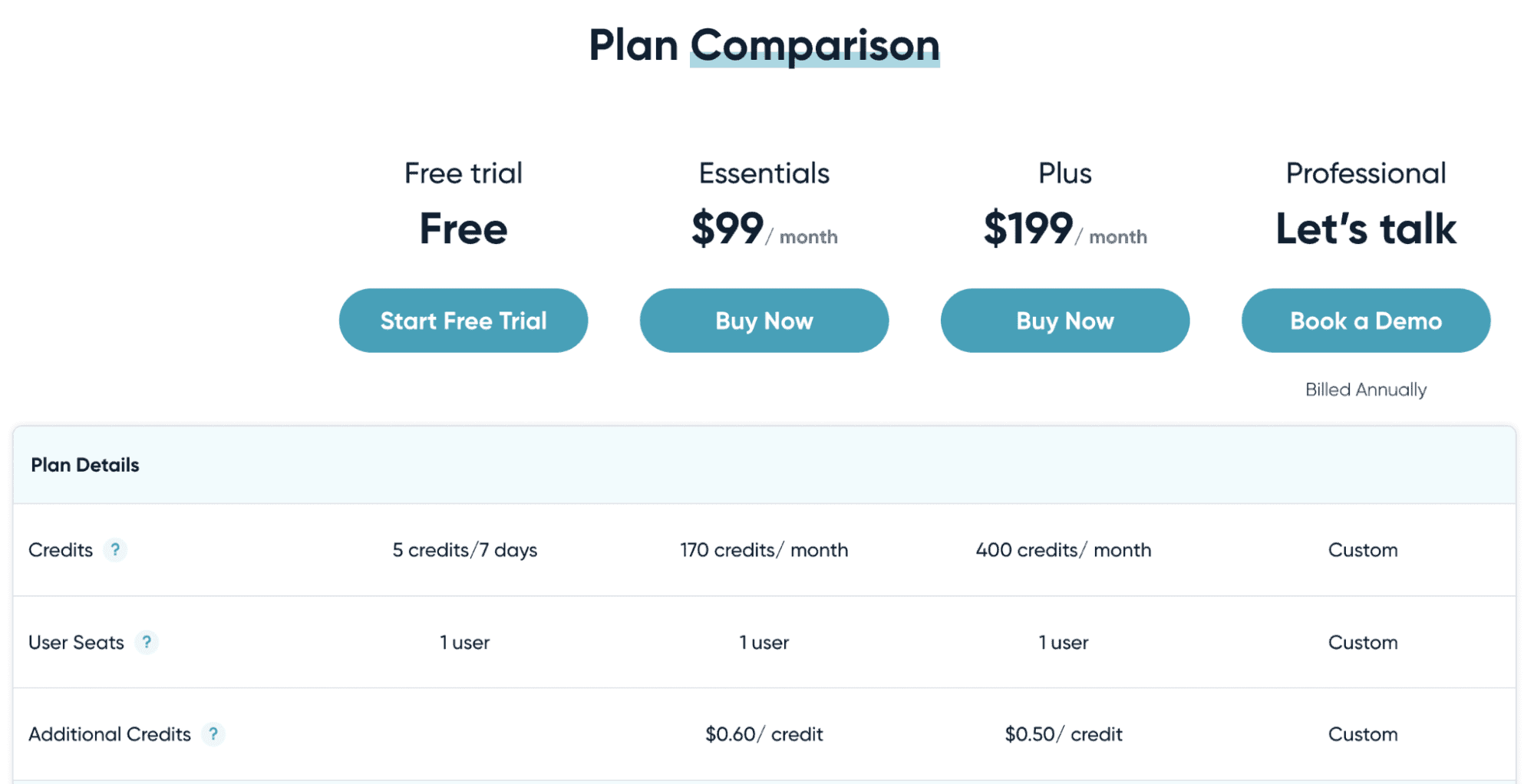
- Essentials: $99/month (170 credits) or $74/month annually
- Plus: $199/month (400 credits) or $149/month annually
- Professional: Custom pricing with multiple seats, API access, and CRM sync
One credit = one contact with email and direct dial included. Monthly plans don't roll over unused credits. Annual subscribers get all credits upfront but credits don't carry past renewal.
The friction: UpLead requires scheduling a Zoom call to cancel (no self-service button). Also, enriching the same contact multiple times charges you one credit each time.
ZoomInfo's Pricing & Plans
ZoomInfo doesn't publish pricing. Every deal is custom-quoted.
👉 Learn more about Zoominfo pricing & plans here
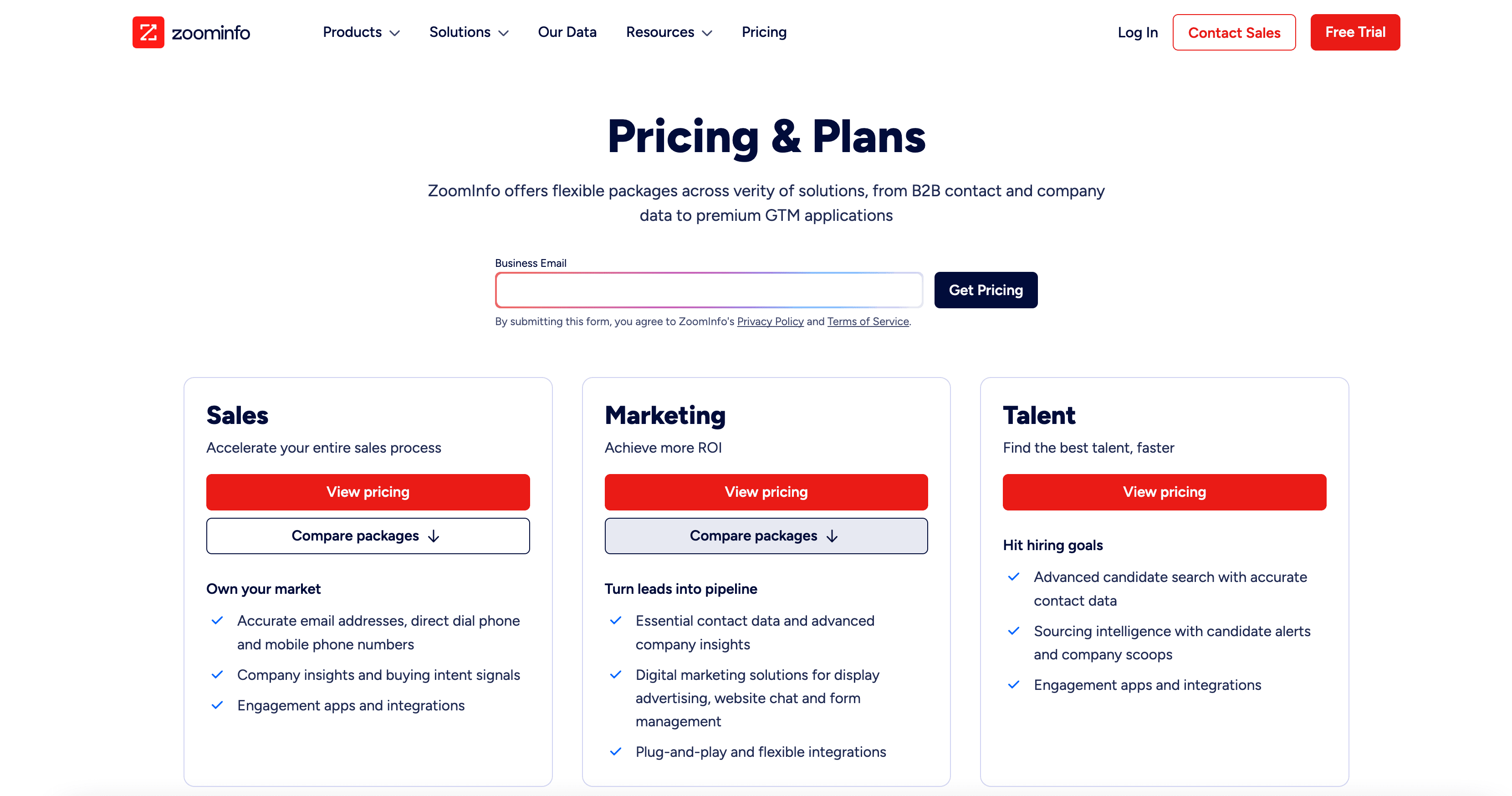
- Professional: ~$15,000/year (3 seats, 5,000 credits)
- Advanced: ~$24,000/year
- Elite: $40,000+/year
You're paying for seat licenses plus consumption credits. Essential features like intent data and European coverage (Data Passport) are add-ons at extra cost. The contract requires annual commitment with 3-seat minimums, 60-day cancellation notice, and auto-renewal with 10-20% price increases.
A Reddit user on r/sales: "It's absolutely scandalous how much they charge vs. the value from it."
The hidden costs: ZoomInfo charges a credit for every company and contact export, which can consume double the credits if the account isn't already in your CRM.
The Credit-Based Pricing Problem
Both UpLead and ZoomInfo use credit systems that create challenges:
Scarcity mindset: Your team focuses on optimizing credit consumption rather than developing best prospecting practices.
Unexpected costs: Credits get consumed by duplicate enrichments, exports, or accessing premium data fields.
Limited growth: UpLead's cheapest plan offers only 170 credits for $99/month. For ambitious growth goals or competitive markets, you'll hit limits fast.
International barriers: ZoomInfo's Data Passport for prospecting outside the US adds significant cost on top of base pricing.
FullEnrich takes a different approach: usage-based pricing with no credit burn for invalid data. Credits roll over on all plans, and you're only charged when enrichment returns valid results. For teams frustrated with coverage gaps and wasted credits, this solves what both single-source credit models struggle with.
Uplead VS Zoominfo: Which one is the best price fit for your business?
For budget-conscious teams: UpLead's transparent pricing and self-service signup win. You know exactly what you're paying upfront.
For enterprise budgets: ZoomInfo's pricing reflects its enterprise positioning, but the lack of transparency and aggressive contract terms frustrate many buyers.
For usage flexibility: FullEnrich eliminates credit anxiety with rollover on all plans and no charges for incorrect data.
👉 ✓Start free with 50 credits ✓ No credit card required
3. Features
Beyond contact data, let's look at the features that impact your sales process:
Feature Category | UpLead | ZoomInfo | FullEnrich |
|---|---|---|---|
Search Filters | 50+ criteria | 300+ advanced filters | Search via API/integrations |
Intent Data | ❌ No | ✅ Buyer signals, visitor tracking | ❌ No |
Org Charts | ❌ No | ✅ Full hierarchies | ❌ No |
Chrome Extension | ✅ LinkedIn prospecting | ✅ LinkedIn + intent overlay | N/A (API-first) |
Waterfall Enrichment | ❌ Single source | ❌ Single source | ✅ 15+ sources |
API Access | Professional tier | Enterprise tier | ✅ Core feature |
Intent Data & Buyer Signals
ZoomInfo separates itself here. The platform tracks buyer intent signals showing which accounts are actively researching solutions in your category. You can see which companies are visiting competitor sites, reading relevant content, and showing purchase intent.
The intent data integrates with sales engagement platforms to trigger automated outreach when accounts spike in intent score.
UpLead doesn't offer intent data or buyer signals. You're getting contact information, not behavioral intelligence.
Organizational Charts
ZoomInfo builds org charts showing reporting structures, department hierarchies, and relationships between decision-makers. For complex B2B sales with multiple stakeholders, this helps you map buying committees, identify champions, and understand who influences purchase decisions.
UpLead doesn't provide org charts. You get individual contacts, not relationship mapping.
Search & Targeting
UpLead offers 50+ search filters covering job title, seniority, industry, company size, revenue, location, and basic technology stack. The interface is clean and searches return results quickly.
ZoomInfo offers 300+ advanced search filters with deep technographic data, funding information, hiring trends, and intent signals. You can build incredibly specific target accounts lists like "VP of Sales at Series B SaaS companies using Salesforce with 50-200 employees showing high intent."
The trade-off: ZoomInfo's power comes with complexity. The interface has a steep learning curve. UpLead's simplicity means you're prospecting within minutes, not weeks.
Chrome Extension
Both platforms offer Chrome extensions for prospecting on LinkedIn and company websites.
UpLead's extension is straightforward. You're on a LinkedIn profile, click the extension, and instantly see if UpLead has verified contact info. One click exports to your CRM or sales engagement tool.
ZoomInfo's extension (ReachOut) does the same but also surfaces intent data, org chart context, and technographic information directly in the browser. It's more powerful but also more cluttered.
The Verdict: Who Has the Most Features?
For intent-driven ABM: ZoomInfo's buyer signals and org charts justify the premium if you're targeting enterprise accounts with complex buying committees. The tool offers a high-end sales automation suite, but it comes at a steep price.
For simple, fast prospecting: UpLead's clean interface and verified data get you up and running in minutes without training overhead.
4. Integration & Workflow Automation
Raw data is worthless if it doesn't flow seamlessly into your sales automation workflows. Here's how each platform connects to your existing stack.
Integration Type | UpLead | ZoomInfo | FullEnrich |
|---|---|---|---|
Native CRM | Salesforce, HubSpot, Pipedrive | 50+ pre-built connectors | HubSpot (two-way sync) |
API Availability | Professional tier ($399/month) | Enterprise contract required | ✅ All paid plans |
Data Warehouses | ❌ No native support | ✅ Snowflake, BigQuery | ✅ REST API for any warehouse |
No-Code Tools | Zapier (1,500+ apps) | Zapier available | Zapier, Make, n8n, Clay |
Automation Sophistication | Basic field mapping | Advanced hierarchy mapping, data hygiene | Webhook/polling, batch enrichment |
CRM and Sales Tool Connectivity
UpLead offers solid basics: native integrations with Salesforce, HubSpot, and Pipedrive, plus Zapier for 1,500+ other apps. The connections work reliably but lack sophisticated features like duplicate management or custom field mapping.
ZoomInfo's enterprise heritage shows in their integration depth. With 50+ pre-built connectors and extensive APIs, they can handle complex multi-system architectures. Their Salesforce integration, for instance, includes hierarchy mapping, account intelligence syncing, and automated data hygiene workflows.
FullEnrich takes an API-first approach that appeals to modern GTM teams. The native HubSpot integration provides two-way sync out of the box. More importantly, their REST API supports both single and bulk enrichment with flexible webhook or polling for results.
API and Developer Experience
For technical teams, the API comparison is telling:
UpLead: API only available on Professional tier ($399/month). Documentation is basic but functional.
ZoomInfo: Comprehensive API with extensive endpoints, but requires enterprise contract and dedicated implementation support.
FullEnrich: Developer-friendly API available on all paid plans starting at $29/month.
No-Code Automation Workflows
Not everyone codes, and that's where no-code automation shines. FullEnrich's pre-built integrations make sophisticated workflows accessible:
- Zapier: Trigger enrichment on new CRM records, update with verified data automatically
- Make: Batch process CSV uploads and sync to HubSpot
- n8n: Build fault-tolerant enrichment pipelines with built-in retries
- Clay: Enrich contacts directly in Clay tables using FullEnrich credits
These integrations eliminate the manual CSV downloads and uploads that plague UpLead users, and avoid the complex configuration requirements of ZoomInfo's enterprise tools.
The Verdict:
For basic CRM connectivity: UpLead's native integrations work reliably for straightforward use cases, though you'll hit limitations with advanced workflows.
For enterprise complexity: ZoomInfo's 50+ connectors and sophisticated features justify the complexity if you're managing multi-system architectures.
For modern GTM stacks: FullEnrich's API-first design and no-code integrations eliminate manual work without requiring enterprise contracts.
5. Compliance & Privacy Considerations
For RevOps and legal teams, data compliance isn't optional. Here's how UpLead and ZoomInfo handle privacy regulations and what risks you should know about.
Compliance Factor | UpLead | ZoomInfo | FullEnrich |
|---|---|---|---|
GDPR/CCPA Compliance | ✅ Claimed (SCCs) | ✅ Claimed (SOC 2, ISO 27701) | ✅ Yes (SCCs, DPA published) |
DPA Availability | Upon request | ✅ Default | ✅ Published online |
Data Breach History | ✅ None | ❌ Legal settlements ($29.5M) | ✅ None |
Data Processing Location | US-based | US-based | Multi-source (SCCs for transfers) |
Data Sourcing Transparency | ❌ Not disclosed | ❌ Not disclosed | ✅ Visible per source |
UpLead's Compliance Stance
UpLead processes data under a "Legitimate Interest" basis for EU contacts, using Standard Contractual Clauses (SCCs) for data transfers. They're US-based, so data is processed in the US. They offer an online opt-out form for individuals who want their information removed.
The documentation: UpLead doesn't publish a DPA (Data Processing Agreement) on their website, but they'll provide one upon request for enterprise customers requiring GDPR Article 28 compliance.
Legal history: UpLead's record is relatively clean. They were fined $34,400 by the California Privacy Protection Agency in 2024 for failing to register as a data broker by the required date. This was a procedural compliance step, not a data breach. They settled quickly and registered.
ZoomInfo's Compliance Stance
ZoomInfo invests heavily in compliance infrastructure. They hold SOC 2 Type II certification and ISO 27001/27701 for security and privacy controls. They provide DPAs to all customers by default and offer a Compliance API for consent management.
The legal history is messier. In November 2024, ZoomInfo agreed to a $29.5 million class-action settlement resolving claims that they misappropriated individuals' names and personal details without consent. They didn't admit wrongdoing but paid to settle.
FullEnrich's Compliance Approach
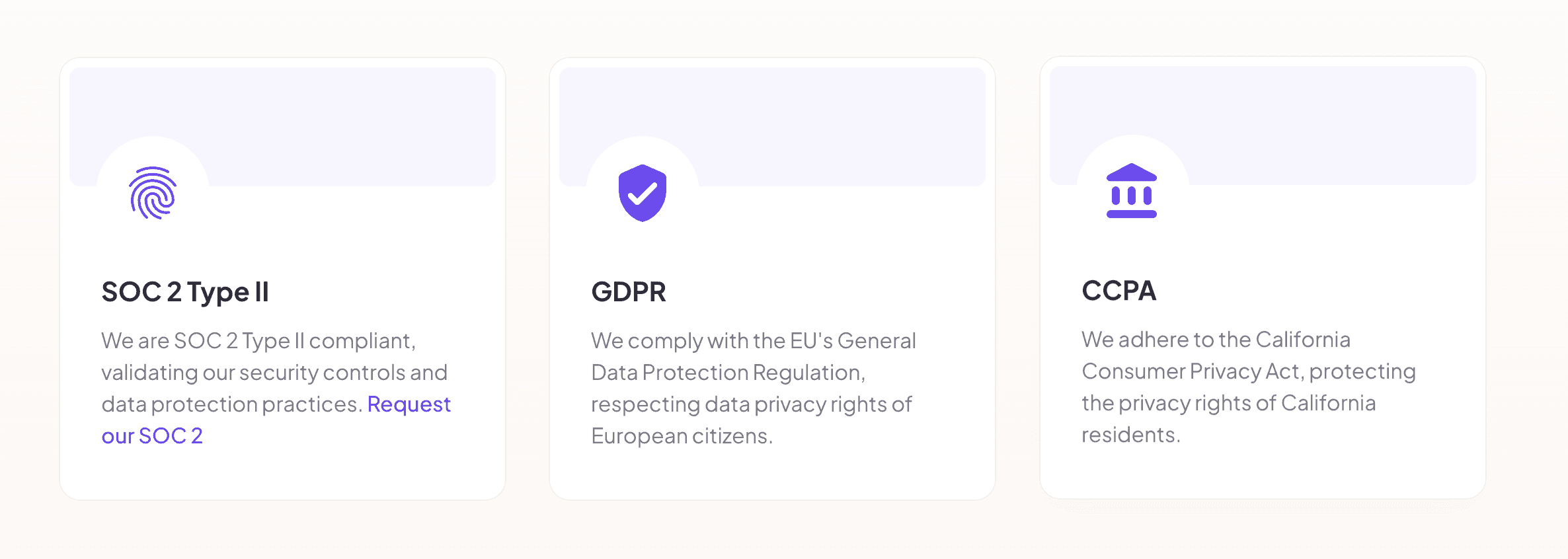
FullEnrich takes compliance seriously with a publicly available DPA that ensures GDPR Article 28 compliance. They use Standard Contractual Clauses for EU data transfers and implement technical measures like bcrypt encryption with 14 rounds for password security.
The key differentiator: FullEnrich doesn't store contact information itself. It aggregates data from 15+ providers that adhere to GDPR and CCPA regulations. This waterfall approach means you can see which source returned each data point, providing clearer data lineage for compliance audits.
Unlike UpLead, FullEnrich's DPA is published online and available without requiring sales negotiations. They commit to concluding DPAs with each sub-processor in their waterfall to ensure the entire supply chain maintains compliance.
Uplead vs zoominfo : Which one to choose for compliance ?
For basic compliance needs: UpLead's cleaner legal history and smaller scale create less regulatory risk, though documentation isn't readily available.
For enterprise compliance requirements: ZoomInfo's SOC 2 and ISO 27701 certifications provide the formal documentation enterprise legal teams expect, despite the messier legal history.
For data lineage transparency: FullEnrich's source-level visibility and published DPA make compliance audits simpler. See the DPA →
6. User Experience & Support
How quickly you can get value from a platform matters as much as the features themselves. Here's how each handles user experience and support.
UX Factor | UpLead | ZoomInfo | FullEnrich |
|---|---|---|---|
Learning Curve | 30 minutes | 2-4 weeks | 30 minutes (web app) |
Interface Type | Web app + Chrome extension | Feature-rich platform | Web app + API + CSV upload |
Training Required | ❌ Minimal | ✅ Structured onboarding needed | ❌ Minimal |
Support Channels | Email, Zoom calls | Phone, email (tier-dependent) | Chat, email, documentation |
Cancellation Process | ❌ Requires Zoom call | ❌ 60-day notice | ✅ Self-service |
Time to First Value | Same day | 2-4 weeks | Same day |
UpLead's User Experience
The interface is clean and intuitive. Most users report being productive within 30 minutes with no training required. Search results are fast, and the credit system is transparent. You always know how many credits a search will cost before clicking.
Support quality is mixed. Some users report excellent, responsive teams that genuinely care about success. Others mention slow email response times or aggressive upselling during what should be routine support calls.
The main friction point: Cancellation requires scheduling a Zoom call with UpLead's team. No self-service cancellation button. This feels like an unnecessary hurdle designed to create retention conversations rather than respecting user autonomy.
ZoomInfo's User Experience
The interface is feature-rich but complex. New users consistently describe a steep learning curve—2 to 4 weeks to feel comfortable, with ongoing training needed to master advanced features like intent data interpretation and org chart navigation.
Support quality depends on contract size. Enterprise customers with large deals report dedicated account teams and responsive support. Smaller customers feel less prioritized.
One G2 review noted: "ZoomInfo's data is excellent, but the sales process and contract terms are frustrating."
FullEnrich's User Experience
FullEnrich offers multiple ways to enrich data: a web dashboard for CSV uploads, API for automated workflows, and integrations with tools like Clay, Zapier, and Make. The interface is straightforward and user-friendly.
The learning curve is minimal. Most users are productive within 30 minutes. You can upload a CSV, map your fields, and start waterfall enrichment immediately. The dashboard shows which of the 15+ providers returned data for each contact, providing transparency into the enrichment process.
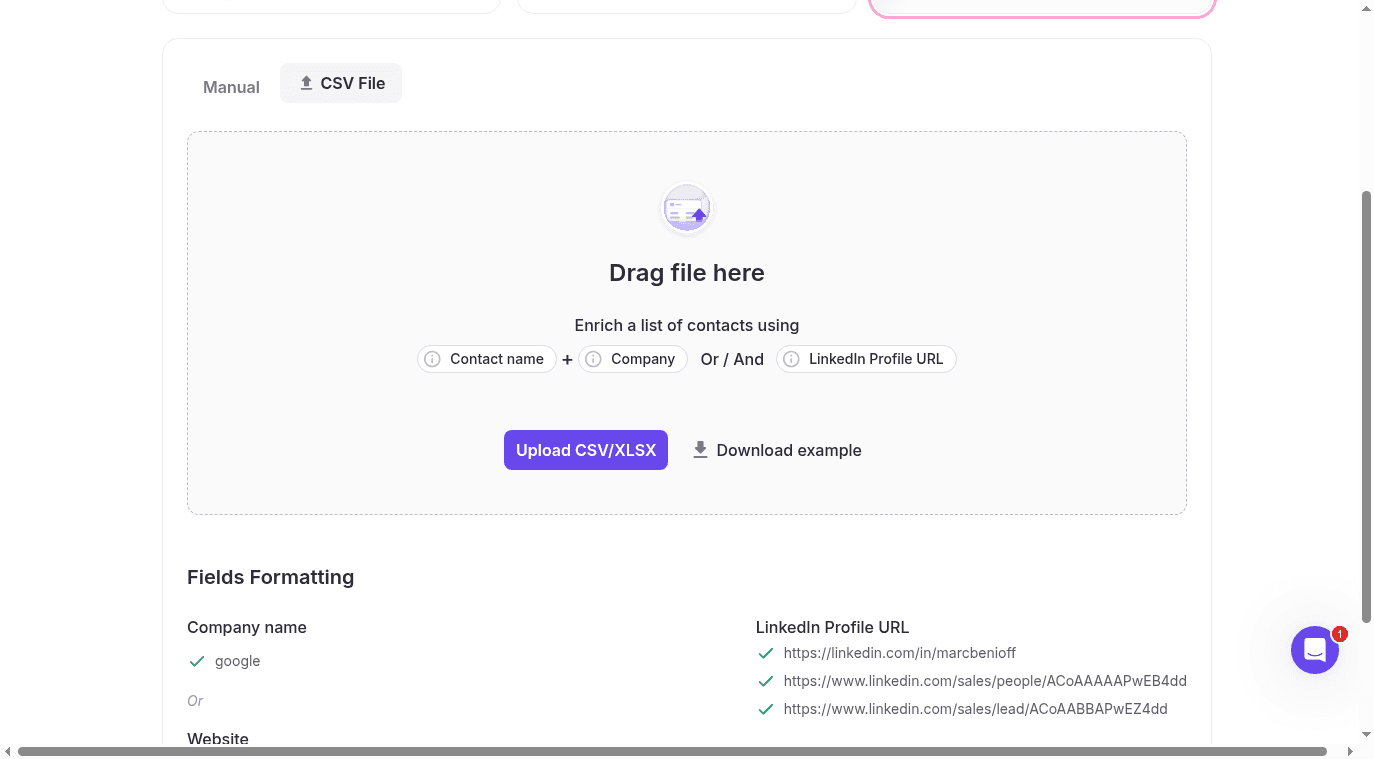
Support: Chat and email-based with responsive teams. Multiple G2 reviews praise the customer support quality and quick response times. Documentation is clear for API users.
Cancellation: Self-service through your account settings. No Zoom calls, no retention pressure.
Uplead vs zoominfo: who has the best user experience ?
For immediate simplicity: UpLead's clean interface gets non-technical teams prospecting within 30 minutes, though the Zoom call cancellation process is frustrating.
For enterprise complexity: ZoomInfo's power requires investment in training and onboarding, but dedicated support teams help larger organizations navigate the platform.
For flexible enrichment: FullEnrich's web app and API options suit both manual CSV uploads and automated workflows, with a user-friendly interface that doesn't require technical expertise. Try the dashboard →
Uplead vs. ZoomInfo: Which Solution Fits Your GTM?
UpLead and ZoomInfo solve different problems at vastly different price points.
UpLead delivers verified email data with transparent pricing ($99-$199/month) and no annual lock-in. Best for SMBs prioritizing email deliverability without the complexity of an enterprise solution.
ZoomInfo provides comprehensive intelligence with buyer intent data and org charts ($15,000-$60,000/year). Best for enterprise ABM teams with deep pockets and resources to manage training.
Choosing the right platform depends on multiple factors. Use this framework to guide your decision.
Use Case | Best Choice | Why |
|---|---|---|
SMB with <$10K annual budget | UpLead | Transparent pricing at $99-$199/month, no annual commitment |
Enterprise ABM strategy | ZoomInfo | Intent data and org charts justify the $40K+/year investment |
International prospecting (EMEA/APAC) | FullEnrich | Multi-source waterfall covers regions where single providers have gaps |
Low match rates with current provider | FullEnrich | Waterfall across 15+ sources finds contacts others miss |
Complex buying committees | ZoomInfo | Org charts map stakeholder relationships and reporting structures |
API-first automated enrichment | FullEnrich | API included on all plans ($29+/month) vs enterprise-only for others |
Month-to-month flexibility | UpLead or FullEnrich | Both offer monthly plans; ZoomInfo requires annual only |
Compliance-sensitive (data lineage) | FullEnrich | See which of 15+ sources returned each data point |
RevOps building data pipelines | ZoomInfo | Native Snowflake/BigQuery integrations |
Agency managing multiple clients | UpLead or FullEnrich | Flexible pricing and no seat minimums |
Why Teams Are Switching to Waterfall Enrichment
Here's what no provider advertises: all B2B contact data decays 20-30% annually.
People change jobs. Emails deactivate. Phone numbers change. Even 95% accuracy means 1 in 20 contacts fails—for a team doing 500 weekly touches, that's 1,300 bad contacts per year.
Both UpLead and ZoomInfo query one database. When their source doesn't have a contact, you've spent the credit with no result.
Instead of one database, waterfall enrichment queries 20+ sources sequentially:
You're paying for access to multiple providers instead of betting on one database's coverage.
You're not choosing between perfect and imperfect data. You're choosing which limitation you can live with:.
Single-source with credit waste when contacts aren't found (UpLead, ZoomInfo)
Multi-source with higher costs per contact but better coverage (waterfall enrichment with full enrich)
All three still require validation, bounce management, and ongoing hygiene. The question is which approach wastes fewer of your credits and team hours.
This is where FullEnrich changes the equation.
Multi-source coverage across 15+ providers
✓ Credits roll over on all plans—no use-it-or-lose-it monthly waste
✓ No credit burn for invalid data—you're only charged when enrichment succeeds
✓ API-first design available on all plans starting at $29/month
✓ Source-level transparency for compliance and data lineage auditing
✓ Monthly contracts with self-service cancellation—no Zoom calls, no 60-day notice
Waterfall enrichment solves what both platforms struggle with: finding contacts when one database comes up empty.