By Grégoire Démogé, Co-founder & CPO at FullEnrich — has tested every major enrichment platform on the market.
What Is Apollo.io?
Apollo.io is an all-in-one sales intelligence and engagement platform with a database of 275M+ contacts. It combines prospecting, email sequencing, and a built-in dialer into a single tool. It's one of the most popular sales platforms on the market — but it runs on a single database, which means when Apollo doesn't have a contact, you get nothing.
Below, we break down what Apollo does well, where it falls short, and how waterfall enrichment fills the gaps Apollo leaves behind.
Apollo.io is a cloud-based sales engagement platform that combines a massive B2B contact database (275M+ contacts) with sales automation tools like email sequences and a power dialer.
Think of it as a complete prospecting toolkit where you can find leads, enrich their data with data enrichment capabilities, and reach out to them through multi-channel outreach, all in one platform.
Here's the thing: Apollo democratizes enterprise-level sales data. Whether you're a solo founder at a startup or a sales rep at a growing company, you get access to verified contact information and personalization features in a single sales engagement platform.
Let's dig in about what the platform has to offer 👇
TLDR: What is Apollo.io?
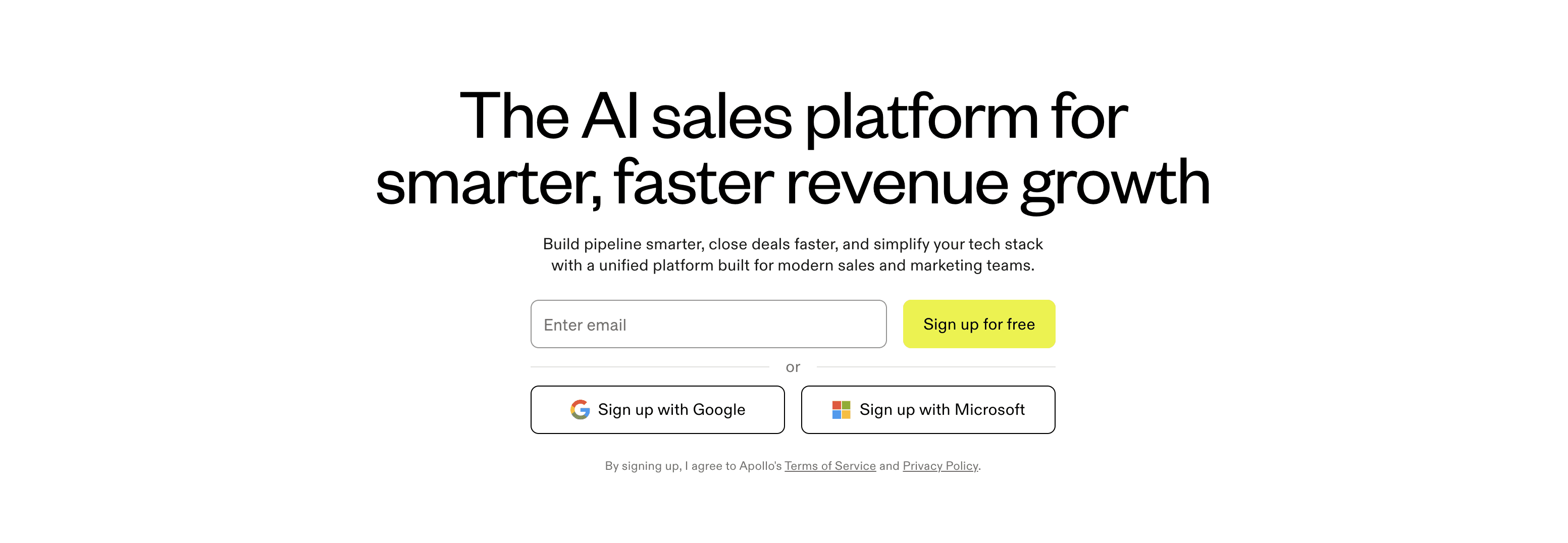
Apollo.io is a unified sales intelligence and engagement platform that combines:
✅ 275M+ verified B2B contacts with 65+ advanced filters (revenue, tech stack, funding, job changes)
✅ Native CRM integrations with Salesforce and HubSpot (bi-directional sync)
✅ Email sequence automation to run multi-step campaigns
✅ Built-in power dialer for cold calling directly from the platform
✅ Chrome extension that overlays contact info on LinkedIn profiles
✅ Buying intent data to identify companies actively searching for solutions
In simple terms: Apollo is where sales teams go to find potential customers, get their contact data, and reach out to them through automated email sequences or phone calls. The platform enables sales reps to streamline the entire outbound sales process with AI-powered workflow automation in one place.
Who is Apollo.io For?
Before we go deeper, let's make sure this is actually for you. Apollo isn't a one-size-fits-all tool, but it's pretty darn close. Here's a breakdown of who benefits most from the platform:
User Type | Why Apollo Works | Key Use Cases | Drawback to Consider |
|---|---|---|---|
Sales Development Reps (SDRs/BDRs) | High-volume prospecting with automated sequences and built-in dialer. Hit quota without burning out. | Building targeted lists of 500+ prospects, running multi-channel sequences, tracking email opens/clicks | Learning curve with credit system |
Founders & SMBs | Complete sales stack (database + CRM + automation) for less than $100/month. Can't afford $30k/year enterprise contracts. | Solo prospecting, bootstrapped lead generation, cost-effective alternative to hiring full-time SDRs | Limited phone number accuracy for international prospects |
Growth Marketers | Enrich inbound leads, build lookalike audiences, pair with intent data for targeted campaigns. | Uploading CSVs for data enrichment, identifying website visitors, building ad audiences based on tech stack | Buying intent data requires add-on |
Recruiters | Find passive candidate emails at $948/year vs. $8,000+ for LinkedIn Recruiter. Filter by skills and experience. | Sourcing passive candidates, reaching out without LinkedIn premium, filtering by specific qualifications | Mobile number accuracy for individuals can be inconsistent |
Small Sales Teams (2-10 reps) | Affordable per-seat pricing with full CRM integration. Everyone works from the same platform. | Team collaboration on sequences, shared contact database, unified reporting with reports and dashboards | May need Organization plan for advanced team governance |
Bottom line: Apollo.io is ideal for startups, SMBs, and mid-market companies doing outbound B2B sales, especially if you're focused on email outreach and need an all-in-one solution on a budget.
Key Features of Apollo.io & How the Platform Works
Alright, let's break down what Apollo actually does and how it all works together. Apollo.io offers a comprehensive suite of features that empower sales teams to automate their workflow from prospecting to closing. The Apollo platform combines AI-powered insights with practical sales automation tools.
Find and enrich contacts with Filters
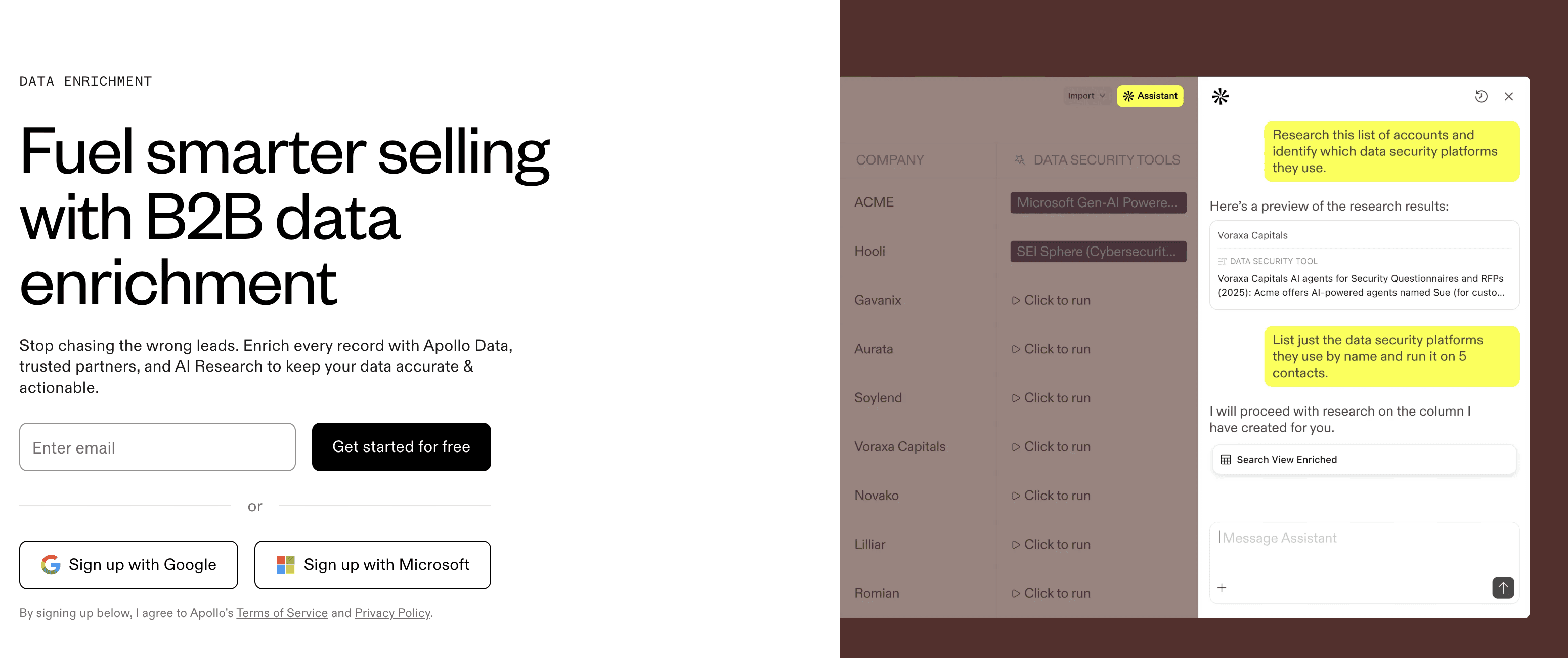
Apollo's contact database is massive. We're talking 275 million contacts across 60+ million companies. But size isn't everything (that's what she said). What matters is how you can filter and customize your prospect lists.
You can slice and dice by 65+ criteria including:
- Revenue range (e.g., companies making $10M-$50M annually)
- Employee count (target growing companies with 50-200 employees)
- Tech stack (find companies using Salesforce, HubSpot, or any of 8,000+ technologies)
- Funding stage (filter for Series A, B, or bootstrapped companies)
- Job changes (catch people who just started a new role, prime buying window)
- Industry (narrow it down to SaaS, manufacturing, healthcare, etc.)
- Geography (city, state, country, or even zip code level)
Example use case: Let's say you sell marketing automation software. You can build a list of "Marketing Directors at SaaS companies with 100-500 employees, using HubSpot, who raised a Series B in the last 12 months." That's a highly qualified prospect list that would take days to build manually. Apollo makes this process take minutes instead.
Chrome Extension: The LinkedIn Overlay Magic
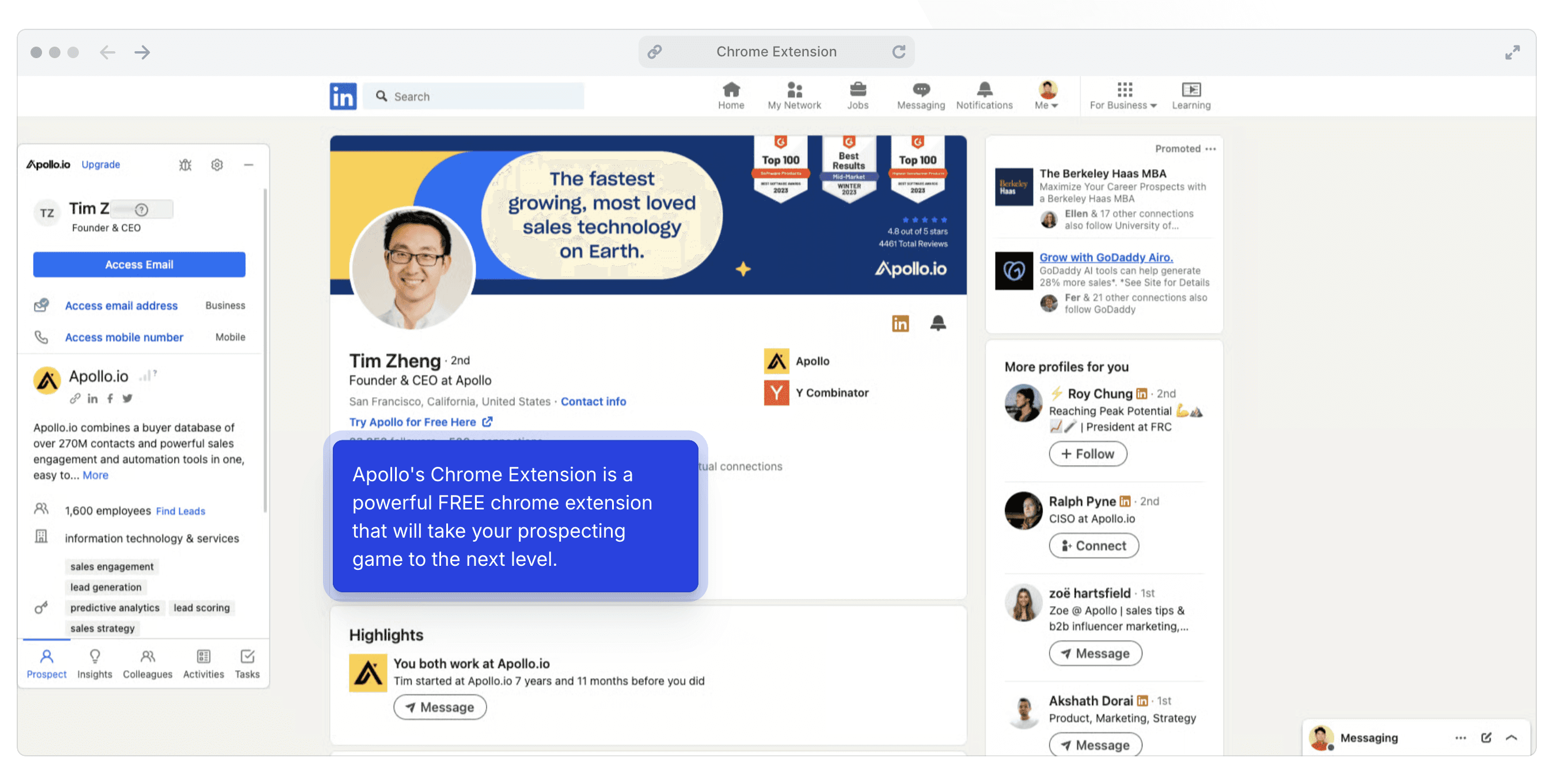
This is where Apollo really shines. Install the Chrome extension, and suddenly every LinkedIn profile becomes a goldmine of contact information with real-time data enrichment.
Here's how it works:
- You're browsing LinkedIn (as you do)
- The Apollo extension overlays a sidebar showing the person's verified email, direct phone numbers, and company details
- Click one button to add them to a sequence or sync them directly to your CRM with CRM integration
- Never copy-paste email addresses again
Pro tip: The extension also works on company websites and social media platforms. Visit a company's "About" or "Team" page, and Apollo will automatically identify and list all the employees with contact info. This LinkedIn integration is one of Apollo's most powerful features.
Sequences: Multi-Step Email & Call Automation
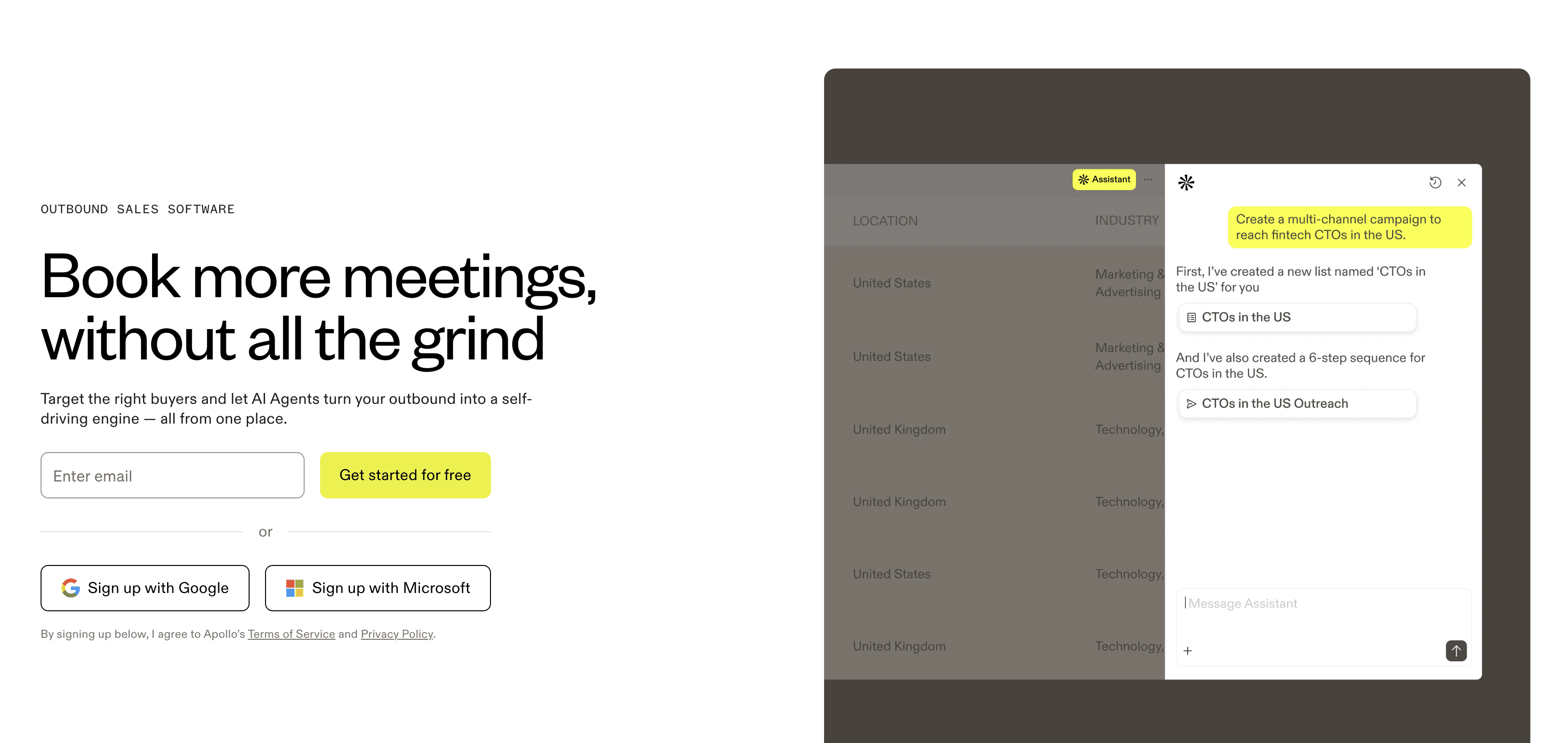
This is Apollo's sales engagement layer. You can create automated email sequences that feel personal but run on autopilot with AI assistance for email writing.
How sequences work:
- Step 1: Send an initial cold email
- Step 2: Wait 3 days, send a followup if they didn't respond
- Step 3: Wait another 4 days, make a call (or add a manual call task)
- Step 4: Send a breakup email ("Should I close your file?")
You can A/B test subject lines, customize with personalization using dynamic variables like {{first_name}} or {{company}}, and track open rates, click rates, and replies in real-time.
The secret sauce: Apollo integrates with your Gmail or Outlook through email service providers, so emails come from your inbox, not a third-party server. This improves email deliverability and makes your email outreach look legitimate.
Buying Intent: Know Who's Ready to Buy
Apollo partners with Bombora to provide buying intent data and insight into prospect behavior. This means you can identify companies that are actively researching keywords related to your product using AI-powered analysis.
Example: If you sell cybersecurity software, Apollo can provide insight into which companies are currently reading articles about "data breach prevention" or "zero trust architecture." These are warm leads who are already in buying mode.
This is a game-changer for ABM (account-based marketing) strategies. Instead of cold email blasts, you're reaching out to companies that are already thinking about your solution.
Apollo.io Integrations: The Ecosystem
One of Apollo's biggest strengths is how well it plays with your existing tech stack. Let's break down the integration categories.
🔄 Native CRM Integrations
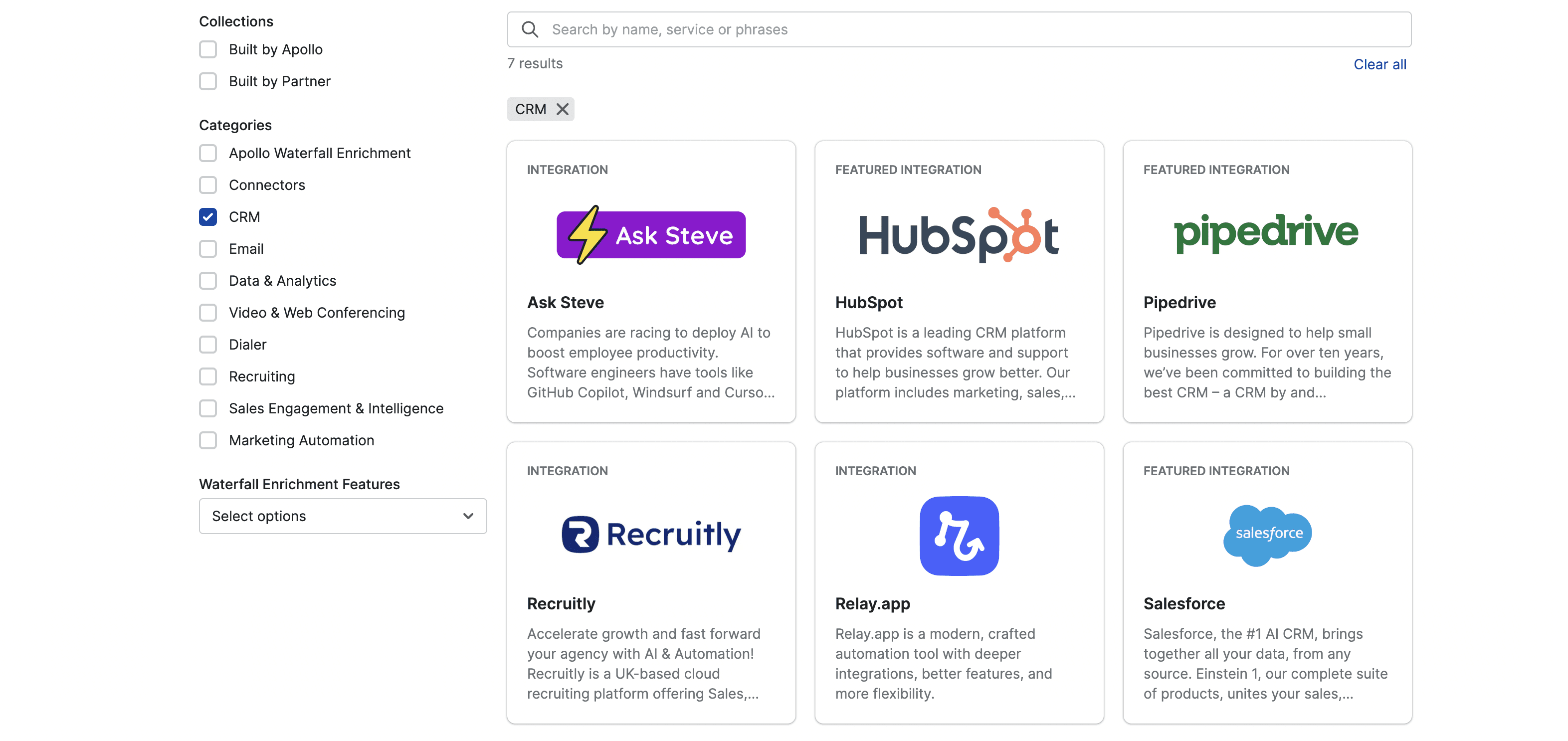
Salesforce and HubSpot have deep, bi-directional sync with Apollo. The platform also integrates with other CRMs like Zoho. This means:
- When you add a contact in Apollo, it automatically syncs to your CRM
- When your sales team updates a contact in Salesforce, it reflects in Apollo
- Email opens, clicks, and call logs all sync back to the CRM activity timeline
Why this matters: No more manual data entry. Your CRM is always up-to-date, and your sales team doesn't have to jump between platforms. This CRM integration enables seamless workflow automation across your entire sales stack.
📧 Sales Engagement Tools
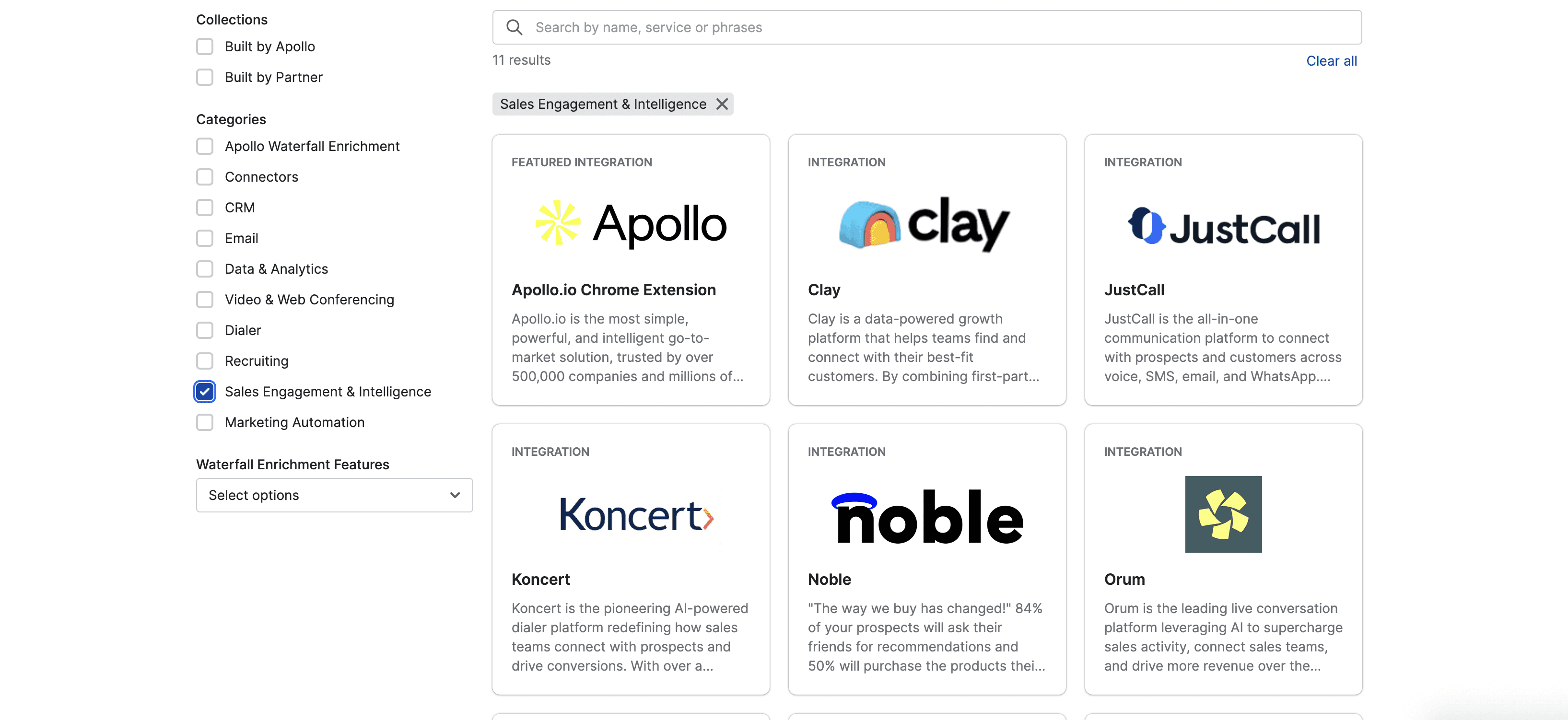
If your sales team already uses Outreach or Salesloft for sequences, Apollo can integrate with them. This is perfect if you only want Apollo for its contact database and prefer to manage sequences in your existing sales engagement platform.
Use case: Enterprise teams with established workflow often take this approach. They use Apollo to find prospects and enrich lead data, then push them to Outreach for sequencing.
🎨 Marketing Automation & ESP
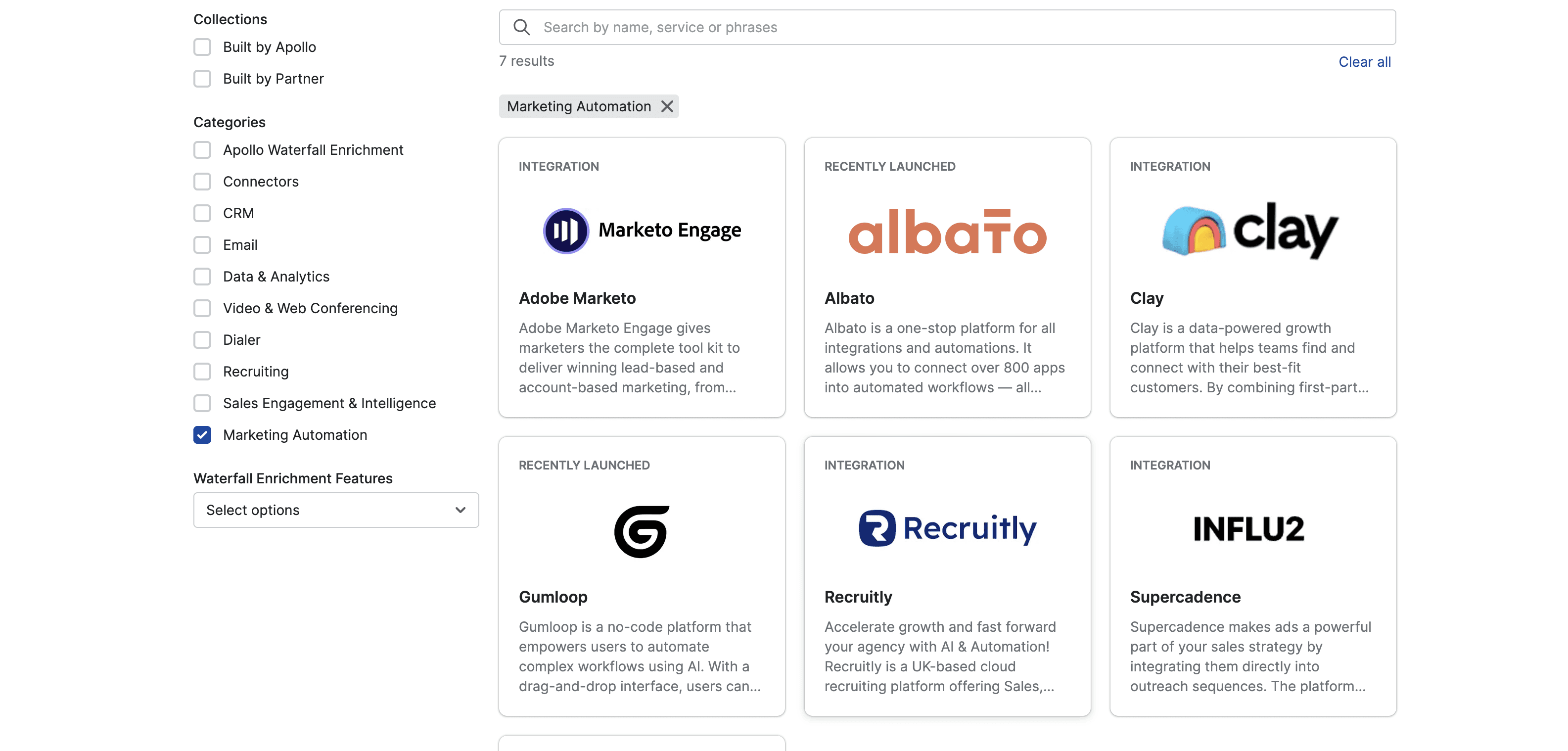
Apollo integrates with:
- Marketo (for enriching marketing automation contacts)
- SendGrid (for email deliverability optimization)
- Zapier (which opens the door to 3,000+ other apps like Slack, Google Sheets, Trello, etc. for workflow automation)
Example Zapier workflow: When a new prospect is added to Apollo, automatically create a card in Trello for your sales team to research. This automation streamlines your entire lead management process.
✉️ Email Providers
Apollo natively connects to Gmail and Outlook. This is crucial for sequence deliverability. When you send emails through Apollo, they come from your actual email address, not a third-party server, which improves inbox placement.
Technical note: You can also connect custom SMTP servers if you're using something like Mailgun or Amazon SES for higher sending volumes.
How Does Apollo.io Get Its Data? (Trust & Data Accuracy)
This is the million-dollar question. Where does all this contact data come from? And more importantly, is it legal and accurate for lead generation?
Here's Apollo's 3-pronged data sourcing approach:
1. The "Contributor Network" (Crowdsourced Data)
When you sync your email or CRM to Apollo, you're anonymously contributing data points to the collective database. Think of it as the "Wikipedia model" for B2B contacts and data enrichment.
Example: If you have a conversation with someone and their email signature shows a new job title, Apollo learns that update and applies it across the platform database for everyone.
This is why Apollo's free plan exists. Free users contribute data by syncing their email, which enriches the contact database for everyone using the platform.
Privacy note: Apollo anonymizes this data. They're not sharing your specific emails with others, they're extracting patterns and contact info for data enrichment purposes.
2. Public Crawling (Web Scraping at Scale)
Apollo's proprietary AI algorithms crawl millions of corporate websites, social media platforms (LinkedIn, Twitter, company blogs), news articles, and press releases to extract contact information.
What Apollo is looking for:
- Email addresses on company websites (contact pages, author bios, team pages)
- Job titles and roles from LinkedIn profiles
- Company funding announcements from TechCrunch, Crunchbase, etc.
- Technology usage from publicly visible code (BuiltWith, Wappalyzer data)
This public data crawling enables Apollo to keep its contact database fresh and up-to-date.
3. Third-Party Data Partnerships
Apollo doesn't operate in a vacuum. They buy specialized datasets and intent data from other vendors to fill gaps in their database.
Partners include:
- Bombora for buying intent signals
- Tech stack databases for software usage data
- Funding databases for investment and valuation information
4. Email Verification: The "Verified" Checkmark
Here's what sets Apollo apart: their real-time email verification and email validation system.
When you see a green checkmark next to an email address, it means Apollo has pinged the email server to confirm the address is active and deliverable. This dramatically reduces bounce rates and improves email deliverability.
Industry benchmark: Apollo claims a <5% bounce rate on verified email addresses. In testing, this holds up. Compare that to random scraped lists where bounce rates can hit 30-40%.
GDPR & CCPA Compliance (Data Privacy)
Apollo is GDPR and CCPA compliant with strong data privacy protections. They provide:
- Opt-out mechanisms (individuals can request removal from the database)
- Data processing agreements for enterprise customers
- Privacy shield compliance for EU-US data transfers
Real talk: B2B contact data is a gray area legally. Apollo operates within the bounds of US law, but if you're in the EU, you need to ensure your email outreach practices align with GDPR (e.g., legitimate interest clauses) to avoid spam complaints.
Apollo.io Pricing Plans & "Hidden" Limits (2025)
Let's break down Apollo.io's pricing and plans what you actually get at each tier. It's important to note that understanding these pricing plans helps you choose the right fit for your sales team.
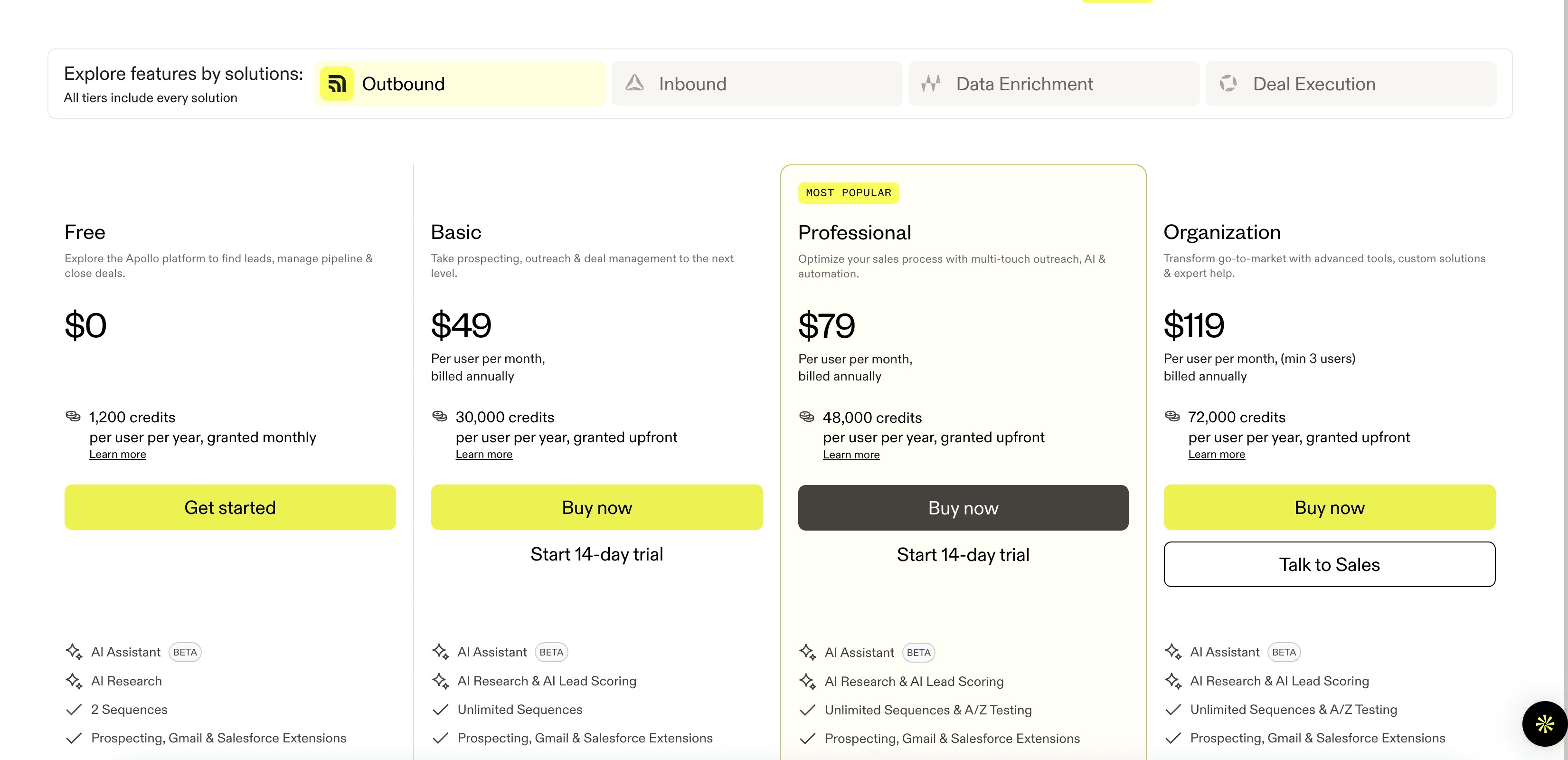
💸 Free Plan: $0/month
What you get:
- 1200 email credits per year (resets annually, not monthly)
- Unlimited searches (you can browse the contact database endlessly)
- 10 mobile phone credits per year (this is the catch)
- Chrome extension access
- Basic email sequences (limited to 3 active sequences)
Who it's for: Solo founders at a startup or side hustlers doing light prospecting. The free trial experience is perfect for testing Apollo before committing.
The gotcha: Email credits are for corporate domains only. So you can't export personal Gmail addresses. And mobile numbers are severely limited (you'll burn through 10 credits fast).
📊 Basic Plan: $49/user/month
What you get:
- 30000 credit
- Advanced filters (tech stack, funding, job changes)
- A/B testing for sequences
- Deeper CRM integration with customizable fields
Who it's for: Sales reps or small sales teams that need consistent prospecting without worrying about credit limits. Apollo.io provides substantial value at this tier.
The upgrade trigger: If you're using more than 10,000 emails per year or need phone numbers regularly, this basic plan offers lower pricing compared to enterprise alternatives.
🚀 Professional Plan: $79/user/month (The Sweet Spot)
What you get:
- 48000 credit per user/year
- Built-in power dialer (make calls directly from Apollo)
- Call recording and analytics with reports and dashboards
- Advanced reporting and dashboards for insight tracking
- API access (advanced API access for custom integrations)
- Email scheduling and send-time optimization
- AI writing assistant for email writing
Who it's for: This is the tier most sales reps and small sales teams land on. The power dialer alone justifies the extra $30/month.
ROI math: If you're making 50+ calls per day, having a built-in dialer with automatic logging saves 30-60 minutes of manual data entry. That's 10-20 hours per month. At $79/month, you're paying ~$4/hour for time savings with automation.
🏢 Organization Plan: $119/user/Month (Minimum 3 users)
What you get:
- 72000 credit per user/
- SSO (Single Sign-On) with advanced security features for enterprise security
- Advanced team governance (permissions, roles)
- Dedicated account manager through the customer support team
- Custom data requests for lead data
- Higher API rate limits
- Contact database management for enterprise-scale operations
Who it's for: Enterprise teams (50+ users) or companies with strict compliance requirements that need advanced security features.
Expect to pay: $10k-$50k+ annually depending on seat count and custom needs.
Alternative to Apollo.io: How Apollo Compares to Other Sales Intelligence Tools
Understanding where Apollo fits in the sales intelligence landscape helps clarify what makes it unique. If you're considering Apollo.io, here's how it stacks up against other platforms. According to reviews on G2, here's what users say about each alternative to Apollo.io.
Apollo.io vs. FullEnrich
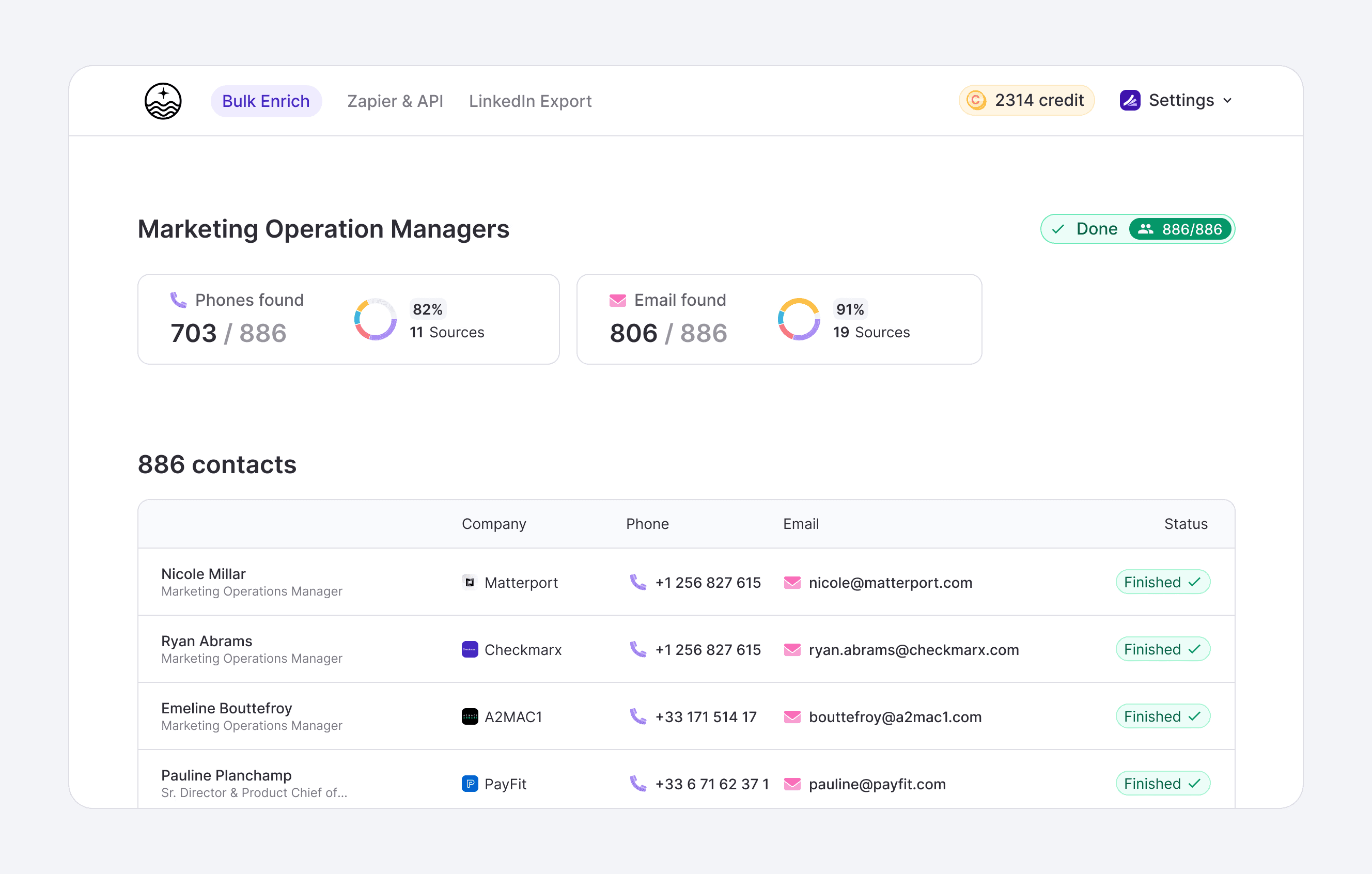
FullEnrich is a waterfall enrichment platform that aggregates data from 20+ premium sources to maximize contact data accuracy.
Feature | Apollo.io | FullEnrich |
|---|---|---|
Pricing | Starts at $49/mo | Starts at $29/mo |
Platform Type | All-in-one (database + engagement) | Waterfall enrichment platform |
Data Sources | Single proprietary database | 20+ premium data sources queried in sequence |
Sequences | Yes | No |
Dialer | Yes | No |
Best Use Case | End-to-end sales workflow | Maximum data accuracy through waterfall enrichment |
Key difference: FullEnrich uses a waterfall approach, checking 20+ data providers to find the most accurate contact data. Apollo is a complete sales engagement platform. If data accuracy is your top priority and you already have engagement tools, FullEnrich is a strong alternative to Apollo.io. If you need an all-in-one platform, Apollo works better.
👉 Start with 50 credits for free now
Apollo.io vs. ZoomInfo
ZoomInfo is an enterprise-focused sales intelligence platform for B2B sales. Here's how they differ:
Feature | Apollo.io | ZoomInfo |
|---|---|---|
Pricing | Starts at $49/mo | Typically $15k-$30k/year |
Platform Type | All-in-one (data + engagement) | Primarily data platform |
Database Size | 275M contacts | 100M+ contacts |
Engagement Tools | Built-in sequences & dialer | Requires separate Engage product |
Target Market | SMBs to Mid-Market | Enterprise |
Contract | Monthly subscription | Annual contract |
Multi-Channel | Multi-channel outreach built-in | Add-on required |
Key difference: Apollo combines the contact database with engagement tools (sequences, dialer) in one sales engagement platform, while ZoomInfo focuses primarily on data with engagement as a separate add-on. For a startup or mid-market company, Apollo.io provides better value.
👉 Learn more about Apollo io vs Zoominfo
Apollo.io vs. Lusha
Lusha is a Chrome extension-focused tool for quick contact lookups on LinkedIn.
Feature | Apollo.io | Lusha |
|---|---|---|
Pricing | $49-$79/mo | $79/mo (Pro) |
Platform Scope | Full prospecting platform | Chrome extension + simple dashboard |
Database | 275M contacts | 45M contacts |
Sequences | Yes | No |
Dialer | Yes | No |
Best Use Case | End-to-end prospecting workflow | Quick LinkedIn lookups |
Key difference: Lusha is simpler and focused on fast contact lookups on LinkedIn, while Apollo is a comprehensive platform for managing the entire prospecting process. When considering an alternative to Apollo.io, Lusha works if you only need LinkedIn data extraction.
👉 Learn more about Apollo io vs Lusha
Wrapping Up: Is Apollo worth it for you ?
The platform works particularly well for SMBs, startups, and mid-market companies that need an affordable, all-in-one solution for outbound sales.
Apollo excels for US-based prospecting and email-first outreach strategies with strong integration capabilities for Salesforce, HubSpot, and other CRMs.
Whether Apollo is the right fit depends on your team size, budget, geographic focus, and whether you prefer an integrated sales engagement platform or specialized point solutions.
For teams looking for an alternative to Apollo.io, options like FullEnrich (for waterfall data enrichment), ZoomInfo (for enterprise needs), or Lusha (for simple LinkedIn prospecting) each serve different use cases.
Happy prospecting!
Related Resources
- Email Enrichment — waterfall enrichment across 20+ sources
- Email Finder — find verified emails from a name or LinkedIn
- Data Enrichment Tools — the full comparison
- Waterfall Enrichment — why 20+ sources beat one
Frequently Asked Questions
Is Apollo.io free?
Apollo has a free tier with 900 credits/seat/year. Paid plans start at $49/seat/month (annual). Credits are per-seat and don't pool across the team.
How accurate is Apollo's data?
Apollo's database covers roughly 55–60% of a typical B2B list. For the contacts it has, accuracy is reasonable. The issue is coverage — when Apollo doesn't have a contact, there's no fallback.
How does Apollo compare to FullEnrich?
Apollo queries one database. FullEnrich waterfalls across 20+ sources for an ~80% find rate. FullEnrich also includes unlimited seats, triple verification, and charges only for verified matches.