Obsolete contact data immediately paralyzes outbound pipeline velocity.
Enterprise vendors face a unique operational hurdle when targeting large accounts: complex contract negotiations demand absolute identity resolution for the precise financial decision-maker.
A generic corporate switchboard number offers zero value to a high-velocity sales team.
Modern contact enrichment infrastructure neutralizes this bottleneck by deploying multi-vendor waterfall logic to acquire verified mobile intelligence.
To help system architects transition away from legacy single-database models, we have audited the contact data sector to isolate the platforms providing the highest fidelity identity resolution.
The nine systems detailed below utilize synchronous intent routing and automated SMTP verification protocols to guarantee direct-dial accuracy.
What is Contact Enrichment?
Contact enrichment functions as a deterministic matching protocol rather than a simple database lookup. Raw CRM inputs, such as a fragmented email address or an orphaned LinkedIn URL, act as primary keys.
The data engine queries these partial identifiers against global datasets to construct a complete, routing-ready identity profile.
Advanced platforms execute synchronous validation rather than retrieving historical cached data. When the system appends a direct mobile number or a B2B email, it simultaneously runs an active telecom carrier check or an SMTP authentication ping. This real-time verification guarantees the acquired data is actively receiving external communications.
However, precision targeting in complex enterprise sectors demands more than just a validated phone number. The underlying data infrastructure must also track professional movement.
Flagging executive turnover, internal promotions, or recent departmental restructuring provides the behavioral context necessary to trigger an engagement sequence at the exact moment of organizational need.
Why Enrichment Is non negotiable in 2026
Enterprise CRM databases degrade at an aggressive pace. Industry metrics indicate that B2B contact data decays at an annual rate exceeding 30 percent, driven by executive turnover and internal promotions.
If a prospect database remains untouched for twelve months, it forces sales representatives to operate on obsolete intelligence. This directly results in high bounce rates, damaged server reputations, and fundamentally misaligned outreach.
To combat this structural decay, automated enrichment directly accelerates pipeline velocity. Continuous identity resolution eliminates the manual research burden that historically consumed nearly a third of a standard sales week.
Revenue operations teams recapture this lost capacity by programmatically refreshing CRM fields with verified mobile numbers and active job titles, ensuring expensive human capital focuses entirely on complex negotiations.
Furthermore, accurate firmographic data powers advanced lead orchestration. Modern go-to-market strategies rely on environmental triggers to assign prospects to the correct specialized account executive. When an enrichment engine instantly updates the CRM payload with news of a company securing new institutional funding, that synchronous data flow activates automated routing rules, allowing the sales organization to strike precisely when the buyer exhibits maximum intent.
Top Contact Enrichment Platforms
This table shows the current leaders in the space and what they actually do best for your team.
Tools | Best For | Core Advantage | Starting Price | G2 Rating |
|---|---|---|---|---|
FullEnrich | Sales Teams | Best Find Rates | $29/mo | |
Clearbit | Marketing Ops | Data Accuracy | Custom | |
Lusha | Individual Reps | Quick Lookups | $49.90/mo | |
Apollo.io | SMB Growth | Large Database | $59/mo | |
Clay | Data Engineers | Custom Workflows | $149/mo | |
Cognism | EU Markets | GDPR Compliance | Custom | |
ZoomInfo | Large Enterprise | Deep Intelligence | Custom | |
LeadGenius | Targeted Leads | Custom Research | Custom | |
Hunter.io | Email Teams | Simple Verifying | $49/mo |
Here is an extended overview of all the tools discussed in the table.
1. FullEnrich
High-accuracy waterfall engine for identifying verified mobile numbers and personal email addresses.
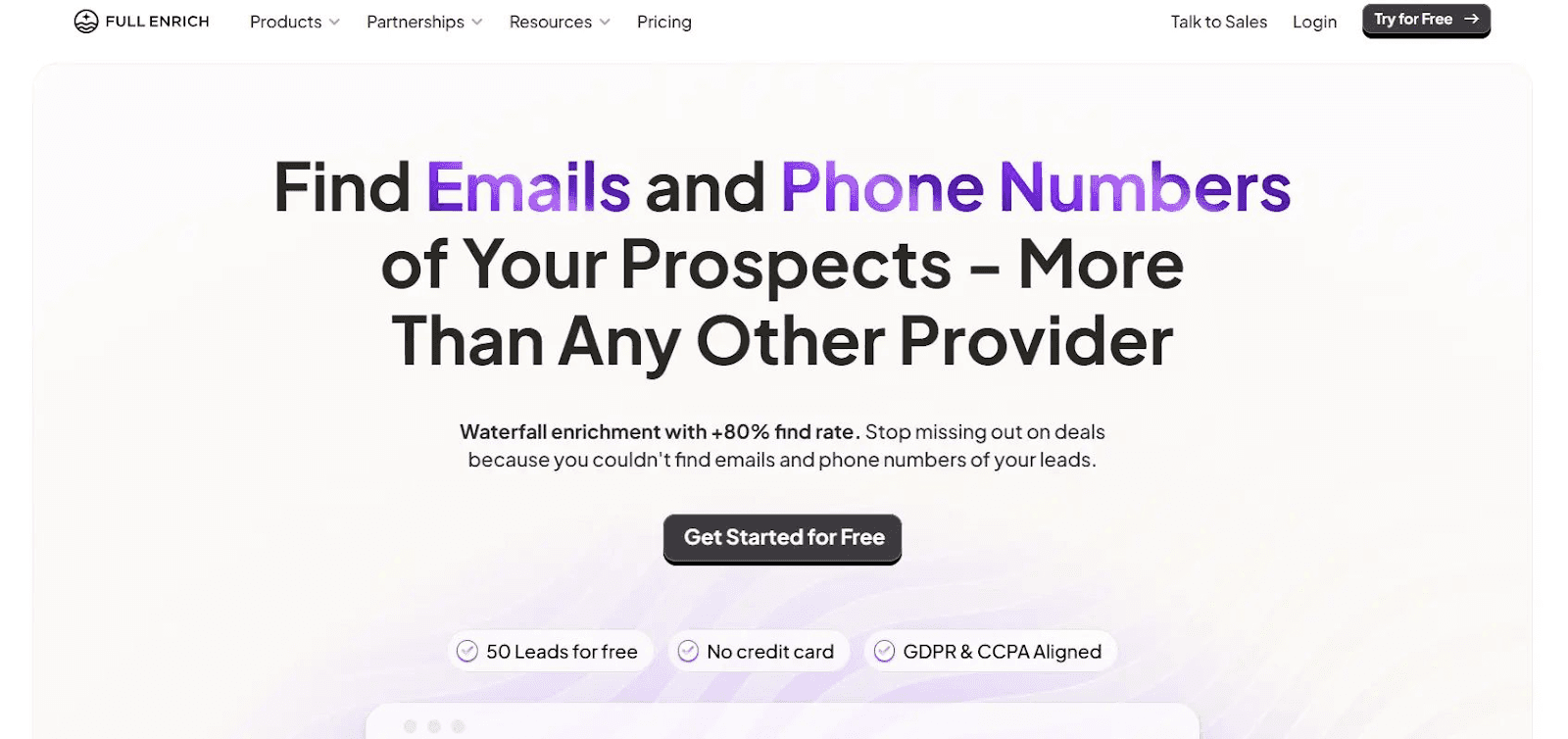
FullEnrich is built for sales teams who are tired of seeing "no data found" messages. Instead of relying on a single database, this tool uses a waterfall enrichment approach to check over 20 data providers simultaneously.
If the first source doesn't have the contact info, the system automatically moves to the next one until it finds a verified match. This makes it incredibly effective at finding direct mobile lines and personal emails that other platforms simply don't have.
Why FullEnrich is the Number One Choice
FullEnrich is placed at the top because it solves the biggest problem with single-source tools, which is data gaps. No single database is perfect, but by querying 20+ vendors at once, FullEnrich fills in those gaps. It ensures you have the highest possible chance of getting a direct line to your prospect. Because you only pay when the tool actually finds a verified result, it is also one of the most cost-effective ways to build a high-quality outreach list.
Key Capabilities
This multi-provider logic essentially eliminates the need to jump between different apps to find a single phone number.
- Waterfall Search: Automatically searches through multiple premium vendors to maximize your data coverage.
- Success-Based Billing: You are charged only when the tool successfully finds and verifies the data you need.
- Triple-Layer Verification: Every email is checked by three different verifiers to keep your bounce rates under 1%.
- Bulk Enrichment: Upload a CSV or lead list and let the system hunt down verified info for every contact at once.
What’s Great:
- High find rates for mobile numbers, which are the hardest data points to secure.
- Credits roll over for up to three months, so your budget is never wasted.
- No extra fees for adding more team members to your account.
What to Watch For:
- It is purely an enrichment tool, so you still need a separate CRM or email platform.
- Live searches can take a few seconds longer than tools using a static, pre-built list.
Pricing
The Starter Plan is $29/month for 500 credits. For more volume, the Pro Plan is $55/month, and the Scale Plan is $500/month.
See fullenrich pricing plans in details here
2. Clearbit
Real-time firmographic and technographic data for marketing and sales ops.
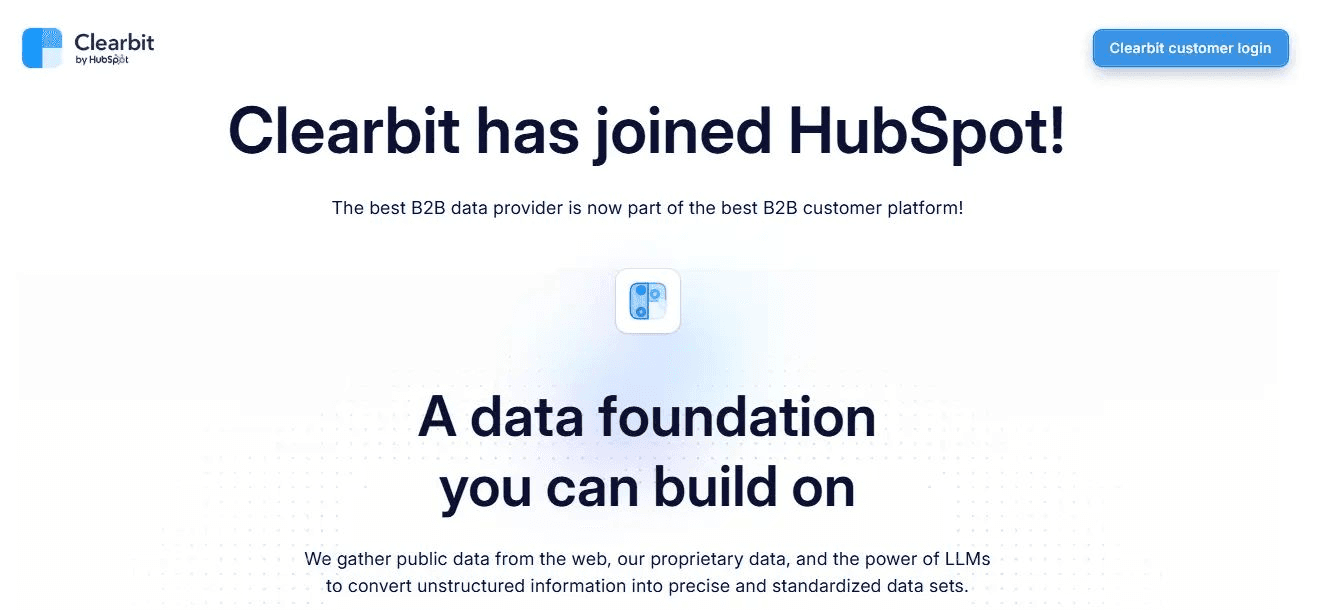
Clearbit, now officially part of HubSpot as "Breeze Intelligence," is one of the most well-known names in the enrichment world. It specializes in providing deep context about companies and the people who work there. It can tell you everything from the technology a company uses to the revenue and office location.
It is particularly popular for teams that want to shorten their website forms; instead of asking twenty questions, you just ask for an email, and Clearbit fills in the rest of the details in the background.
Key Capabilities
By pulling data directly into your CRM or forms, Clearbit removes the friction that usually stops prospects from signing up.
- Dynamic Form Shortening: Automatically fills in lead details so you can ask for less information on your website forms.
- Technographic Data: See the exact software and hardware a company is currently using to customize your pitch.
- Website Reveal: Identify which companies are visiting your site, even if they don't fill out a form.
What’s Great:
- Integrates smoothly with the HubSpot ecosystem to streamline workflows.
- Provides very granular industry data, perfect for lead scoring.
What to Watch For:
- It can be very expensive for small teams, as it is now bundled with the HubSpot platform.
- Accuracy for smaller, non-US companies isn't always as high as for larger enterprises.
Pricing
Clearbit pricing is now part of the HubSpot Breeze credit system, starting at $75/month for 100 Breeze Intelligence credits.
3. Lusha
Speedy LinkedIn lookup tool for individual sales reps and recruiters.
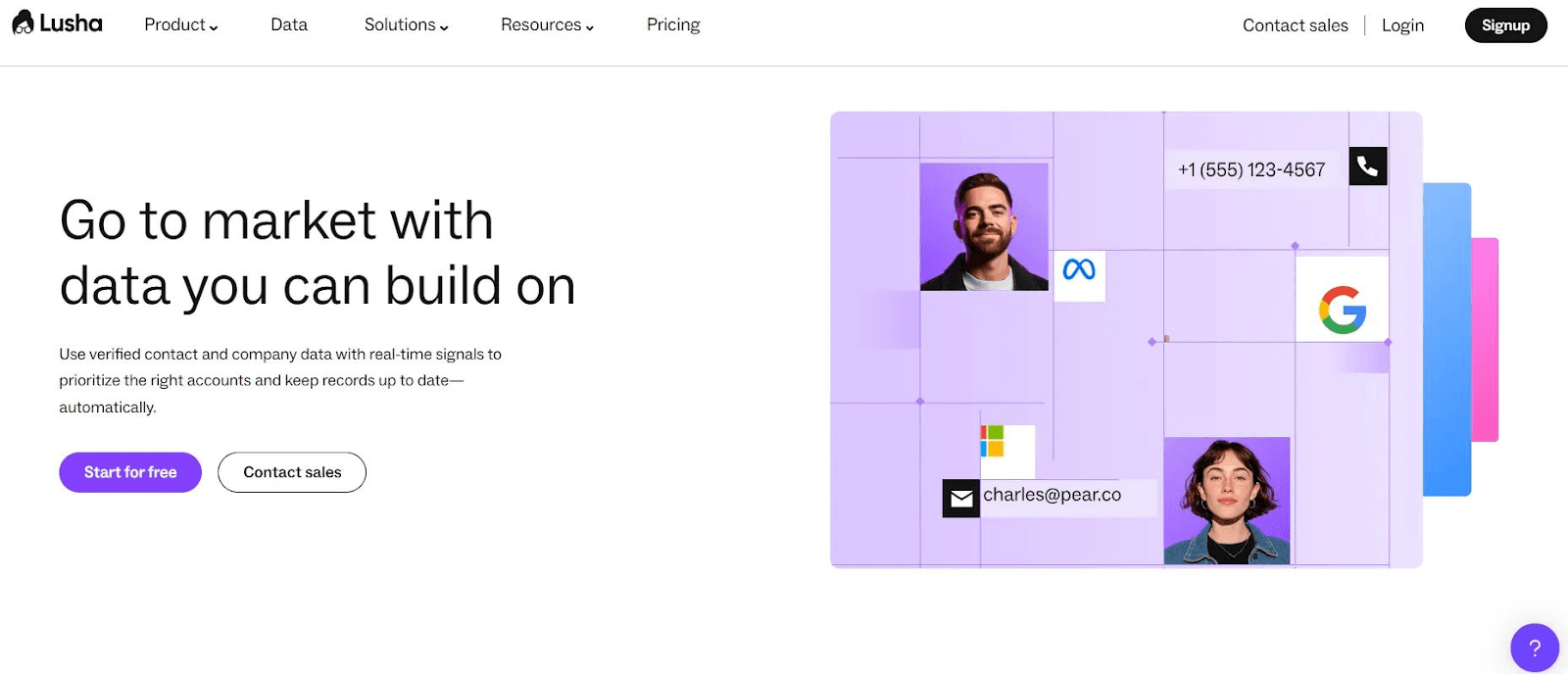
Lusha is famous for its simplicity. It is essentially a "reveal" button in your browser. When you look up a prospect on LinkedIn, Lusha pulls up their contact info almost instantly. It is built for the sales rep who needs to move fast and doesn't want to spend time navigating complex software.
Key Capabilities
Whether you're in your CRM, on LinkedIn, or even on a company’s homepage, Lusha sits in the corner of your screen, ready to provide the data you need to reach out immediately.
- Instant Reveal: Get contact details directly on LinkedIn profiles with a single click.
- Intent Signals: See which companies are actively searching for products in your category.
- Job Change Alerts: Get notified when your key prospects move to a new company.
What’s Great:
- The easiest tool to learn; you can start using it in seconds.
What to Watch For:
- The credit system can be expensive if you are revealing many phone numbers.
Also read: 12 best Lusha Alternatives
Pricing
Lusha offers a Free Plan with 40 credits. Paid plans start at $49.90/user/month for 400 credits per year, and based on usage, they go up upto $399.90/month, which provides 3,400 credits and 5 user seats.
Learn more about Lusha Pricing
4. Apollo Io
A massive B2B database paired with built-in sequences for high-volume sales.
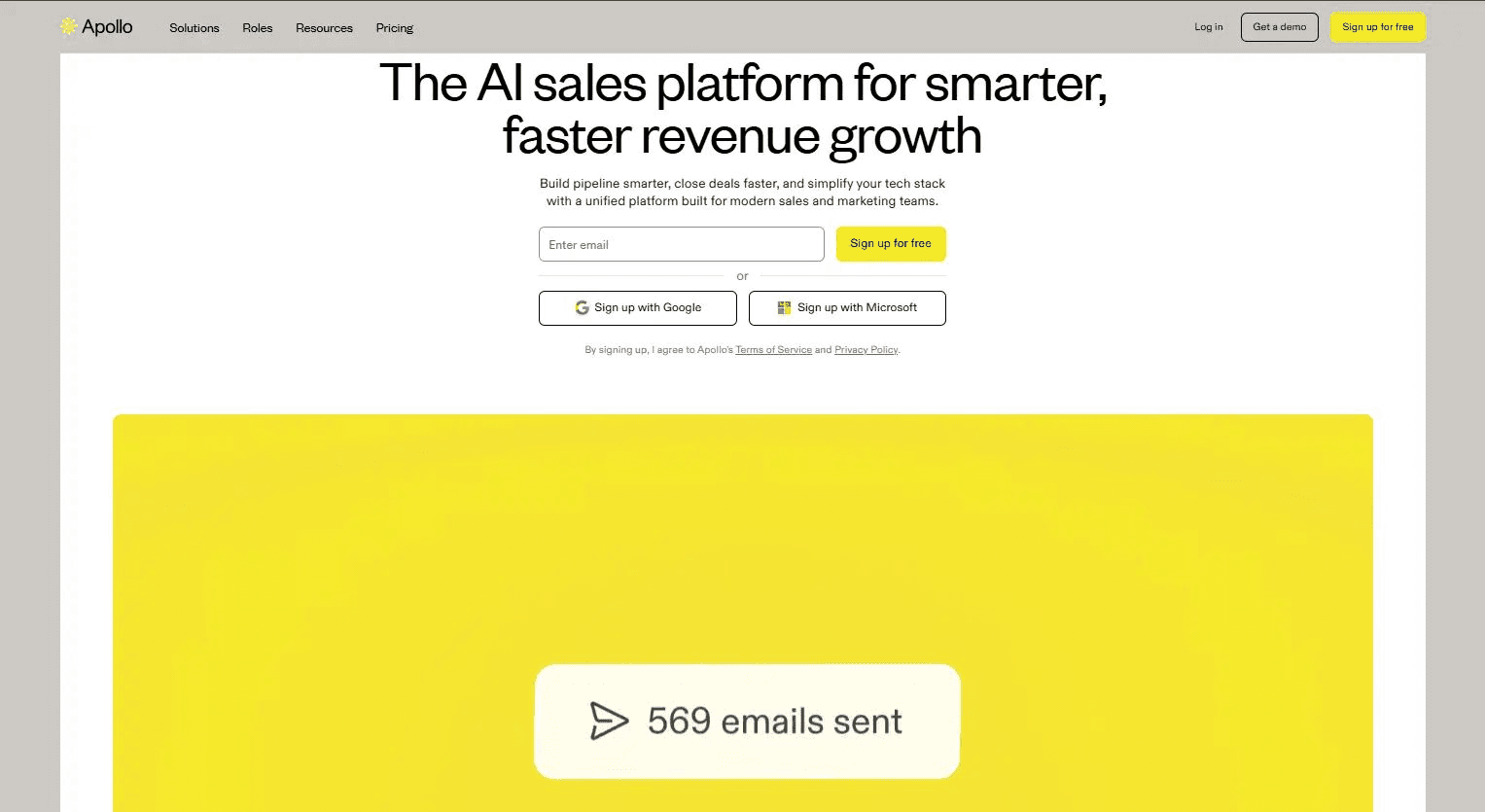
Apollo.io acts as a complete sales engine by combining lead discovery with an outreach platform. Instead of having to export your enriched data to a separate tool, you can find a prospect and add them to a sequence in one motion.
It holds over 275 million contacts, making it one of the largest datasets available for sales teams today. It is the standard choice for small and mid-sized teams that want to consolidate their tech stack and keep everything from data enrichment to email sending under one roof.
Key Capabilities
- Integrated Sales Console: Manage your calls, emails, and LinkedIn tasks in a single view tied directly to your lead data.
- AI Writing Assistant: Uses historical data to help you draft personalized emails and A/B test different versions of your pitch.
- Buying Intent Filters: Highlights companies that are currently researching your category so you can time your outreach perfectly.
This all-in-one approach removes the technical headaches of moving data between different apps. Since your enrichment and your outreach are in the same place, you can see exactly which data sources are resulting in real meetings and closed deals.
What’s Great:
- The most competitive pricing for teams that need both data and an outreach tool.
- A very generous free plan that lets you test the full platform before spending a cent.
- Strong integration with LinkedIn Sales Navigator for easy list building.
What to Watch For:
- Because it tries to be everything, the interface can feel cluttered and slow at times.
Also read: 12 best Apollo io Alternatives
Pricing
The Basic Plan is $59/user/month. The Professional Plan is $99/user/month and includes the dialer, while the Organization Plan for larger teams is $149/user/month.
Learn more about Apollo Pricing
5. Clay
Programmable data orchestration that combines 150+ sources into one spreadsheet.
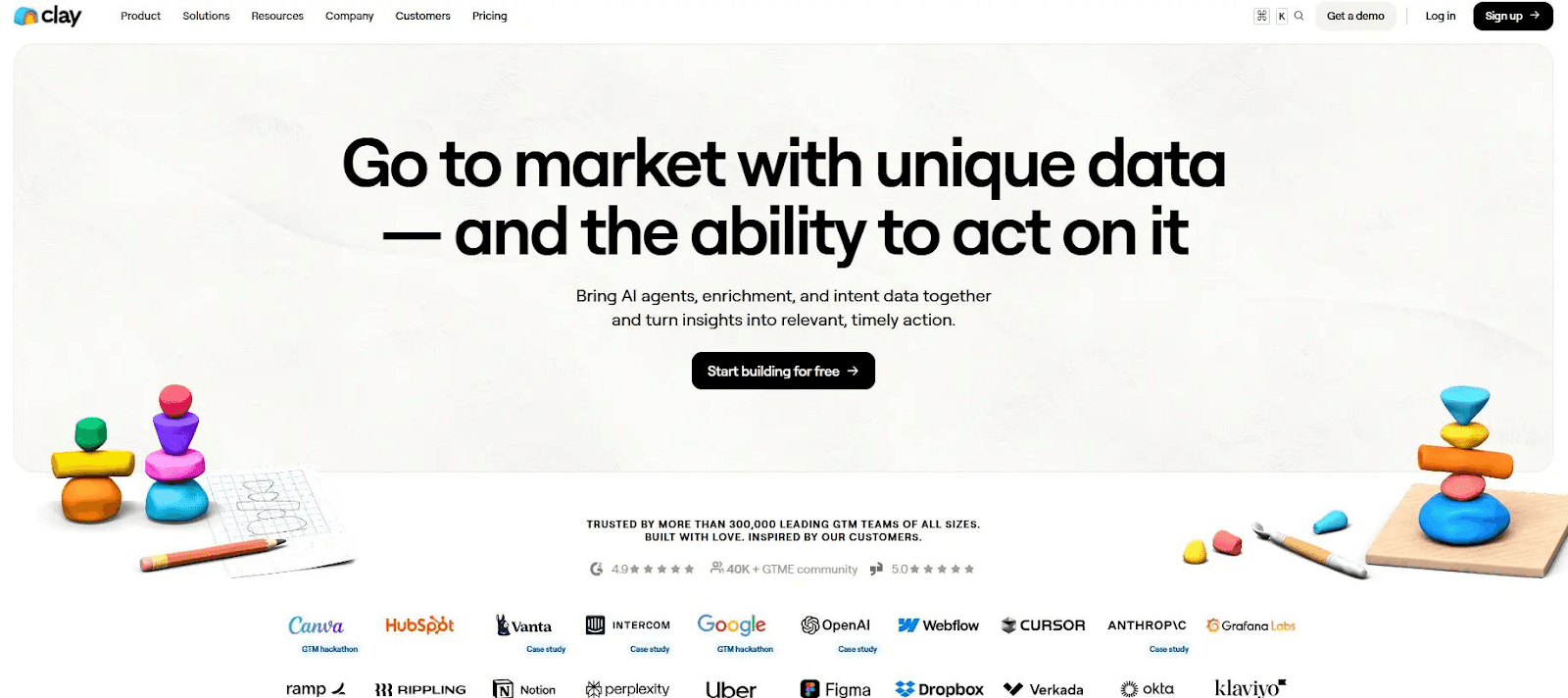
Clay is the tool of choice for teams that want to go beyond basic "first name" personalization. It looks like a spreadsheet but works like a powerful data engine, allowing you to pull data from dozens of sources, including LinkedIn, Crunchbase, and GitHub, at the same time.
You can set up "if-then" logic to enrich leads based on specific triggers, such as when a company raises capital or a prospect posts on LinkedIn. It is essentially a "build-your-own" enrichment platform that lets you create the exact dataset you need for hyper-targeted campaigns.
Key Capabilities
By treating data as a layered system, Clay ensures you never have to rely on a single, flawed database.
- Multi-Source Orchestration: Connects to 50+ premium data providers, allowing you to build your own custom data waterfall.
- Claygent (AI Research Agent): An AI assistant that can browse the web and summarize specific details about a prospect to use in your emails.
- Automated Lead Scoring: Automatically ranks leads based on any data point you choose, ensuring your reps only talk to the best prospects.
What’s Great:
- Unlimited users on all plans, so you only pay for the data you actually use.
- Can automate hours of manual research in a matter of seconds.
What to Watch For:
- It has a very steep learning curve; you need to be comfortable with spreadsheet logic to get the most out of it.
- Credit-based pricing can get very expensive when running complex, multi-step workflows.
Pricing
The Starter Plan is $149/month. For more power, the Explorer Plan is $349/month, and the Pro Plan for high-volume teams is $800/month.
Learn more about Apollo Pricing
6. Cognism
Premium sales intelligence with a focus on high-accuracy European and mobile data.
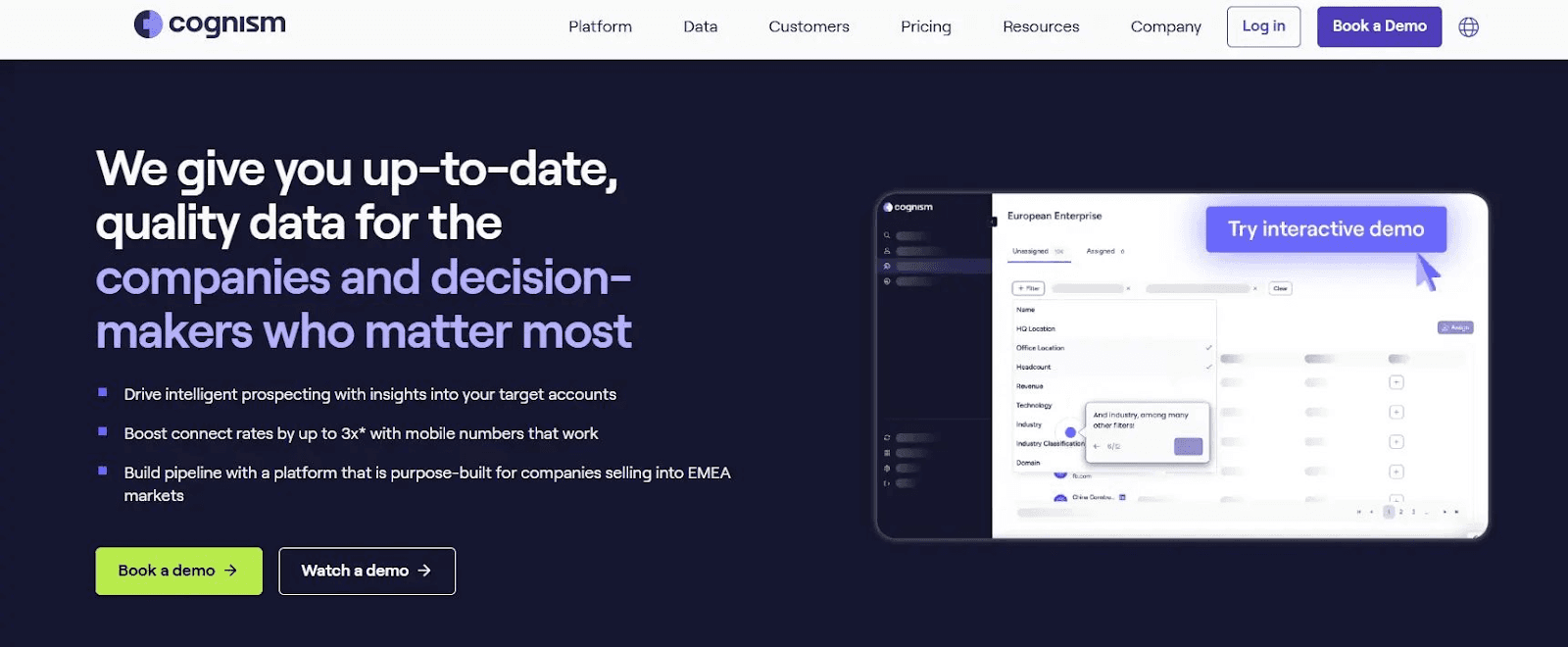
Cognism has built a reputation as one of the best provider of European B2B data in the world. While many tools struggle with the strict privacy laws in the EU and UK, Cognism is built from the ground up to be fully GDPR and CCPA compliant.
Their "Diamond Data" feature provides phone-verified mobile numbers, which are manually checked by their own researchers. This makes it an essential tool for sales teams that rely on cold calling and need to reach high-level executives who are rarely at their office desks.
Key Capabilities
This focus on compliance and phone-verified data makes Cognism a "safety net" for global sales teams.
- Diamond Data®: Human-verified mobile numbers that are manually checked to ensure you aren't dialing dead lines.
- DNC List Scrubbing: Automatically filters out contacts on "Do Not Call" registries across 13 different countries to keep your outreach legal.
- Intent Data (via Bombora): Identifies accounts that are actively researching your product category across the web.
What’s Great:
- Unmatched accuracy for European mobile numbers and decision-maker emails.
- Excellent customer support that helps you set up the tool to match your specific goals.
What to Watch For:
- It is one of the more expensive tools on the market and usually requires a long-term contract.
Also read: 12 best Cognism Alternatives
Pricing
Cognism does not publicly disclose its pricing. Instead, businesses must request a custom quote. Industry reports suggest that annual platform fees typically start at around $16,500, with additional per-user-seat costs.
7. ZoomInfo
Enterprise-grade intelligence with a massive focus on corporate hierarchies.
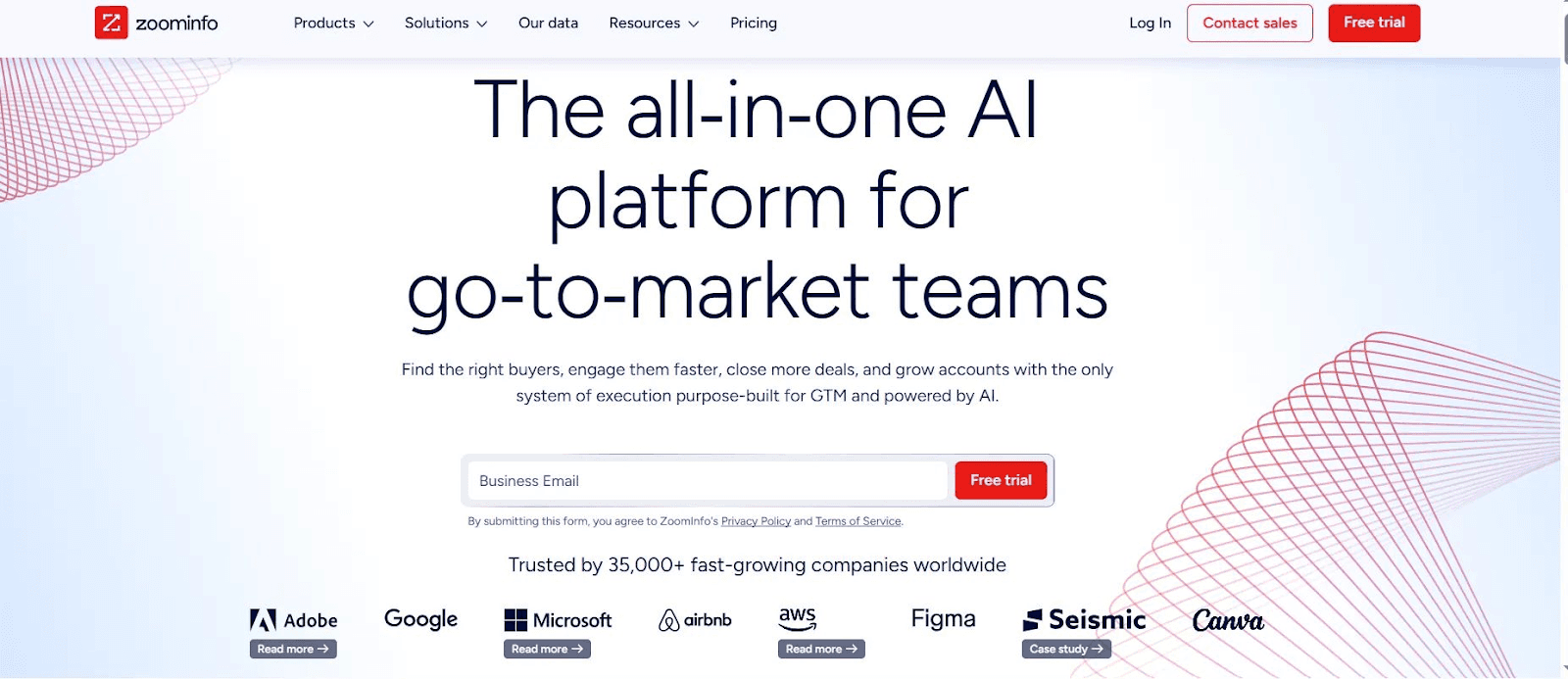
ZoomInfo is the heavyweight champion of B2B data. It isn't just a list of names; it is a deep map of the corporate world. It provides everything from department-level organizational charts to real-time intent signals that show you which companies are currently in a buying cycle.
For large teams navigating complex, multi-stakeholder deals, ZoomInfo provides the structural data needed to identify every decision-maker within an account.
Key Capabilities
By giving you a bird's-eye view of a company's internal structure and current business needs, ZoomInfo reduces the risk of pitching the wrong person.
- Org Charts: Map out entire departments to see exactly who reports to whom before you reach out.
- Streaming Intent: Track when companies are researching specific topics across the web to time your calls perfectly.
- Technographic Data: See exactly which software and hardware a company is currently using to customize your pitch.
What’s Great:
- Great depth for North American company data and corporate structures.
- An all-in-one platform that includes its own dialer and conversation intelligence tools.
- High-quality intent signals that help prioritize your most likely buyers.
What to Watch For:
- Extremely high starting price and mandatory annual contracts.
- Data accuracy can drop significantly when searching outside of the US and Canada.
Also read: 15 best Zoominfo Alternatives
Pricing
ZoomInfo operates on a custom pricing model and does not publicly disclose its rates. According to various third-party industry sources, pricing typically ranges from around $15,000 per year for smaller teams to $45,000+ annually for larger teams with expanded feature access.
Learn more about Zoominfo Pricing
8. LeadGenius
Bespoke, human-verified data for niche markets and global accounts.
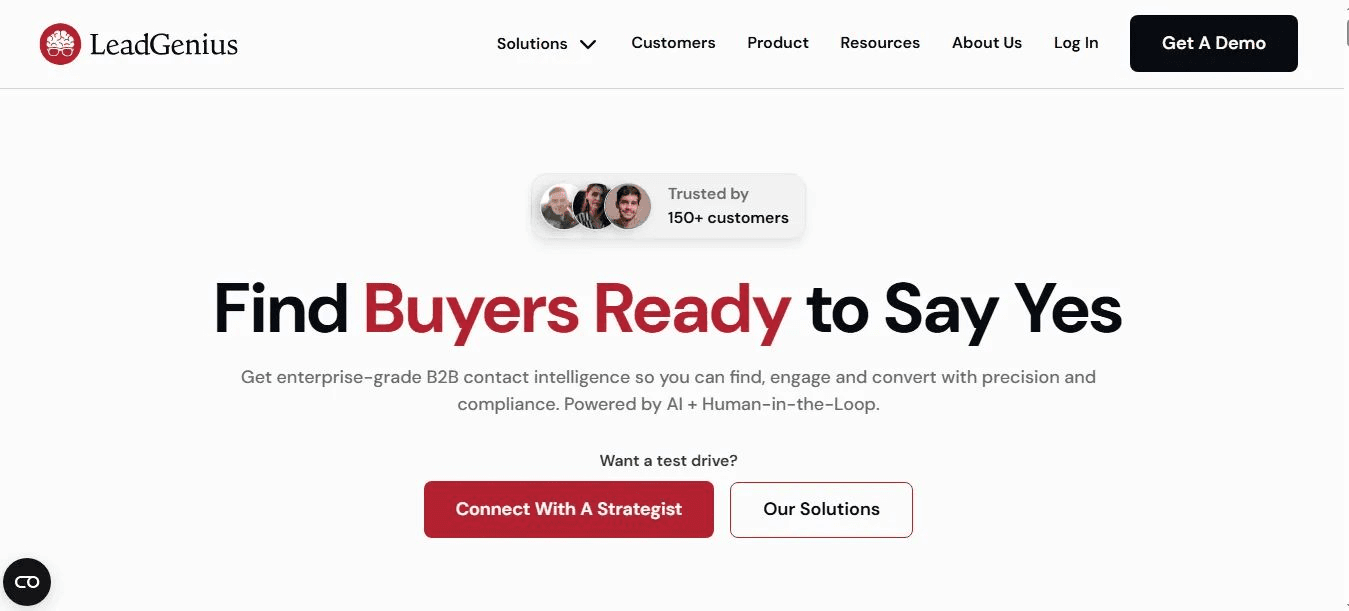
LeadGenius is different because it doesn't just rely on a bot-scanned database. It uses a combination of AI and "human-in-the-loop" researchers to find and verify data that other tools miss.
This is especially useful for companies selling into niche industries or international markets like EMEA and APAC, where automated tools often struggle with accuracy. It is designed for teams that need high-quality, custom lead lists rather than just raw bulk data.
Key Capabilities
By having a human eye on the data before it hits your CRM, LeadGenius ensures your sales team focuses only on high-potential, verified opportunities.
- Custom Lead Generation: Instead of just searching a database, you can request custom research for specific, hard-to-find roles.
- Human-Verified Accuracy: A team of real people checks your leads to ensure the data is 100% correct.
- Contact Monitoring: Get notified when your "champions" change jobs so you can follow them to their new company.
What’s Great:
- Highly customizable; you can request specific data points customized to your business.
- Great for keeping your CRM clean by tracking job changes in real-time.
What to Watch For:
- Pricing is high and can be opaque since it is based on custom research needs.
- The turnaround time for custom lists is slower than that of instant-reveal tools.
Pricing
LeadGenius offers custom-quoted pricing based on your specific research requirements.
9. Hunter.io
A simple, transparent tool for finding and verifying professional email addresses.
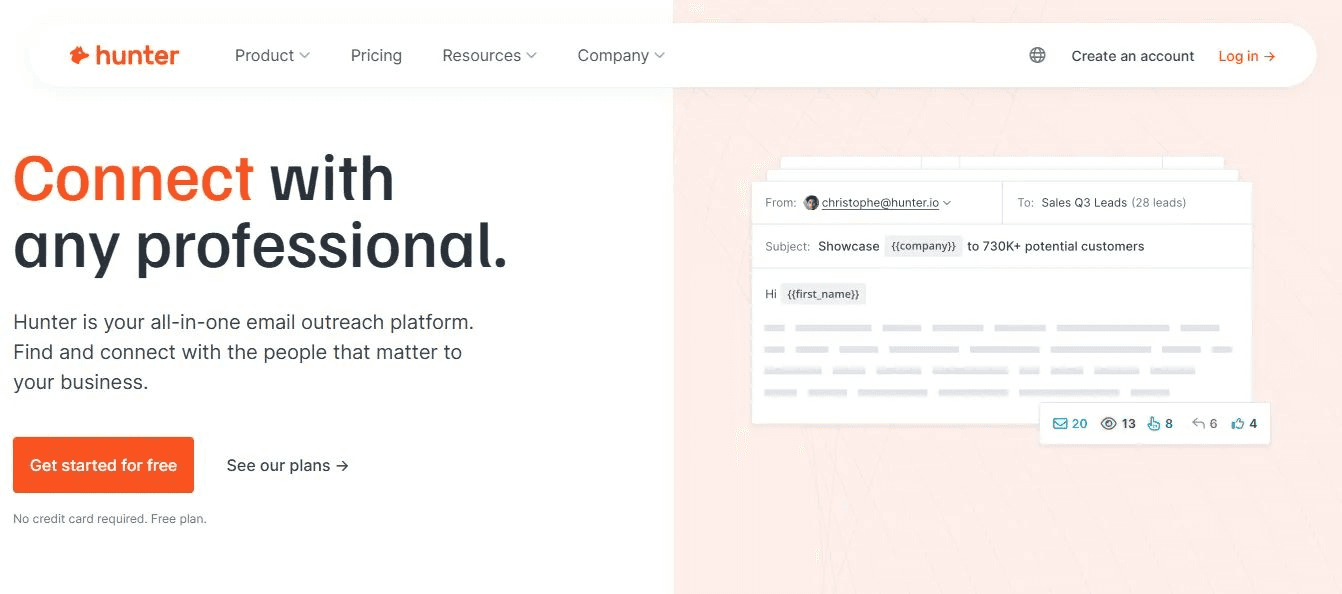
Hunter.io is the gold standard for teams that live in their email inboxes. It works by crawling the web to find publicly available email patterns for any company domain.
It is transparent, showing you exactly where it found the email address and providing a confidence score for each result. It is the perfect choice for cold emailers who want a lightweight, reliable tool that does one thing: email exceptionally well.
Key Capabilities
Because Hunter shows you the source of its data, you never have to guess why an email was suggested.
- Domain Search: Enter a company website and instantly get a list of all publicly listed email addresses for that business.
- Bulk Email Verifier: Run your entire list through a multi-step check to remove invalid addresses and protect your sender reputation.
- Author Finder: Find the direct contact info for authors of specific articles or blog posts for PR and link-building outreach.
What’s Great:
- Affordable and easy to use; you can be up and running in minutes.
- Known for transparent data sources in the industry.
- Great built-in email "campaigns" tool for basic cold outreach.
What to Watch For:
- It does not provide phone numbers, so it isn't a fit for teams that do a lot of cold calling.
- Accuracy can be lower for small, private companies without a large web presence.
Also read: 12 best Hunter IO Alternatives
Pricing
Hunter offers a Free Plan with 50 credits. Paid plans start at $49/month for the Starter Plan and go up to $299/month for the Scale Plan.
Learn more about Hunter IO Pricing
Making Your Data Work for You
Static databases yield zero operational value. To generate a measurable return on investment, acquired mobile intelligence must flow instantly into an active orchestration layer.
This requires continuous API synchronization between the enrichment engine and your primary sales platform, guaranteeing that automated outbound sequences always execute against the most recent identity profile.
Furthermore, data fidelity should dictate your specific outreach channel. When the deterministic matching protocol successfully validates a direct mobile number for a key decision-maker, the CRM must immediately push that exact record into a high-touch cadence.
This allows your team to bypass automated corporate email filters and prioritize a direct phone touchpoint.
However, system logic must also actively manage data acquisition failures. If the multi-vendor waterfall sequence exhausts its queries without securing a verified mobile number, the CRM should automatically reroute the incomplete profile.
Instead of burning expensive human capital on a low-probability corporate switchboard call, the platform can assign the record to a low-cost automated digital nurture campaign.
What is the Best Contact Enrichment Tool?
Platform selection depends entirely on a team's primary engagement channel. Revenue teams executing high-volume email campaigns often deploy Hunter.io to leverage its synchronous SMTP validation, while organizations focused on social selling typically integrate platforms like Kaspr to extract contact data directly from live browser sessions.
For enterprise account mapping, teams usually rely on the macro-level intent routing provided by legacy systems like ZoomInfo.
However, single-database architectures inherently limit pipeline scale. A system that excels at global software tech-stack identification might fail completely when tasked with verifying specific financial decision-makers in complex, highly regulated industries.
Because modern B2B sectors require a dynamic data acquisition strategy rather than a static subscription to an isolated vendor, teams are increasingly shifting to multi-source engines.
FullEnrich eliminates this structural vulnerability by operating as an orchestration layer rather than a standalone database. The engine executes waterfall logic to automatically query multiple premium datasets sequentially until it secures an actively verified direct dial.
This aggregate infrastructure ensures maximum identity resolution across every possible industry segment, making it the most robust choice for high-velocity outbound teams.
Getting Started with FullEnrich
If you want to see what a "waterfall" search can actually do for your sales numbers, setting up FullEnrich takes about two minutes.
- Sign Up for Free: Head to the FullEnrich website and create an account to get your first 50 credits for free.
- Upload Your List: Take your current lead list, even if it only has names and company websites, and upload it as a CSV file.
- Run the Enrichment: Choose which data points you need. The tool will automatically check 20+ sources to find the best verified match.
- Download and Sync: Once it's done, you can pull your clean, enriched list back into your CRM or email tool.
It is a simple way to prove that better data leads to better conversations. You only pay for verified leads, so your budget stays focused on results.
Frequently Asked Questions
How often should I enrich my CRM data?
B2B data decays fast about 3% every month. You should aim to do a "deep clean" and enrichment of your active leads at least once a quarter to make sure you aren't calling people who have already left their jobs.
Does enrichment help with my email deliverability?
Yes. By verifying emails before you send them, you avoid "hard bounces." High bounce rates tell email providers that you are a spammer, so keeping your list clean is the best way to stay out of the spam folder.
Can I use these tools if I only sell to small businesses?
Yes, but you have to pick the right one. Tools like Hunter.io and Lusha are great for small businesses. For very niche or local businesses, a custom research tool like LeadGenius might be more effective.
What is the difference between firmographic and technographic data?
Firmographics are the "basics" of a company (size, revenue, location). Technographics are the "tools" they use (what CRM they have, what their website is built on). Both are vital for a personalized pitch.
Is it safe to use these tools with GDPR and other privacy laws?
Most professional tools (like Cognism or FullEnrich) are built to be compliant. They use publicly available data and scrub their lists against "Do Not Call" registries to keep your outreach on the right side of the law.
Why is "Success-Based" billing important?
Many tools charge you a credit every time you hit "search," even if they find nothing. Success-based billing means you only pay when the tool actually finds and verifies the data, which saves you a lot of money in the long run.
Can I automate this process?
Yes. Almost all of these tools have APIs or connect to Zapier. You can set it up so that every time a new lead enters your CRM, they are automatically enriched with their mobile number and job title.
What is a "Waterfall" enrichment exactly?
Think of it like a backup plan. Instead of asking one person for a phone number, you ask fifteen. If the first one says no, you move to the next. This ensures you get a "yes" much more often than using a single database.